How to read this protein in Indian food chart
Every number for raw ingredients on this page comes from the Indian Food Composition Tables 2017 (IFCT 2017), published by ICMR-National Institute of Nutrition (NIN) in Hyderabad, which analysed foods sampled across India. Where IFCT has no entry (curd, tofu, soya chunks, oats, chia seeds), we use USDA FoodData Central. For cooked dishes we use the Indian Nutrient Databank (INDB), a peer-reviewed 2024 database that calculates 1,014 standard Indian recipes from IFCT values, plus USDA's survey database for a few dishes INDB lacks.
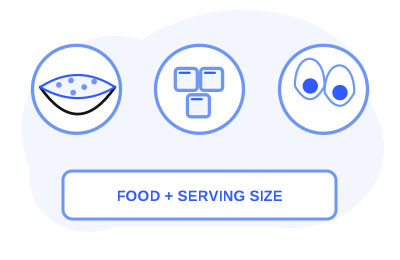
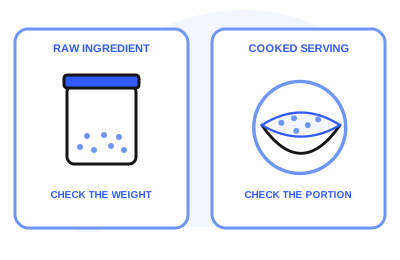
Two things trip people up. First, raw versus cooked: 100 g of raw moong dal has about 24 g of protein, but once it soaks up water and becomes dal, the same 100 g of cooked dal has far less. The tables say clearly which is which. Second, serving size: a food can be high in protein per 100 g but eaten in tiny amounts (sesame seeds, for example), so we give a realistic serving next to every value.
How much protein do you need a day?
ICMR-NIN's current recommended dietary allowance for healthy Indian adults is 0.83 g of protein per kg of body weight a day, which works out to 54 g for a 65 kg man and 45.7 g for a 55 kg woman. NIN adds that people eating a cereal-heavy diet with lower-quality protein need about 1 g per kg, and recommends a cereal, pulse and milk balance of roughly 3 : 1 : 2.5 for good protein quality.
If you strength train, the International Society of Sports Nutrition (ISSN) position stand recommends 1.4 to 2.0 g per kg a day, ideally split into servings of 20 to 40 g every 3 to 4 hours. A 2018 meta-analysis in the British Journal of Sports Medicine found that gains in muscle from training levelled off at around 1.6 g per kg a day. Work out your own number with our protein intake calculator.
Protein in dals and legumes (per 100 g raw)
Dals and whole legumes are the backbone of protein in daily Indian food. Split dals are slightly higher in protein than the whole versions because the husk, which is mostly fibre, has been removed. The serving column uses 30 g of raw dal, the amount INDB's standard recipe uses for one bowl of home dal.
| Food | Protein per 100 g raw | Calories per 100 g raw | Protein per 30 g raw |
|---|---|---|---|
| Masoor dal (red lentil, split) | 24.4 g | 322 kcal | 7.3 g |
| Moong dal (green gram, split) | 23.9 g | 326 kcal | 7.2 g |
| Urad dal (black gram, split) | 23.1 g | 324 kcal | 6.9 g |
| Whole moong (green gram) | 22.5 g | 294 kcal | 6.8 g |
| Whole masoor (brown lentil) | 22.5 g | 299 kcal | 6.7 g |
| Whole urad (black gram) | 22.0 g | 291 kcal | 6.6 g |
| Horse gram (kulthi, whole) | 21.7 g | 330 kcal | 6.5 g |
| Toor / arhar dal (red gram, split) | 21.7 g | 331 kcal | 6.5 g |
| Chana dal (Bengal gram, split; besan is ground chana dal) | 21.6 g | 329 kcal | 6.5 g |
| Whole toor (red gram) | 20.5 g | 274 kcal | 6.1 g |
| Dried peas | 20.4 g | 303 kcal | 6.1 g |
| Lobia (cowpea, brown) | 20.4 g | 320 kcal | 6.1 g |
| Rajma (red kidney beans) | 19.9 g | 299 kcal | 6.0 g |
| Moth beans | 19.8 g | 309 kcal | 5.9 g |
| Kala chana (Bengal gram, whole) | 18.8 g | 287 kcal | 5.6 g |
Cooked, the picture changes. USDA lists boiled lentils at about 9.0 g of protein per 100 g and boiled chickpeas at 8.9 g, roughly a third of the raw value, because cooked pulses are mostly water.
Protein in paneer, milk and other dairy
Paneer is the most concentrated vegetarian protein in a typical Indian kitchen, but it is also high in fat: IFCT 2017 measured 18.9 g of protein and 24.8 g of fat per 100 g of paneer, which is why it carries 305 kcal per 100 g. Milk and curd give less protein per serving but are easy to eat every day.
| Food | Protein per 100 g | Calories per 100 g | Protein per serving |
|---|---|---|---|
| Paneer (IFCT 2017) | 18.9 g | 305 kcal | 9.4 g per 50 g; 18.9 g per 100 g |
| Khoa (IFCT 2017) | 16.3 g | 316 kcal | 3.3 g per 20 g |
| Cow's milk, whole (IFCT 2017) | 3.3 g | 73 kcal | 8.2 g per 250 ml glass |
| Buffalo milk, whole (IFCT 2017) | 3.7 g | 107 kcal | 9.2 g per 250 ml glass |
| Curd / plain yogurt, whole milk (USDA) | 3.5 g | 61 kcal | 5.2 g per 150 g katori |
| Hung curd / Greek yogurt, plain, non-fat (USDA) | 10.2 g | 59 kcal | 20.4 g per 200 g |
| Whey protein isolate powder (USDA) | 58.1 g | 359 kcal | 17.4 g per 30 g (brands vary) |
Protein in paneer by weight: 50 g of paneer has about 9.4 g of protein (153 kcal), 100 g has 18.9 g (305 kcal), 200 g has 37.7 g (611 kcal) and 250 g has 47.2 g (764 kcal), using IFCT 2017. Other national databases list paneer anywhere from about 16 g (USDA) to 26 g (UK) per 100 g, so check the label on the pack you buy.
Protein in paneer vs chicken
Gram for gram, raw chicken breast and paneer have similar protein. The difference is calories: paneer brings a lot of fat with its protein. If you are trying to lose fat, the column that matters is protein per 100 kcal.
| Food | Protein per 100 g | Calories per 100 g | Protein per 100 kcal |
|---|---|---|---|
| Paneer (IFCT 2017) | 18.9 g | 305 kcal | 6.2 g |
| Chicken breast, skinless, raw (IFCT 2017) | 21.8 g | 168 kcal | 13.0 g |
| Chicken breast, roasted, cooked weight (USDA) | 31.0 g | 165 kcal | 18.8 g |
| Firm tofu (USDA) | 17.3 g | 144 kcal | 12.0 g |
| Whole egg, raw (IFCT 2017) | 13.3 g | 135 kcal | 9.8 g |
| Soya chunks (USDA defatted soy flour) | 51.5 g | 327 kcal | 15.7 g |
| Moong dal, raw (IFCT 2017) | 23.9 g | 326 kcal | 7.3 g |
| Hung curd / Greek yogurt, non-fat (USDA) | 10.2 g | 59 kcal | 17.3 g |
Paneer still earns its place, especially for vegetarians building muscle who need the calories anyway. For fat loss, firm tofu, soya chunks and hung curd give more protein for the same calories. See our high-protein vegetarian Indian diet for full day plans built this way.
Protein in eggs, chicken, mutton and fish (per 100 g raw)
Animal foods give complete protein in a small serving. Raw values below are from IFCT 2017; cooking drives off water, so 100 g of cooked meat or fish has more protein than 100 g raw.
| Food | Protein per 100 g raw | Calories per 100 g raw | Protein per serving |
|---|---|---|---|
| Whole egg, raw | 13.3 g | 135 kcal | 6.6 g per egg (50 g) |
| Whole egg, boiled | 13.4 g | 148 kcal | 6.7 g per egg (50 g) |
| Egg white, raw | 10.8 g | 45 kcal | 3.3 g per 30 g |
| Chicken breast, skinless | 21.8 g | 168 kcal | 21.8 g per 100 g |
| Chicken thigh, skinless | 18.2 g | 200 kcal | 18.2 g per 100 g |
| Chicken liver | 21.6 g | 124 kcal | 21.6 g per 100 g |
| Goat meat (mutton), leg | 22.1 g | 160 kcal | 22.1 g per 100 g |
| Goat meat (mutton), chops | 20.4 g | 136 kcal | 20.4 g per 100 g |
| Tuna | 24.5 g | 112 kcal | 24.5 g per 100 g |
| Hilsa | 21.8 g | 259 kcal | 21.8 g per 100 g |
| Mackerel (bangda) | 21.5 g | 101 kcal | 21.5 g per 100 g |
| Rohu | 19.7 g | 102 kcal | 19.7 g per 100 g |
| Prawns, big | 19.2 g | 91 kcal | 19.2 g per 100 g |
| Pomfret, white | 19.0 g | 123 kcal | 19.0 g per 100 g |
| Catla | 17.9 g | 94 kcal | 17.9 g per 100 g |
| Sardine (mathi) | 17.9 g | 152 kcal | 17.9 g per 100 g |
Protein in grains, millets and rice
Cereals are not high-protein foods, but Indians eat a lot of them, so they add up. Four phulkas made from 30 g of atta each supply about 12.7 g. Quinoa, amaranth (rajgira) and wheat lead; rice and ragi are lowest.
| Food | Protein per 100 g raw | Calories per 100 g raw | Protein per 30 g raw |
|---|---|---|---|
| Amaranth seed (rajgira) | 13.3 g | 356 kcal | 4.0 g |
| Oats (USDA) | 13.2 g | 379 kcal | 3.9 g |
| Quinoa | 13.1 g | 328 kcal | 3.9 g |
| Semolina (suji / rava) | 11.4 g | 334 kcal | 3.4 g |
| Bajra (pearl millet) | 11.0 g | 348 kcal | 3.3 g |
| Barley | 10.9 g | 316 kcal | 3.3 g |
| Wheat flour (atta) | 10.6 g | 320 kcal | 3.2 g |
| Jowar (sorghum) | 10.0 g | 334 kcal | 3.0 g |
| Brown rice, raw | 9.2 g | 354 kcal | 2.7 g |
| Maize, dry | 8.8 g | 334 kcal | 2.6 g |
| White rice, raw, milled | 7.9 g | 356 kcal | 2.4 g |
| Poha (rice flakes) | 7.4 g | 354 kcal | 2.2 g |
| Ragi (finger millet) | 7.2 g | 321 kcal | 2.1 g |
Cooked: one 36 g chapati gives about 2.1 g of protein (INDB), and a cup of cooked white rice (158 g) about 4.2 g (USDA). Eating cereals with dal improves the overall protein quality, which is why NIN recommends the cereal, pulse and milk combination rather than any one food.
Protein in nuts and seeds
Nuts and seeds are protein-dense per 100 g but also calorie-dense, so they work best as a top-up. Peanuts stand out: about as much protein as pistachios, and an everyday Indian staple.
| Food | Protein per 100 g | Calories per 100 g | Protein per serving |
|---|---|---|---|
| Pumpkin seeds (USDA) | 30.2 g | 559 kcal | 3.0 g per 10 g |
| Peanuts (groundnut) | 23.6 g | 520 kcal | 7.1 g per 30 g |
| Sunflower seeds | 23.5 g | 586 kcal | 2.4 g per 10 g |
| Pistachios | 23.4 g | 539 kcal | 7.0 g per 30 g |
| Peanut butter (USDA) | 22.2 g | 598 kcal | 3.6 g per 16 g tablespoon |
| Sesame seeds (til), white | 21.7 g | 520 kcal | 2.2 g per 10 g |
| Cashews | 18.8 g | 583 kcal | 5.6 g per 30 g |
| Flaxseeds (alsi) | 18.6 g | 444 kcal | 1.9 g per 10 g |
| Almonds | 18.4 g | 609 kcal | 5.5 g per 30 g |
| Chia seeds (USDA) | 16.5 g | 486 kcal | 1.7 g per 10 g |
| Walnuts | 14.9 g | 671 kcal | 4.5 g per 30 g |
| Dry coconut (copra) | 7.3 g | 624 kcal | 0.7 g per 10 g |
Protein in soya: chunks, tofu and soya milk
Soya is the strongest vegetarian protein source per calorie. Soya chunks are made from defatted soy flour, which USDA lists at 51.5 g of protein per 100 g; brand labels vary a little, so check yours. A 30 g handful of dry chunks, soaked and cooked, gives about 15 g of protein for roughly 100 kcal.
| Food | Protein per 100 g | Calories per 100 g | Protein per serving |
|---|---|---|---|
| Soya chunks, dry (USDA defatted soy flour) | 51.5 g | 327 kcal | 15.4 g per 30 g dry |
| Soybean, whole, raw (IFCT 2017) | 35.6 g | 381 kcal | 10.7 g per 30 g |
| Tofu, firm (USDA) | 17.3 g | 144 kcal | 17.3 g per 100 g |
| Edamame, cooked (USDA) | 11.9 g | 121 kcal | 11.9 g per 100 g |
| Tofu, regular / soft (USDA) | 8.1 g | 76 kcal | 8.1 g per 100 g |
| Soy milk, unsweetened (USDA) | 3.5 g | 38 kcal | 8.9 g per 250 ml |
Protein in vegetables (per 100 g raw)
Vegetables will not carry your protein target on their own, but green peas, drumstick leaves and mushrooms contribute more than most. Sprouted moong is worth a note: sprouting adds water, so 100 g of sprouts has about 3 g of protein, far less than the 22.5 g in 100 g of dry whole moong.
| Food | Protein per 100 g raw | Calories per 100 g raw |
|---|---|---|
| Green peas, fresh | 7.2 g | 81 kcal |
| Drumstick (moringa) leaves | 6.4 g | 67 kcal |
| Sweet corn, tender | 4.2 g | 97 kcal |
| Broad beans | 3.9 g | 29 kcal |
| Button mushrooms | 3.7 g | 27 kcal |
| Fenugreek (methi) leaves | 3.7 g | 34 kcal |
| Cluster beans (gavar) | 3.5 g | 40 kcal |
| Mustard (sarson) leaves | 3.5 g | 30 kcal |
| Sprouted moong (USDA) | 3.0 g | 30 kcal |
| French beans | 2.5 g | 24 kcal |
| Cauliflower | 2.1 g | 23 kcal |
| Spinach (palak) | 2.1 g | 24 kcal |
| Okra (bhindi) | 2.1 g | 27 kcal |
| Potato | 1.5 g | 70 kcal |
Protein in common Indian dishes (per cooked serving)
Recipes vary, so treat these as typical rather than exact. INDB values are calculated from standard recipes, most of them from two Indian cookery textbooks; the serving weight is the cooked weight. Notice how much a dal's thickness matters: a thin home dal made from 30 g of dal gives about 7 g of protein, while USDA's thicker dal gives about 21 g per cup.
| Dish (cooked) | Serving | Protein | Calories |
|---|---|---|---|
| Butter chicken (INDB) | 275 g | 30.1 g | 377 kcal |
| Chicken curry (INDB) | 248 g bowl | 29.2 g | 320 kcal |
| Fish curry (INDB) | 254 g bowl | 22.3 g | 282 kcal |
| Paneer tikka (INDB) | 439 g plate | 22.4 g | 412 kcal |
| Dal, thick (USDA) | 1 cup, 240 g | 20.6 g | 348 kcal |
| Matar paneer (INDB) | 277 g bowl | 18.3 g | 374 kcal |
| Moong dal cheela, stuffed (INDB) | 227 g | 15.9 g | 352 kcal |
| Paneer curry (INDB) | 202 g bowl | 15.8 g | 357 kcal |
| Mutton biryani (INDB) | 208 g plate | 15.3 g | 396 kcal |
| Chicken biryani (USDA) | 1 cup, 196 g | 14.0 g | 204 kcal |
| Kadai paneer (INDB) | 318 g bowl | 13.8 g | 344 kcal |
| Soyabean curry (INDB) | 120 g bowl | 12.5 g | 196 kcal |
| Curd rice (INDB) | 216 g plate | 12.4 g | 423 kcal |
| Palak paneer (INDB) | 296 g bowl | 11.9 g | 230 kcal |
| Egg bhurji, 1 egg (INDB) | 126 g | 7.7 g | 130 kcal |
| Moong dal, home-style (INDB) | 277 g bowl (30 g raw dal) | 7.4 g | 139 kcal |
| Chole (INDB) | 120 g bowl | 7.3 g | 196 kcal |
| Rajma curry (INDB) | 120 g bowl | 7.1 g | 172 kcal |
| Vegetable poha (INDB) | 98 g | 4.8 g | 177 kcal |
| Upma (USDA) | 1 cup, 170 g | 3.4 g | 148 kcal |
| Chapati (INDB) | 1 chapati, 36 g | 2.1 g | 73 kcal |
Protein in South Indian food
South Indian meals are built on rice and fermented rice-and-urad batters, so protein per plate is moderate unless you add dal, curd or eggs. The useful facts: two idlis (76 g) give about 4.8 g of protein and a medium plain dosa (80 g) about 4.6 g (USDA). A bowl of sambar (257 g) adds 8.6 g and a bowl of rasam just 4.4 g (INDB). Curd rice gives 12.4 g a plate.
- Swap a dosa for pesarattu. Made from whole moong, two pesarattu from 60 g of moong give about 13.5 g of protein, roughly three times a plain dosa.
- Use horse gram (kollu / huruli). IFCT lists it at 21.7 g of protein per 100 g raw, so rasam or sundal made with it adds far more than tamarind rasam.
- Add sundal as a snack. 150 g of boiled chickpeas gives about 13 g (USDA).
- Keep the curd. A 150 g katori of curd adds about 5 g, and fish such as mackerel or sardine adds 18 to 22 g per 100 g raw.
For a full plan built on these foods, see the South Indian diet plan for weight loss and the Kerala diet plan for weight loss.
How to reach your protein target with Indian food
- 1
Put a protein food in every meal
Aim for 20 to 40 g per meal, as the ISSN suggests. Dal alone rarely gets there: pair it with curd, paneer, tofu, eggs, chicken or fish.
- 2
Make your dal thicker, or eat two bowls
A bowl made from 30 g of dal gives about 7 g. Using 60 g of dal, or adding a second bowl, doubles that for roughly 130 extra calories.
- 3
Choose a high-protein breakfast
Moong dal chilla, besan chilla, paneer or egg bhurji and pesarattu all give 13 to 20 g. See our high-protein Indian breakfast list.
- 4
Keep two easy top-ups in the house
Soya chunks (about 15 g per 30 g dry) and hung curd (about 20 g per 200 g) are cheap, quick and lean.
- 5
Check the calories too
Paneer, nuts and ghee-heavy gravies add a lot of energy. If you are losing fat, use our calorie deficit calculator and the calories in Indian food chart alongside this one.
ICMR-NIN's 2024 Dietary Guidelines for Indians advise against regular use of protein supplements to build muscle mass, and focus on protein quality from food combinations. Whey or soy powder is a convenience, not a requirement. If your goal is fat loss or muscle building, the same rule applies: hit your daily protein from food first, then adjust.
Healthy food in your city
Every city eats differently, so we have written a guide to the signature dishes, healthy staples and smart orders in each city we serve, with calories and protein for local food:
- Healthy food in Bengaluru
- Healthy food in Gurugram
- Healthy food in Hyderabad
- Healthy food in Pune
- Healthy food in Mumbai
- Healthy food in Delhi
- Healthy food in Noida
- Healthy food in Chennai
- Healthy food in Thane
- Healthy food in Navi Mumbai
- Healthy food in Ahmedabad
- Healthy food in Chandigarh–Mohali
- Healthy food in Jaipur
- Healthy food in Kolkata
- Healthy food in Kochi
- Healthy food in Faridabad
- Healthy food in Ghaziabad
- Healthy food in Lucknow
- Healthy food in Kanpur
- Healthy food in Agra
- Healthy food in Surat
- Healthy food in Vadodara
- Healthy food in Rajkot
- Healthy food in Nagpur
- Healthy food in Nashik
- Healthy food in Indore
- Healthy food in Bhopal
- Healthy food in Raipur
- Healthy food in Visakhapatnam
- Healthy food in Vijayawada
- Healthy food in Bhubaneswar
- Healthy food in Coimbatore
- Healthy food in Mysuru
- Healthy food in Mangaluru
- Healthy food in Kozhikode
- Healthy food in Thrissur
- Healthy food in Thiruvananthapuram
- Healthy food in Goa
- Healthy food in Guwahati
- Healthy food in Ludhiana
- Healthy food in Amritsar
- Healthy food in Jalandhar
- Healthy food in Dehradun
- Healthy food in Jodhpur
- Healthy food in Udaipur
Prefer a regional plan? Read the Punjabi, Gujarati, Maharashtrian or Bengali diet plan for weight loss.
Sources
- Indian Food Composition Tables 2017 (Longvah, Ananthan, Bhaskarachary, Venkaiah), ICMR-National Institute of Nutrition, Hyderabad
- Nutrient Requirements for Indians 2020: brief note (protein RDA 0.83 g/kg/day), ICMR-National Institute of Nutrition
- Dietary guidelines across different countries and comparisons to Dietary Guidelines for Indians, 2024 (Shah, Sachdeva, Chaudhari), Indian Journal of Medical Research
- Indian Nutrient Databank (INDB): an open-access database of Indian foods and recipes (Vijayakumar et al., 2024), Current Developments in Nutrition
- Indian Nutrient Databank: recipe data files, Jaacks Lab, GitHub
- FoodData Central datasets (SR Legacy and FNDDS), U.S. Department of Agriculture
- International Society of Sports Nutrition position stand: protein and exercise (Jäger et al., 2017), Journal of the International Society of Sports Nutrition
- Protein supplementation and resistance training-induced gains in muscle mass and strength: meta-analysis (Morton et al., 2018), British Journal of Sports Medicine
- McCance and Widdowson's composition of foods integrated dataset (CoFID) 2021, UK Government (Public Health England / OHID)
Written by the MakeMyFitness team from the sources above. First published , last updated . Spotted something out of date? Tell us at hello@makemyfitness.com.