Healthy food in Jalandhar: the numbers behind the search
Jalandhar's waistlines have changed faster than any other district's in Punjab. In the National Family Health Survey, the share of women aged 15–49 in Jalandhar district who were overweight or obese rose from 26.9% in NFHS-4 (2015–16) to 48.3% in NFHS-5 (2019–21), nearly half, the biggest rise of any Punjab district with figures in both rounds. The same survey found 57.0% of women anaemic, and 17.8% of women and 14.8% of men aged 15 and over with high blood sugar or on medicine for it.
None of this comes from exotic food. Jalandhar eats Doaba home cooking: parathas made with the district's own potatoes, maah di dal, rajma and kale chane, curd and lassi, and in winter a long season of weddings and functions for families home from Canada and the UK. This page shows what those foods add up to. For a structured week of Punjabi meals, use our Punjabi diet plan for weight loss.
Dish values below are from the Indian Nutrient Databank (INDB), an open dataset of over 1,000 Indian recipes calculated from ICMR-NIN food tables. Raw-ingredient values are from ICMR-NIN's Indian Food Composition Tables 2017 (IFCT). We don't use INDB's deep-fried recipes, which assume every drop of frying oil is eaten. Home and dhaba cooks often use more ghee than these recipes, so treat the numbers as a floor.
Jalandhar grows India's seed potatoes: aloo, parathas and portions
Jalandhar district is one of the biggest potato-growing districts in Punjab, with about 26,000 hectares under the crop and an output of around 7.2 lakh tonnes, according to the trade publication Indian Potato, which estimates that 55–65% of it is grown as seed for other states. Varieties such as Kufri Pukhraj and Kufri Jyoti dominate. So aloo is local food here in the most literal sense.
The potato itself is not the problem. IFCT lists raw potato at about 70 kcal and 1.5 g of protein per 100 g, lighter than wheat flour. What makes an aloo paratha breakfast heavy is the count, the ghee and the sweet lassi alongside. Here is how Jalandhar's usual parathas compare in INDB recipes.
| Paratha | Weight | Calories | Protein |
|---|---|---|---|
| Aloo | about 93 g | about 191 kcal | 3.5 g |
| Gobhi | about 102 g | about 181 kcal | 3.8 g |
| Mooli | about 100 g | about 184 kcal | 3.3 g |
| Dal | about 77 g | about 206 kcal | 5.2 g |
| Paneer | about 85 g | about 224 kcal | 6.8 g |
| Keema | about 100 g | about 238 kcal | 9.4 g |
| Plain chapati, for comparison | about 36 g | about 73 kcal | 2.1 g |
| Breakfast | Calories | Protein |
|---|---|---|
| 2 aloo parathas, 1 tsp butter, a tall sweet lassi | about 586 kcal | 12.7 g |
| 1 aloo paratha, cucumber raita, 2 boiled eggs | about 419 kcal | 23.1 g |
| 1 paneer paratha, cucumber raita | about 314 kcal | 13.0 g |
The middle breakfast has about 170 fewer calories than the first and nearly twice the protein, and it is still an aloo paratha breakfast. If you eat eggs, that one swap does more for fat loss than giving up parathas altogether.
Maah di dal, rajma and kale chane: the Doaba dal shelf
Whole pulses are staples in Jalandhar kitchens: maah (whole urad), rajma, kale chane and lobia. They are the backbone of a vegetarian diet here, and they are more filling than they look in a bowl.
| Pulse | Cooked, per INDB bowl | Raw, per 100 g | Note |
|---|---|---|---|
| Maah (whole urad) dal | about 182 kcal, 7.5 g protein | 291 kcal, 22.0 g protein | INDB's richer ‘special’ version is about 351 kcal with 24 g of fat |
| Rajma | about 172 kcal, 7.1 g protein | 299 kcal, 19.9 g protein | Bowl is about 120 g |
| Kale chane | about 169 kcal, 6.8 g protein | 287 kcal, 18.8 g protein | Bowl is about 120 g |
| Lobia | about 179 kcal, 7.3 g protein | 320 kcal, 21.3 g protein | White cowpea in IFCT |
| Soyabean curry | about 196 kcal, 12.5 g protein | 377 kcal, 37.8 g protein | The most protein of these pulses |
A home bowl of dal gives 7–8 g of protein because cooked dal is mostly water. ICMR-NIN's “My Plate for the Day” for a 2,000 kcal diet includes 85 g of raw pulses a day, which supplies about 20 g of protein. In practice that means two bowls of dal or rajma a day, not one, or a bowl of dal plus a soya or chana dish. Go easy on the cream and butter in restaurant dal makhani and maah di dal; that is where the extra calories hide.
Wedding season in Jalandhar: a palace buffet, plate by plate
Winter is wedding season in Jalandhar, as across Punjab, and many functions come with relatives visiting from abroad. A buffet plate is where a whole week's deficit can go. These INDB figures assume home-style recipes, so a caterer's version with extra cream will be higher.
| Dish | Serving | Calories | Protein |
|---|---|---|---|
| Paneer tikka with vegetables | 1 plate | about 412 kcal | 22.4 g |
| Shahi paneer | 1 bowl | about 406 kcal | 13.1 g |
| Butter chicken | 1 serving | about 377 kcal | 30.1 g |
| Mutton korma | 1 bowl | about 424 kcal | 26.0 g |
| Dal makhani | 1 bowl | about 262 kcal | 11.7 g |
| Naan | 1 naan (about 53 g) | about 152 kcal | 4.3 g |
| Moong dal halwa | 1 small bowl (about 95 g) | about 334 kcal | 8.0 g |
| Kulfi | 1 kulfi | about 266 kcal | 8.7 g |
| Rabri | 1 bowl | about 226 kcal | 7.7 g |
Two naans, shahi paneer, dal makhani, moong dal halwa and a kulfi come to about 1,570 kcal and 50 g of protein, close to a full day's food for many people, before any fried starters. A plate of paneer tikka, one naan, half a bowl of dal makhani and half a kulfi shared with someone is about 830 kcal with 37 g of protein, and you still eat everything you came for.
- Fill up at the tikka counter first. Paneer tikka and grilled chicken give the most protein for the calories.
- Take one bread, not two. Pick the naan or the tandoori roti and leave the laccha paratha.
- Choose one dessert. Moong dal halwa and kulfi together add about 600 kcal.
- Go easy on fried starters. ICMR-NIN advises against oil that has been heated again and again, which is common at large functions.
- Keep training through the season. A wedding month is easier to absorb if the strength sessions don't stop.
Protein for a sports-goods city: athletes, lifters and supplements
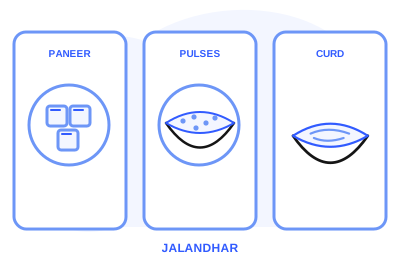
Jalandhar makes sports goods for the country and has a hockey history to match, so plenty of young people here train hard. ICMR-NIN sets the recommended protein intake for healthy adults at 0.83 g per kg of body weight a day, about 54 g for a 65 kg person, and people doing regular strength training often aim higher. Its 2024 guidelines also advise getting good-quality protein from combinations of foods, such as cereals with pulses, and avoiding protein supplements to build muscle mass.
- Soya chunks or soyabean curry for the most plant protein per bowl.
- Paneer, at 18.9 g of protein per 100 g in IFCT, in a tikka or bhurji rather than a cream gravy.
- Eggs, about 6.7 g of protein each in INDB, boiled or as bhurji.
- Curd, lassi and milk through the day; a tall glass of salted lassi has 5.7 g of protein for about 80 kcal.
- Two bowls of pulses, as above, with rotis rather than rice-only meals.
Work out your own number with the protein intake calculator, and see our guide to protein in Indian food for more dishes.
Blood sugar and iron: two Jalandhar numbers worth knowing
With 17.8% of women and 14.8% of men in Jalandhar district showing high blood sugar or taking medicine for it in NFHS-5, it makes sense to watch sugar. ICMR-NIN suggests adults avoid sugar or limit it to 20–25 g a day, which a sweet lassi and a dessert can use up between them. With 57% of women anaemic, iron matters too: eat pulses and greens daily, follow meals with a vitamin C-rich fruit such as guava or orange, and keep tea and coffee at least an hour away from meals, as ICMR-NIN advises. Testing and any treatment are for your doctor.
A vegetarian Jalandhar day at about 1,660 kcal
This day uses the INDB figures above and suits someone aiming to lose about 0.5–1 kg a week. Set your own calorie target with the calorie deficit calculator, and see calories in Indian food for anything not listed here.
| Meal | What | Calories | Protein |
|---|---|---|---|
| Breakfast | 1 paneer paratha, cucumber raita | about 314 kcal | 13.0 g |
| Mid-morning | A cup of chai, an hour after breakfast | about 34 kcal | 0.8 g |
| Lunch | 2 chapatis, maah di dal, aloo gobhi, salad | about 515 kcal | 15.0 g |
| Afternoon | Salted lassi | about 80 kcal | 5.7 g |
| Dinner | 2 chapatis, soyabean curry, palak paneer | about 571 kcal | 28.6 g |
| Bedtime | A 200 g glass of cow milk | about 146 kcal | 6.5 g |
If you eat chicken, swap the soyabean curry for a bowl of chicken curry (about 320 kcal and 29.2 g of protein in INDB) and the day rises to about 1,780 kcal and 86 g of protein.
For coaching in the city, see online personal training in Jalandhar, group classes in Jalandhar and personal gym training in Jalandhar. Before you join anywhere, compare gym fees in Jalandhar and personal trainer fees in Jalandhar.
Sources
- IFCT 2017: Indian Food Composition Tables, National Institute of Nutrition (ICMR)
- Indian Nutrient Databank: open recipe nutrient data, Jaacks Lab, University of Edinburgh
- Dietary Guidelines for Indians 2024, National Institute of Nutrition (ICMR)
- NFHS-5 Punjab: state and district key indicators, including Jalandhar (2019–21), Ministry of Health and Family Welfare, IIPS; via OpenCity
- Punjab's role in potato and seed production: a closer look at Kapurthala and Jalandhar districts (revised March 2026), Indian Potato
Written by the MakeMyFitness team from the sources above. First published , last updated . Spotted something out of date? Tell us at hello@makemyfitness.com.