How a Kerala diet plan for weight loss works
Kerala food is easy to adapt for fat loss because so much of it is already built from fish, vegetables, pulses and rice. You don't have to switch to oats and salads. What usually needs changing is the amount of rice, the amount of coconut in each dish, the oil in the pan and the tea-shop snacks. This guide gives real calorie and protein figures for Kerala dishes and a 7-day chart at about 1,500 kcal, in vegetarian and non-vegetarian versions.
The figures come from the Indian Nutrient Databank (INDB), a peer-reviewed database of 1,014 Indian recipes built mainly on ICMR-NIN data (Vijayakumar et al., 2024); the Indian Food Composition Tables 2017 (IFCT) for raw fish, coconut, tapioca and bananas; and USDA FoodData Central where IFCT has no entry. Targets come from the ICMR-NIN Dietary Guidelines for Indians (2024). Our lead coach, Kumar Abhishek, is a certified Human Performance Nutritionist (K11). This is guidance for healthy adults, not medical advice.
The Kerala plate: what helps fat loss and what works against it

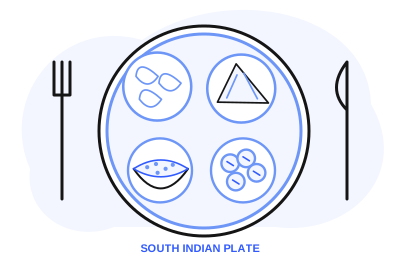
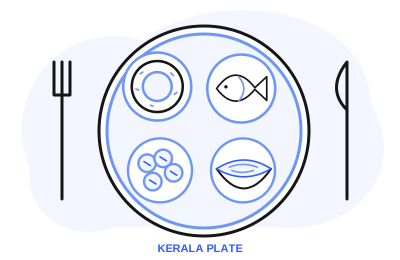
A typical Kerala day might be puttu and kadala or appam and stew for breakfast, then rice with a fish curry or sambar, a thoran, avial or a pachadi and moru at lunch, and a lighter dinner of kanji, chapati or dosa. Much of that helps fat loss. Fish is lean and protein-rich: IFCT lists ayala (Indian mackerel) at 101 kcal and 21.5 g protein per 100 g raw and karimeen at 92 kcal and 19.7 g, and notes that fish provide omega-3 fats. Thorans put a vegetable on the plate at almost every meal. Kadala, cherupayar and parippu bring pulses into breakfast, which much of India skips.
What adds up is coconut in nearly every dish and coconut oil in the pan. IFCT puts fresh coconut at 409 kcal per 100 g, almost all of it from fat, with only 3.8 g protein. A 20 g handful in a thoran adds about 82 kcal. Coconut oil is about 45 kcal a teaspoon (USDA: 892 kcal per 100 g), and ICMR-NIN lists it with ghee and palm oil as a source of saturated fat. Its guidelines suggest about 20 g of cooking oil and other visible fat a day for sedentary women and 30 g for sedentary men. Add rice at two or three meals, sweet chaya with pazham pori or parippu vada in the evening, banana chips, and porotta with beef fry when eating out, and a Kerala day can pass 2,000 kcal without feeling like a feast.
Calories and protein in 24 Kerala foods
Cooked dishes use the INDB recipe serving (one puttu, one bowl), with the main ingredients in brackets so you can compare with your own kitchen. Raw ingredients are per 100 g from IFCT. Homemade versions vary with the coconut and oil used, so read these as a guide rather than exact values. For more dishes, see calories in Indian food and protein in Indian food.
| Food | Serving (what's in it) | Calories (kcal) | Protein (g) |
|---|---|---|---|
| Rice puttu | 1 puttu (60 g rice flour, 20 g dry coconut) | 344 | 5.3 |
| Kadala curry | 1 bowl (30 g dry black chana) | 169 | 6.8 |
| Idli | 4 small idlis | 138 | 4.6 |
| Plain dosa | 1 dosa | 138 | 3.7 |
| Boiled rice (matta or white) | 1 plate (100 g raw parboiled rice) | 352 | 7.8 |
| Sambar | 1 bowl (25 g toor dal, 15 g coconut) | 249 | 8.6 |
| Rasam | 1 bowl | 104 | 4.4 |
| Avial | 1 bowl (40 g dry coconut, 1 tsp coconut oil) | 417 | 8.2 |
| Beans thoran | 1 bowl (100 g beans, 20 g coconut) | 197 | 3.9 |
| Raw papaya thoran | 1 bowl | 199 | 2.3 |
| Cabbage-carrot thoran | 1 bowl | 213 | 3.6 |
| Ayala (mackerel) curry with coconut | 1 dish (120 g fish, 20 g coconut) | 281 | 28.2 |
| Chemmeen (prawn) curry with coconut | 1 bowl (150 g prawns) | 313 | 24.4 |
| Chicken stew | 1 bowl (with coconut milk and potato) | 379 | 21.4 |
| Mutta (egg) curry | 1 bowl (1 egg) | 178 | 8.2 |
| Moru (thinned salted curd) | 1 glass (100 g curd) | 80 | 5.7 |
| Paal payasam-style rice kheer | 1 bowl (250 ml milk, 1.5 tbsp sugar) | 301 | 9.2 |
| Mathi (oil sardine), raw | 100 g (IFCT) | 152 | 17.9 |
| Ayala (mackerel), raw | 100 g (IFCT) | 101 | 21.5 |
| Karimeen (pearl spot), raw | 100 g (IFCT) | 92 | 19.7 |
| Kappa (tapioca), raw | 100 g (IFCT; USDA) | 80 to 160 | 1.0 to 1.4 |
| Fresh coconut, grated | 100 g (IFCT) | 409 | 3.8 |
| Coconut oil | 1 teaspoon, 5 g (USDA) | 45 | 0 |
| Poovan banana, ripe | 100 g (IFCT) | 106 | 1.5 |
Kerala swaps that keep the flavour
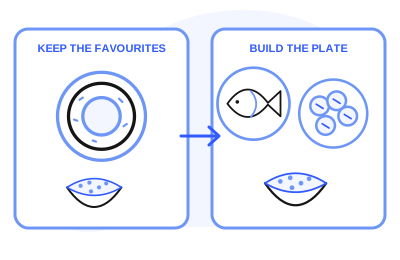
- Half a puttu with a full bowl of kadala. A whole puttu is about 344 kcal with 5.3 g protein. Half a puttu with kadala curry is about 341 kcal with 9.5 g protein, so more of the plate is pulses.
- Measure the coconut. Keep grated coconut in thoran to a tablespoon or two per serving instead of a handful, and use half a bowl of avial (about 209 kcal) rather than a full one.
- Coconut oil by the teaspoon. Keep coconut oil for flavour. Measure it, and use 1 to 2 teaspoons per dish, not a ladle. Every teaspoon is about 45 kcal.
- Fish curry over fish fry. Ayala curry with coconut gives 28 g protein for about 281 kcal a serving. Have fry as an occasional treat, shallow-fried with a measured spoon of oil.
- Kappa or rice, not both. If kappa is on the plate with meen curry, skip the rice at that meal. IFCT and USDA put 150 g of raw tapioca at about 120 to 240 kcal.
- Chapati or dosa for dinner instead of porotta. One chapati is about 73 kcal with 2.1 g protein (INDB).
- Moru instead of sweet chaya. A glass of salted moru made from 100 g curd is about 80 kcal with 5.7 g protein. If you want tea, cut the sugar gradually.
- Keep payasam for the sadya. A bowl is about 301 kcal (INDB), and ICMR-NIN suggests limiting added sugar to 25 g a day. Enjoy it at Onam, Vishu and weddings rather than every weekend.
- Matta rice is a good choice, in a smaller portion. Kerala's red matta is parboiled rice, and ICMR-NIN advises that at least half your cereals be whole or minimally polished grains. It's still rice: half a plate at a meal is about 176 kcal.
Calorie and protein targets for a Kerala diet plan
Use the calorie deficit calculator to set your own number. ICMR-NIN describes typical weight-loss diets as running a 500 to 750 kcal a day deficit, says not to cut more than 40% of your daily energy needs, and says weight-reduction diets should not go below 1,000 kcal a day. Its protein RDA is 0.83 g per kg of body weight a day, about 54 g for a 65 kg adult, and it suggests about 15% of calories from protein during a deficit to protect muscle (about 56 g at 1,500 kcal). People who strength train usually do better at 1.4 to 2.0 g per kg, according to the International Society of Sports Nutrition. Check yours with the protein intake calculator. For non-vegetarians, ICMR-NIN suggests 700 to 900 g a week of fish, poultry or lean meat. That's 100 to 130 g a day, about one fish curry or chicken serving daily, which most Kerala households already eat.
7-day Kerala diet chart for weight loss (vegetarian)
| Day | Breakfast | Lunch | Evening and dinner | Day total |
|---|---|---|---|---|
| Day 1 | Half a puttu, kadala curry | Half plate rice, 1 bowl sambar, sprouts salad, moru (100 g curd, thinned) | 1 banana, 2 chapatis, moong dal, 100 g curd | About 1,450 kcal, 52 g protein |
| Day 2 | 4 small idlis, 1 bowl sambar | Half plate rice, half bowl avial, cherupayar (30 g dry, 1 tsp coconut oil), 150 g curd | 1 guava, 2 chapatis, kadala curry, 100 g curd | About 1,480 kcal, 52 g protein |
| Day 3 | Rava upma, 150 g curd | Half plate rice, 1 bowl sambar, beans thoran, moru (100 g curd, thinned) | Sprouts salad, 2 chapatis, 50 g paneer, cabbage and peas stir-fry | About 1,500 kcal, 58 g protein |
| Day 4 | Half a puttu, cherupayar (30 g dry, 1 tsp coconut oil), 100 g curd | Half plate rice, rasam, raw papaya thoran, 200 g curd | 1 banana, 2 chapatis, moong dal, 100 g curd | About 1,490 kcal, 50 g protein |
| Day 5 | 2 dosas, half bowl sambar, 100 g curd | Half plate rice, kadala curry, cabbage thoran, moru (100 g curd, thinned) | 150 g papaya, 2 chapatis, moong dal, 100 g curd | About 1,550 kcal, 54 g protein |
| Day 6 | 4 small idlis, kadala curry | Half plate rice, 1 bowl sambar, beans thoran, 150 g curd | Boiled kadala (30 g dry, 1 tsp coconut oil), 2 chapatis, moong dal | About 1,510 kcal, 53 g protein |
| Day 7 | 1 puttu, moong dal | Half plate rice, half bowl avial, rasam, moru (100 g curd, thinned) | 1 guava, 2 chapatis, 50 g paneer, cabbage and peas stir-fry | About 1,560 kcal, 55 g protein |
Vegetarian Kerala food is lower in protein: this chart gives 50 to 58 g a day, close to the RDA for a 60 to 70 kg adult. Heavier people and anyone strength training should add curd, paneer or an extra serving of cherupayar or kadala.
7-day Kerala diet chart for weight loss (non-vegetarian)
| Day | Breakfast | Lunch | Evening and dinner | Day total |
|---|---|---|---|---|
| Day 1 | Half a puttu, kadala curry | Half plate rice, ayala (mackerel) curry with coconut, cabbage thoran, moru (100 g curd, thinned) | 2 chapatis, mutta curry (1 egg) | About 1,490 kcal, 67 g protein |
| Day 2 | 4 small idlis, 1 bowl sambar, 1 boiled egg | Half plate rice, chicken curry, beans thoran | 1 guava, 1 dosa, moong dal | About 1,530 kcal, 73 g protein |
| Day 3 | 1 dosa, mutta curry (1 egg) | Half plate rice, ayala (mackerel) curry with coconut, raw papaya thoran, moru (100 g curd, thinned) | Boiled kadala (30 g dry, 1 tsp coconut oil), 2 chapatis, moong dal | About 1,540 kcal, 72 g protein |
| Day 4 | Half a puttu, cherupayar (30 g dry, 1 tsp coconut oil), 1 boiled egg | Half plate rice, chemmeen (prawn) curry with coconut, cucumber (100 g), 100 g curd | 150 g papaya, 1 chapati, chicken stew | About 1,500 kcal, 76 g protein |
| Day 5 | Rava upma, 2 boiled eggs | Half plate rice, ayala (mackerel) curry with coconut, half bowl sambar, moru (100 g curd, thinned) | 2 dosas, kadala curry | About 1,470 kcal, 76 g protein |
| Day 6 | 4 small idlis, mutta curry (1 egg) | Half plate rice, chicken curry, cabbage thoran | Sprouts salad, 1 chapati, ayala (mackerel) curry with coconut | About 1,530 kcal, 88 g protein |
| Day 7 | Half a puttu, kadala curry, 1 boiled egg | Half plate rice, 1 bowl sambar, cucumber (100 g), moru (100 g curd, thinned) | 1 guava, 2 chapatis, chicken stew | About 1,560 kcal, 65 g protein |
With fish, prawns, chicken and eggs, the non-vegetarian chart reaches 65 to 88 g of protein a day at the same calories, more than enough for most people who are also lifting weights.
Onam, Vishu and the sadya
A sadya on a banana leaf, with rice, parippu, sambar, avial, thoran, olan, pachadis, pickles, banana chips, sharkara varatti and two or three payasams, is one of the largest meals in Indian food. There's no need to skip it. On the day, take a normal portion of rice, go back for the vegetables rather than the rice, and choose the one payasam you like best. Eat lightly at the other meals that day, and go back to the plan the next morning. One sadya won't undo weeks of steady eating. Christmas cake, Malabar biryani at Eid and wedding feasts work the same way. For eating out in the city, see the Kochi healthy food guide.
Why strength training matters on a Kerala diet plan
Eating less brings weight down, but not all of it is fat. A review in Advances in Nutrition (Cava et al., 2017) found that in people with overweight or obesity, about 20 to 30% of the weight lost by dieting is fat-free mass, and that resistance exercise is an effective way to limit or even prevent that muscle loss. ICMR-NIN also recommends muscle-strengthening work on at least two days a week and says regular strength training is necessary to maintain muscle. Two or three 30-minute sessions a week are enough to start, such as our home workout for weight loss. See how we coach fat loss.
How quickly weight comes off
The NHS suggests aiming for 0.5 to 1 kg a week, and ICMR-NIN considers half a kilo a week safe and advises against rapid weight-loss methods. Early drops are partly water, and some weeks the scale won't move even when your eating has been on track. Compare weekly averages of a few morning weigh-ins, and check your waist each month. If nothing has moved for three weeks, take 150 to 200 kcal off the day, usually from rice, coconut or oil.
Sources
- Dietary Guidelines for Indians (2024), ICMR-National Institute of Nutrition (PDF hosted by Nutrition Connect)
- Indian Food Composition Tables 2017, ICMR-National Institute of Nutrition
- Development of an Indian Food Composition Database (Vijayakumar et al., 2024), Current Developments in Nutrition
- Indian Nutrient Databank (INDB): recipe data and code, Jaacks Lab, University of Edinburgh (GitHub)
- FoodData Central: Oil, coconut (FDC ID 171412), US Department of Agriculture
- FoodData Central: Cassava, raw (FDC ID 169985), US Department of Agriculture
- FoodData Central: Yogurt, plain, whole milk (FDC ID 171284), US Department of Agriculture
- Overweight and obesity in adults, NHS
- Preserving Healthy Muscle during Weight Loss (Cava, Yeat and Mittendorfer, 2017), Advances in Nutrition
- International Society of Sports Nutrition position stand: protein and exercise (Jäger et al., 2017), Journal of the International Society of Sports Nutrition
Written by the MakeMyFitness team from the sources above. First published , last updated . Spotted something out of date? Tell us at hello@makemyfitness.com.