Myth
Always stretch before you exercise.
Fact
Long, static holds just before training can briefly reduce power. A moving warm-up works better beforehand; save longer stretches for afterwards or a separate session.
Move freely. Feel looser every day.
Long hours at a desk, on the sofa or in the car leave hips, backs and shoulders stiff. Mobility training restores how far and how well your joints move, and flexibility work helps your muscles lengthen comfortably. A few focused sessions a week, guided live by your coach, can change how you feel getting out of bed.
The essentials
Four principles do most of the work. Everything your coach plans comes back to them.
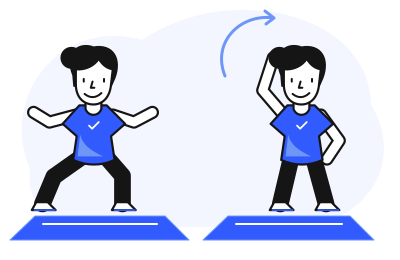
Flexibility is how far a muscle can lengthen. Mobility is how well you can control a joint through its range. Moving freely takes both, and your coach trains each.
Ten minutes most days beats one long session a week. Your body adapts to regular, gentle stretching over weeks, not in a single sitting.
Getting stronger at the end of your range of motion helps you keep the flexibility you gain, and makes your joints more resilient.
A stretch should feel like mild tension you can breathe through. Sharp pain or pinching means ease off; your coach adjusts the position.
How we coach it
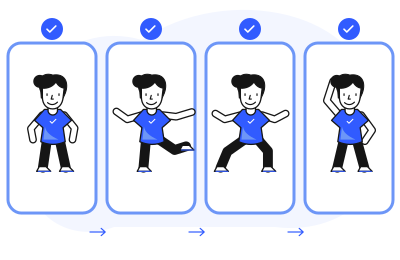
A clear path for your first few months. Your coach adjusts every stage to how you're progressing.
A typical week
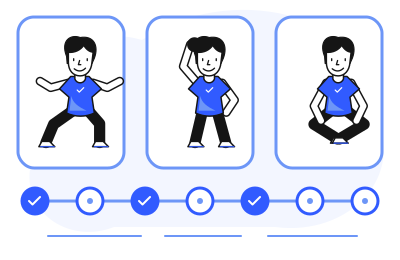
A starting point, not a rulebook. Your coach shapes it around your schedule, your energy and your experience.
Hips and lower back
45 min, coached live
Desk breaks
Two minutes every hour
Shoulders and upper back
45 min, coached live
Your 10-minute routine
Morning or before bed
Full-body flow
45 min, coached live
A long walk
Easy pace, fresh air
Easy day
Slow breathing, a gentle stretch
Coached sessions are live, one-on-one video sessions with your coach.
Myths and facts
Bad advice is everywhere. Here's what the evidence and experience actually say.
Myth
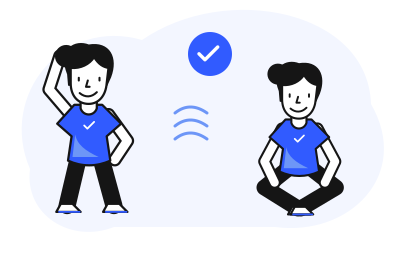
Always stretch before you exercise.
Fact
Long, static holds just before training can briefly reduce power. A moving warm-up works better beforehand; save longer stretches for afterwards or a separate session.
Myth
Some people just aren't flexible.
Fact
Everyone starts from a different place, but nearly everyone improves with regular practice. Progress is gradual and steady.
Myth
Stretching has to hurt to work.
Fact
Pain makes your muscles tense up to protect you. Gentle, consistent tension is what actually improves your range.
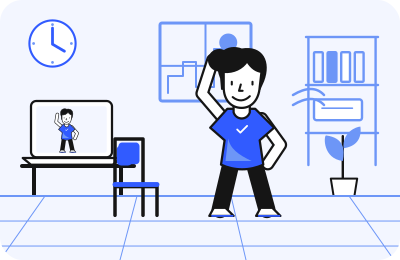
Between sessions
Stiffness builds up through the day. A few simple habits stop it from setting in.
Stand, walk or do a quick stretch every 30–60 minutes. Your hips and back will thank you by evening.
Slow, deep breathing helps your muscles relax, so you can ease further into each stretch.
A few minutes of easy movement makes your muscles more pliable and stretching far more comfortable.
Track what matters
These are the signs your coach checks with you, so you can see the change even on days the mirror doesn't.
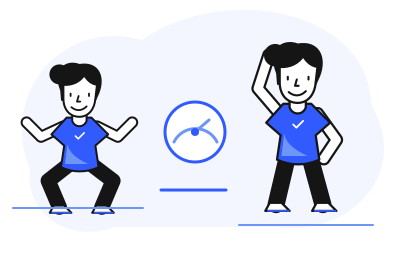
How far you can reach towards your feet with straight legs, checked every few weeks.
Sitting into a deep squat with your heels down and your chest up, for longer.
Raising both arms fully overhead without arching your lower back.
Less morning stiffness, easier getting out of the car and fewer aches after a long day at a desk.
How to train for it
Every program is coached live on video. Pick the one that suits where and how you like to train.
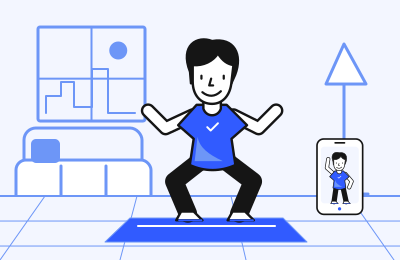
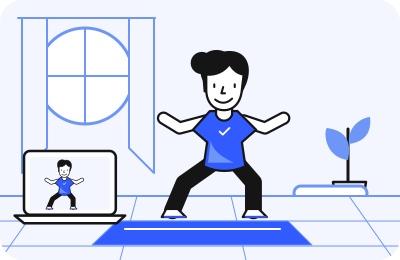
Guided mobility and stretching one-on-one, in your own space.
From ₹899 / session
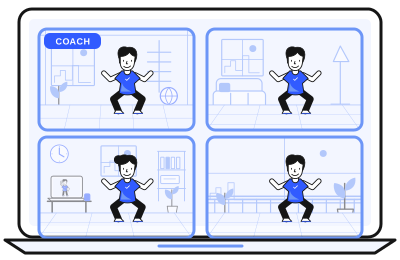
Mobility and stretch classes: a relaxed, affordable way to keep the habit going.
From ₹499 / person
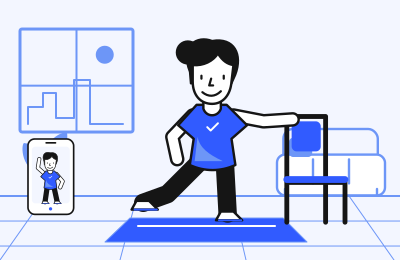
If stiffness comes from an old injury, careful work alongside your physio's advice.
From ₹1,299 / session
Book a session
We’ll call to confirm your coach, talk through your goals and send you a private video link.
Straight answers before you start.
Many people feel looser within a couple of weeks. Lasting gains in range of motion usually take six to eight weeks of regular practice.