What a Gujarati diet plan for weight loss looks like
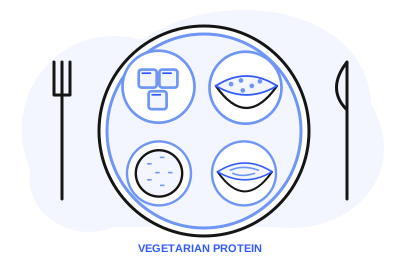
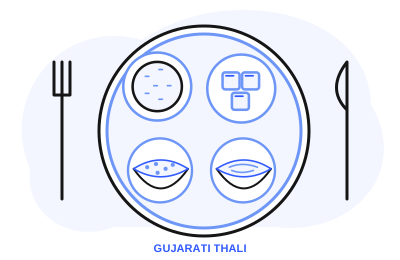
A Gujarati diet plan for weight loss doesn't need oats, quinoa or imported salads. The everyday Gujarati thali already has most of what fat loss needs: rotli and rotla made from whole grains, a pulse at almost every meal, a vegetable shaak, and dahi or chaas on the side. What tips it into a surplus is usually the extras: a spoon of ghee on every rotli, sugar or jaggery in the dal, kadhi and shaak, a plate of fafda or gathiya with morning tea, and a sweet after lunch.
This guide keeps the food recognisable and changes the amounts. Every calorie and protein figure below comes from the Indian Food Composition Tables 2017 (IFCT, ICMR-National Institute of Nutrition), the open Indian Nutrient Databank (INDB) of 1,014 recipes calculated from those tables, or a named recipe source. Where recipes vary a lot, you'll see a range rather than a single number.
How the traditional Gujarati thali helps and hurts fat loss

Judged against the ICMR-NIN Dietary Guidelines for Indians (2024), the Gujarati vegetarian plate starts with real strengths. The guidelines ask for whole grains and millets to make up a good share of cereals (20–30% of an adult's cereals by raw weight from millets), a pulse with every meal, plenty of vegetables, and milk or curd daily. Bajra rotla, jowar rotla, toor dal, mag, kadhi and chaas tick those boxes without any changes.
- Helps: pulses at every meal. Dal, mag (whole moong), chana and besan dishes such as khaman and pudla supply most of the protein in a vegetarian Gujarati day.
- Helps: millets. Bajra and jowar rotla are filling and, by IFCT 2017 values, carry about 10–11 g of protein per 100 g of grain, similar to wheat atta.
- Helps: chaas. A tall glass of salted buttermilk is about 80 kcal with 5.7 g of protein in INDB, a far lighter drink than sweet tea or a soft drink.
- Hurts: farsan. Fafda, gathiya, sev, bhajiya and fried muthia are deep-fried in oil. The 2024 guidelines specifically list deep-fried snacks as foods to swap for salads, sprouts and steamed snacks.
- Hurts: added sugar. Many Gujarati households sweeten dal, kadhi and even shaak. The guidelines cap added sugar at less than 5% of daily energy, which on 1,500 kcal is about 75 kcal, or under 4 level teaspoons of sugar for the whole day.
- Hurts: ghee and oil by habit. The guidelines suggest 20 g of visible fat a day for a sedentary woman and 30 g for a sedentary man, and limiting ghee or butter to 1–2 teaspoons a day. A teaspoon is 5 g and about 45 kcal, so ghee on four rotlis can use up a day's allowance before the tadka.
- Hurts: low protein. A typical vegetarian thali leans on cereal. Without dahi, paneer, sprouts or a second pulse serving, many people land well below the protein that helps protect muscle while dieting.
Dairy is rarely the problem. National Dairy Development Board figures, drawn from the government's Basic Animal Husbandry Statistics, put milk availability in Gujarat at about 700 g per person a day in 2023-24, against 471 g for India as a whole. Milk, dahi and chaas are cheap protein. The issue is when that milk becomes ghee, basundi or shrikhand.
Calories and protein in Gujarati food: 20 common dishes
These are typical home servings. INDB values come from standard Indian cookery-manual recipes; values marked “IFCT calc” are worked out from IFCT 2017 raw-ingredient figures for the stated amounts, with 1 teaspoon of ghee or oil counted as 5 g (about 45 kcal). Restaurant and festive versions usually carry more oil and sugar. For a wider list, see our guide to calories in Indian food.
| Dish | Serving | Calories | Protein | Source |
|---|---|---|---|---|
| Khaman dhokla | 2 pieces | about 173 kcal | 10.8 g | INDB |
| Methi thepla | 1 thepla | 70 to 135 kcal | about 4 g | BHF (no oil) to INDB methi paratha |
| Rotli (phulka) | 1 rotli | about 73 kcal | 2.1 g | INDB |
| Bajra rotlo | 1, from 40 g flour, no ghee | about 139 kcal | 4.4 g | IFCT calc |
| Jowar rotlo | 1, from 40 g flour, no ghee | about 134 kcal | 4.0 g | IFCT calc |
| Gujarati toor dal (khatti-meethi) | 1 katori: 30 g raw dal, 1 tsp ghee, 5 g jaggery | about 162 kcal | 6.6 g | IFCT calc |
| Gujarati kadhi | 1 katori: 100 g dahi, 10 g besan, 1 tsp ghee, 5 g jaggery | about 168 kcal | 5.5 g | IFCT calc |
| Moong dal khichdi | 30 g rice + 20 g moong dal + 1 tsp ghee, up to 1 INDB serving | 217 to 327 kcal | 7 to 10 g | IFCT calc, INDB |
| Mag (whole moong) with vaghar | 1 bowl | about 143 kcal | 7.3 g | INDB |
| Fangavela mag (sprouted moong) salad | 1 bowl | about 77 kcal | 4.7 g | INDB |
| Besan pudla | 2 small, from 40 g besan, 1 tsp oil | about 177 kcal | 8.6 g | IFCT calc |
| Bataka poha | 1 bowl | about 177 kcal | 4.8 g | INDB (vegetable poha) |
| Ringan no olo (baingan bharta) | 1 bowl | about 212 kcal | 4.5 g | INDB |
| Bharela ringan (stuffed brinjal) | 2 small brinjals | about 103 kcal | 1.6 g | INDB |
| Bhinda nu shaak | 1 bowl | about 184 kcal | 1.8 g | INDB (okra fry) |
| Kobi-vatana nu shaak | 1 bowl | about 106 kcal | 3.2 g | INDB (cabbage and peas) |
| Chaas | 1 tall glass | about 80 kcal | 5.7 g | INDB (salted lassi) |
| Vedmi (puran poli) | 1 piece | about 196 kcal | 5.1 g | INDB |
| Paneer | 50 g | about 153 kcal | 9.4 g | IFCT 2017 |
| Roasted chana | 30 g | about 86 kcal | 5.6 g | IFCT (whole Bengal gram) |
Gujarati food swaps that keep the taste
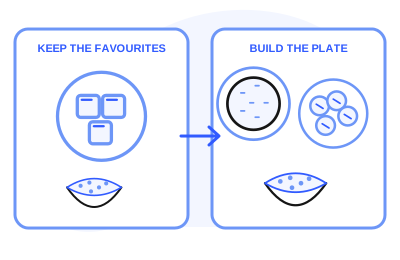
The aim is a thali your family would still recognise. Most of these swaps cut 50 to 200 kcal each, and three or four of them together create most of a day's deficit without anyone eating “diet food”.
| Instead of | Try | Why it helps |
|---|---|---|
| Fafda or gathiya with tea | 2 pieces of khaman, or 30 g roasted chana | Steamed or roasted rather than deep-fried, with 5–11 g of protein |
| Ghee on every rotli | Dry phulka, with 1 tsp ghee in the dal | Each skipped teaspoon saves about 45 kcal |
| Sugar or jaggery by habit in dal, kadhi and shaak | Halve it for two weeks, then halve again; add kokum, lemon or tomato for tang | Keeps added sugar under the guidelines’ 5% of energy |
| Two thick theplas with oil | Two thin theplas with besan and bajra in the dough, cooked dry, plus dahi | BHF’s low-oil thepla is about 70 kcal each |
| White rice with every meal | Bajra or jowar rotla at one meal, a small katori of rice at another | Adds millets, as the 2024 guidelines advise |
| Shrikhand or basundi after lunch | Plain dahi with fruit; keep sweets for festivals | Saves a few hundred kcal and keeps the protein |
| Sev on top of everything | Roasted peanuts or sprouts as the crunch | Same crunch, more protein, less fried flour |
How much protein a Gujarati vegetarian diet needs while losing weight
The ICMR-NIN 2024 guidelines set the recommended dietary allowance for protein at 0.83 g per kg of body weight a day for healthy adults, which is about 54 g for a 65 kg person. They add that while dieting with a typical deficit of 500–750 kcal a day, getting about 15% of energy from protein may help preserve muscle. On 1,500 kcal, 15% is about 56 g.
A 2017 review in *Advances in Nutrition* (Cava and colleagues) suggests a little more during weight loss: 1.25 to 1.5 times the RDA for people who don't exercise and more than 1.5 times for those who do. Applied to ICMR's 0.83 g, that works out to roughly 1.0 to 1.25 g per kg. The ICMR guidelines note that intakes above about 1.6 g per kg add nothing further to muscle gains from strength training, so there's no need to chase very high numbers. For most Gujarati vegetarians, 55 to 75 g a day is a realistic, food-first target. Work out yours with the protein intake calculator.
- Breakfast: khaman, besan pudla or moong chilla instead of poha alone, plus 100 g dahi.
- Lunch: a full katori of dal or mag, not a few spoons, and a glass of chaas.
- Snack: roasted chana or sprouted moong instead of khakhra or biscuits.
- Dinner: 50 g paneer, a second pulse dish, or khichdi made with more dal than rice.
Our guide to protein in Indian food lists more vegetarian sources, and high-protein vegetarian Indian diet goes deeper on building a whole day.
7-day Gujarati diet chart for weight loss (about 1,500 kcal)
This Gujarati diet chart for weight loss is vegetarian and lands between about 1,450 and 1,510 kcal and 57 to 70 g of protein a day, using the values in the table above. Each day's totals are shown under the day. Chai is 100 ml of milk with no sugar; a teaspoon of sugar adds about 20 kcal. Totals don't include a plate of raw salad (cucumber, tomato, onion, carrot), which you can add freely at lunch and dinner.
| Day | Breakfast | Lunch | Evening | Dinner |
|---|---|---|---|---|
| Monday (about 1,480 kcal, 65 g protein) | 2 pieces khaman, chai | 2 rotli, Gujarati dal, kobi-vatana shaak, chaas | 1 guava, 30 g roasted chana | Moong dal khichdi, kadhi, sprouted moong salad; 200 ml milk at bedtime |
| Tuesday (about 1,510 kcal, 57 g) | 2 methi thepla, 100 g dahi, chai | 1 bajra rotlo, mag, bharela ringan, chaas | 1 apple, 30 g roasted chana | 2 rotli, paneer bhurji (50 g paneer, 1 tsp oil), kobi-vatana shaak |
| Wednesday (about 1,450 kcal, 60 g) | Bataka poha, 100 g dahi, chai | 2 rotli, Gujarati dal, bhinda nu shaak, chaas | 200 g papaya, 30 g roasted chana | 2 besan pudla with 50 g paneer, cucumber raita |
| Thursday (about 1,510 kcal, 70 g) | 2 besan pudla, 100 g dahi, chai | 1 rotli, small katori rice (30 g raw), Gujarati dal, bharela ringan, chaas | 1 guava, sprouted moong chaat (30 g dry) | 1 bajra rotlo, mag, raita, 50 g paneer |
| Friday (about 1,500 kcal, 63 g) | 2 pieces khaman, chai | 2 rotli, kadhi, mag, chaas | 1 banana, 30 g roasted chana | Moong dal khichdi, paneer bhurji, kobi-vatana shaak |
| Saturday (about 1,500 kcal, 67 g) | 2 pieces khaman, 100 g dahi, chai | 2 rotli, Gujarati dal, kobi-vatana shaak, chaas | 1 apple, 30 g roasted chana | 1 jowar rotlo, mag, 50 g paneer, 100 g dahi |
| Sunday (about 1,510 kcal, 61 g) | 2 methi thepla, 100 g dahi, chai | 1 rotli, Gujarati dal, kobi-vatana shaak, raita | 200 g papaya, sprouted moong salad | Moong dal khichdi, kadhi, 50 g paneer |
- Eat eggs? Swap the 50 g paneer bhurji on Tuesday or Friday for a 2-egg bhurji (about 218 kcal and 14 g protein, INDB): the day stays near 1,520 kcal with about 5 g more protein.
- Need more food? Many men and very active women will need more than 1,500 kcal. Add one rotli (about 73 kcal) or a second katori of dal (about 160 kcal) rather than farsan.
- Fasting days: if you keep upvas, plan it as a lighter day with fruit, dahi, peanuts and rajgira, and avoid making up for it with fried sabudana vada.
- Printing it: this chart is designed to be saved or printed straight from the page, so you don't need a separate PDF.
How much weight you can expect to lose on a Gujarati diet
The ICMR-NIN guidelines say weight loss should be gradual, that a loss of half a kilogram a week is considered safe, and that weight-reduction diets should not drop below 1,000 kcal a day or cut more than 40% of daily energy needs. The US Centers for Disease Control and Prevention similarly notes that people who lose about 1 to 2 pounds (roughly 0.5 to 0.9 kg) a week are more likely to keep it off.
So a realistic Gujarati diet plan for weight loss in one month is about 2 to 4 kg, and less for some people, with a bigger drop in the first week from water. Your result depends on your starting weight, how active you are and how consistently you follow the plan. Find your own daily target with the calorie deficit calculator instead of assuming 1,500 is right for you.
Why strength training matters on a Gujarati weight-loss diet
When you eat less, some of the weight you lose is muscle. The 2017 *Advances in Nutrition* review found that fat-free mass makes up about 20–30% of weight lost by people with overweight or obesity, and that resistance exercise can reduce or even prevent that loss of muscle. The ICMR-NIN guidelines say the same in plain words: regular strength training is necessary to maintain muscle mass, and adults should do muscle-strengthening work on at least two days a week.
For a vegetarian Gujarati diet with modest protein, this matters even more. Two or three 30 to 45-minute strength sessions a week, plus a daily walk, make the protein you eat count. Our home workout plan for weight loss is a good place to start, and the fat loss page explains how we structure coaching for it.
Eating Gujarati food in Ahmedabad and away from home
Unlimited thalis, Sunday farsan runs and wedding buffets are where most Gujarati diets come undone. At a thali, fill up on dal, kadhi and shaak, take rotli without ghee, and skip the second round of sweets. At a farsan shop, khaman or khandvi is a better pick than fried fafda. If you live in Ahmedabad, our healthy food guide for Ahmedabad covers local dishes and how to order.
Sources
- Dietary Guidelines for Indians (2024), ICMR-National Institute of Nutrition
- Indian Food Composition Tables 2017 (Longvah et al.), ICMR-National Institute of Nutrition
- Indian Nutrient Databank (INDB): recipe nutrient dataset, Jaacks Lab, University of Edinburgh (GitHub)
- Development of an Indian Food Composition Database (Vijayakumar et al., 2024), Current Developments in Nutrition
- Theplas (Gujarati) recipe, British Heart Foundation
- Per capita availability of milk by states, National Dairy Development Board
- Preserving healthy muscle during weight loss (Cava, Yeat and Mittendorfer, 2017), Advances in Nutrition
- Losing weight, US Centers for Disease Control and Prevention
Written by the MakeMyFitness team from the sources above. First published , last updated . Spotted something out of date? Tell us at hello@makemyfitness.com.