Healthy food in Navi Mumbai starts at the APMC in Vashi and Turbhe
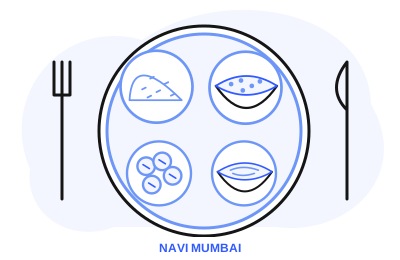
Navi Mumbai is a planned city, and its food supply was planned too. According to Wikipedia's history of the city, planning began in 1971 under CIDCO, and the commissioning of a wholesale agricultural produce market at Turbhe after 1990, with the railway line to Vashi in 1992, set off the city's growth. Today the Mumbai Agricultural Produce Market Committee (APMC) runs five wholesale markets in Sectors 18 and 19 of Vashi and Turbhe, listed on its official site (checked October 2026):
- Grain market: about 412 shops for rice, wheat and pulses.
- Spice market: about 660 stalls for spices, sugar, jaggery and dry fruits.
- Onion-potato market: onions, potatoes and garlic.
- Fruit market: about 1,029 galas.
- Dharamveer Sambhaji Raje Vegetable Sankul: the vegetable market, including leafy greens.
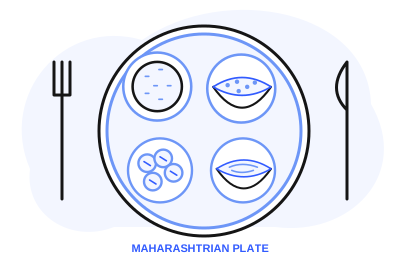
These are wholesale markets, so they matter less as a shopping trip than as a reminder of what is cheap and plentiful here: pulses, millets, seasonal fruit and vegetables. Those are exactly the foods ICMR-NIN's Dietary Guidelines for Indians (2024) build a healthy plate around, with cereals and pulses in a raw ratio of about 3 to 1 for good protein quality.
A high-protein staples list from the APMC grain market
The cheapest high protein food in Navi Mumbai is in the grain market's sacks, not in a supplement shop. The table shows how much protein a kilo of each staple holds by IFCT 2017 values, and what one everyday serving gives you. Values are for the raw, dry food; cooking adds water, not protein.
| Staple | Protein per kg | Typical serving (raw) | Per serving |
|---|---|---|---|
| Peanuts (shengdana) | about 236 g | 15 g, a small handful | 3.5 g protein, 78 kcal |
| Moong, whole | about 225 g | 30 g, one katori usal or sprouts | 6.8 g protein, 88 kcal |
| Toor dal | about 217 g | 30 g, one katori varan | 6.5 g protein, 99 kcal |
| Matki (moth bean) | about 198 g | 40 g, one katori usal | 7.9 g protein, 123 kcal |
| Kala chana | about 188 g | 30 g, roasted or as usal | 5.6 g protein, 86 kcal |
| Bajra | about 110 g | 40 g flour, one bhakri | 4.4 g protein, 139 kcal |
| Jowar | about 100 g | 40 g flour, one bhakri | 4.0 g protein, 134 kcal |
| Rice, milled | about 79 g | 30 g, one small katori cooked | 2.4 g protein, 107 kcal |
Two things stand out. Pulses carry two to three times the protein of grains, so the easiest upgrade to a Navi Mumbai kitchen is cooking usal or dal for both main meals, not just one. And a jowar or bajra bhakri gives more protein and fibre than the same 30–40 g of rice. Sprouting matki or moong at home costs nothing and turns a sack into a week of snacks.
Koli seafood from Navi Mumbai's creek villages
Navi Mumbai was built around old villages. Wikipedia notes that land in 86 villages was acquired for the new city, and many survive as gaothans inside the nodes. Ghansoli Koliwada is listed among the region's Koli settlements, and the urban research group URBZ describes Diwale, near the Belapur creek, as an Agri-Koli village where fishing is still the main occupation, the fish market is the busiest spot, and seafood is distributed to Navi Mumbai and Mumbai. Fresh catch is part of daily life here, and it's the leanest protein you can buy.
Per 100 g raw, IFCT 2017 lists bangda (mackerel) at 21.5 g of protein for 101 kcal, surmai (seer fish) at 22.3 g for 136 kcal, white paplet at 19.0 g for 123 kcal, tiger prawns at 14.2 g for 65 kcal and bombil at 13.5 g for 69 kcal. How you cook it changes the plate far more than which fish you choose:
| Dish | Serving | Calories | Protein | Source |
|---|---|---|---|---|
| Bangda tawa fry | 100 g raw fish, 1 tsp oil | about 146 kcal | 21.5 g | IFCT calc |
| Paplet tawa fry | 100 g raw fish, 1 tsp oil | about 168 kcal | 19.0 g | IFCT calc |
| Surmai tawa fry | 100 g raw fish, 1 tsp oil | about 181 kcal | 22.3 g | IFCT calc |
| Tandoori fish | 1 portion (about 233 g) | about 224 kcal | 26.1 g | INDB |
| Hariyali fish tikka | 1 portion (179 g) | about 268 kcal | 25.0 g | INDB |
| Fish curry | 1 bowl (254 g) | about 282 kcal | 22.3 g | INDB |
| Prawn curry with coconut | 1 bowl (about 285 g) | about 313 kcal | 24.4 g | INDB |
| Fish fry, Indian style | 1 piece (140 g) | about 247 kcal | 30.1 g | FatSecret |
- Tawa and tandoor are the lightest. A teaspoon of oil is about 45 kcal; a thick rava coat and shallow frying can add several times that.
- Curry is a full meal, not a side. A coconut fish curry already has most of a meal's fat in it, so pair it with one bhakri or a small katori of rice.
- Buy small fish too. Bangda and bombil are lean, and a 100 g piece of either is less than 110 kcal raw.
- Plan for the ban. Maharashtra stops mechanised and motorised fishing boats from 1 June to 31 July each monsoon under its marine fishing rules, as the Free Press Journal has reported. Use eggs, chicken, paneer and usal for protein in those weeks.
Eating at Navi Mumbai's malls and node food courts
Each node has its own shopping centre, and Vashi alone has three large malls, Inorbit, Palm Beach Galleria and Raghuleela, according to Wikipedia. Food courts look the same everywhere: biryani, rolls, dosa, Chinese and a tandoor counter. These are the numbers for the common picks.
| Pick | Serving | Calories | Protein | Source |
|---|---|---|---|---|
| Chicken tikka | 200 g | about 300 kcal | 45 g | FatSecret |
| Chicken biryani | 250 g | about 348 kcal | 15.9 g | FatSecret |
| Mutton biryani | 1 plate (208 g) | about 396 kcal | 15.3 g | INDB |
| Vegetable biryani | 1 plate (302 g) | about 527 kcal | 9.5 g | INDB |
| Paneer kathi roll | 1 roll (148 g) | about 424 kcal | 10.3 g | INDB |
| Masala dosa | 1 dosa (about 209 g) | about 345 kcal | 6.9 g | INDB |
The tandoor counter wins by a distance: 200 g of chicken tikka has about three times the protein of a plate of biryani for fewer calories. If you want rice, chicken biryani is the better pick than vegetable biryani, which INDB puts at more calories and under 10 g of protein. Add a raita, skip the cola, and a mall lunch fits a fat-loss day.
Crossing the creek: lunches and late dinners for Navi Mumbai commuters
Many people in Vashi, Nerul, Kharghar and Airoli work across the creek, and the food problem is predictable: a rushed breakfast, an office-canteen lunch and a late dinner ordered on the way home. Three habits fix most of it.
- 1
Protein at breakfast
Two boiled eggs (about 148 kcal and 13.4 g of protein by IFCT values) or a katori of sprouted moong with poha. INDB's vegetable poha alone is about 177 kcal and 4.8 g.
- 2
Build the canteen plate
Two rotis, a full katori of dal (INDB moong dal: 139 kcal, 7.4 g), a dry sabzi and dahi. Add eggs or chicken when the counter has them.
- 3
Snack before the train home
A sprouted moong salad (INDB: 77 kcal, 4.7 g) or a banana with a handful of peanuts keeps you from ordering whatever arrives fastest.
- 4
Cook fish fast at night
A tawa-fried bangda or surmai takes ten minutes and gives over 20 g of protein. Add a bhakri and a bhaji.
If you're considering a healthy food subscription in Navi Mumbai, judge it the same way: it should tell you the calories and protein per meal, and lunch and dinner should each carry 25–30 g of protein. Many tiffins don't, because roti, rice and a potato sabzi are cheaper to make than dal, paneer or chicken.
Sample day: about 1,800 calories from the market and the creek
This day is built from APMC staples and local fish. It comes to about 1,760 kcal and 91 g of protein, which suits many men losing weight steadily and many active women. Check your own target with the calorie deficit calculator.
| Meal | What to eat | Calories | Protein |
|---|---|---|---|
| Breakfast | Vegetable poha, 2 boiled eggs, chai | about 359 kcal | 19.0 g |
| Lunch | 2 chapatis, palak paneer, moong dal | about 515 kcal | 23.5 g |
| Evening | Sprouted moong salad, 1 banana (about 100 g peeled) | about 182 kcal | 5.9 g |
| Dinner | Surmai tawa fry (100 g raw, 1 tsp oil), 2 jowar bhakris, cabbage and peas | about 555 kcal | 35.7 g |
| Bedtime | 200 ml cow's milk | about 146 kcal | 6.5 g |
| Total | about 1,757 kcal | about 91 g |
Values: INDB for poha, chapati, palak paneer (230 kcal, 11.9 g), moong dal, sprouted moong salad, chai and cabbage and peas (106 kcal, 5.4 g); IFCT 2017 for eggs, banana (about 105 kcal per 100 g), surmai, jowar and milk. Vegetarian? Replace the surmai with 100 g of paneer bhurji (about 350 kcal with a teaspoon of oil) and drop one bhakri: the day is still about 1,790 kcal and 83 g of protein. For muscle gain, add a third bhakri at dinner and a handful of peanuts in the evening.
High protein food in Navi Mumbai for vegetarians
Vegetarians in Navi Mumbai can reach their target without fish. ICMR-NIN's allowance for healthy adults is 0.83 g of protein per kg a day, about 54 g for a 65 kg adult, and people who strength train usually need more. Use the APMC staples above as the base: usal or dal twice a day, sprouts as the snack, dahi or chaas with lunch, and paneer, which IFCT lists at 18.9 g of protein per 100 g, a few times a week. Our protein intake calculator gives your own number, and the Maharashtrian diet plan for weight loss has a full 7-day vegetarian chart.
For values on hundreds more foods, see protein in Indian food and calories in Indian food.
Training to match the food
ICMR-NIN treats about half a kilogram a week as a safe rate of weight loss and asks adults to do muscle-strengthening exercise on at least two days a week. Personal Home Training in Navi Mumbai works in any flat from Airoli to Ulwe, and Personal Gym Training in Navi Mumbai brings a coach to your society gym on video. If you ride Palm Beach Road at weekends, see cycling in Navi Mumbai; for runs around Kharghar and the waterfront, see running tracks in Navi Mumbai. Everything else is on online personal training in Navi Mumbai.
Sources
- Indian Food Composition Tables 2017 (Longvah et al.), ICMR-National Institute of Nutrition
- Dietary Guidelines for Indians (2024), ICMR-National Institute of Nutrition
- Indian Nutrient Databank (INDB): recipe nutrient dataset, Jaacks Lab, University of Edinburgh (GitHub)
- Markets (Spice, Grain, Onion-Potato, Fruit and Vegetable markets), Mumbai Agricultural Produce Market Committee
- Navi Mumbai, Wikipedia
- Vashi, Wikipedia
- Koliwada, Wikipedia
- Place making in an urban village (Diwale, Navi Mumbai; 10 July 2021), URBZ
- Fish fry: calories and nutrition (with FatSecret's generic entries for chicken tikka and chicken biryani), FatSecret India
- Maharashtra: annual 61-day fishing ban to come into force from June 1, Free Press Journal
Written by the MakeMyFitness team from the sources above. First published , last updated . Spotted something out of date? Tell us at hello@makemyfitness.com.