Healthy food in Chandigarh: what the Tricity actually eats
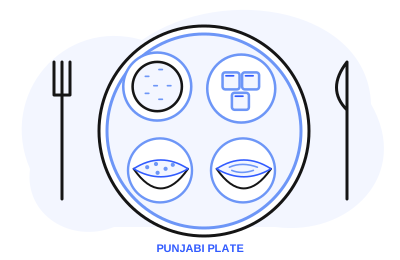
Ask what to eat in Chandigarh, Mohali or Panchkula and you get the same answers: chole kulche in the morning, a paratha with white butter, a tall glass of lassi, tandoori chicken or paneer tikka in the evening, and dal makhani with naan at a dhaba. None of that has to go if you are trying to lose fat or build muscle. Most of these dishes are built on chickpeas, dal, dahi, paneer and grilled meat, which is a good base. What decides the outcome is the bread, the butter and the sugar in the glass.
This page is about eating in the Tricity, at home, at the office canteen in Mohali’s IT parks and at sector market dhabas. For a full week of Punjabi meals at about 1,500 kcal, see our Punjabi diet plan for weight loss. Values below come from the open Indian Nutrient Databank (INDB, 1,014 Indian recipes calculated from ICMR-NIN’s food tables), the Indian Food Composition Tables 2017 (IFCT) and, for a few restaurant-style breads and drinks, the UK government’s CoFID tables, which analyse Indian takeaway foods sold in Britain.
Calories and protein in Chandigarh’s favourite dishes
Servings are the ones defined by each source. INDB recipes come from standard Indian cookery manuals, so a dhaba version finished with butter or cream will run higher. “IFCT calc” means we worked the value out from IFCT 2017 raw-ingredient figures for the amount stated. Where two recipes disagree, you get a range.
| Dish | Serving | Calories | Protein | Source |
|---|---|---|---|---|
| Chole (white chickpea curry) | 1 bowl | 196–244 kcal | 7.3–10.4 g | INDB, two recipes |
| Plain kulcha, no butter | 1, from 60 g maida | about 211 kcal | 6.2 g | IFCT calc |
| Naan | 1 naan (about 53 g) | about 152 kcal | 4.3 g | INDB; CoFID agrees at 285 kcal per 100 g |
| Aloo paratha | 1 paratha | about 191 kcal | 3.5 g | INDB |
| Paneer paratha | 1 paratha | about 224 kcal | 6.8 g | INDB |
| Sweet lassi | 1 tall glass (about 440 ml) | 158–287 kcal | 5.7–11.5 g | INDB recipe to CoFID takeaway samples |
| Salted lassi | 1 tall glass | about 80 kcal | 5.7 g | INDB |
| Dal makhani | 1 bowl | 262–296 kcal | 11.3–11.7 g | INDB, two recipes |
| Rajma | 1 bowl | about 172 kcal | 7.1 g | INDB |
| Paneer tikka | 1 plate with vegetables | about 412 kcal | 22.4 g | INDB |
| Tandoori chicken | 100 g | about 145 kcal | 16.3 g | INDB |
| Chicken curry | 1 bowl | about 320 kcal | 29.2 g | INDB |
| Butter chicken | 1 serving | about 377 kcal | 30.1 g | INDB |
| Egg bhurji | 2 eggs | about 218 kcal | 14.4 g | INDB |
| Cucumber raita | 1 bowl | about 90 kcal | 6.2 g | INDB |
Chole kulche, chole bhature and Amritsari kulcha: choosing your Chandigarh breakfast
In Chandigarh and Mohali the chickpeas are rarely the problem. A bowl of chole is about 196–244 kcal with 7–10 g of protein in INDB, close to a bowl of dal. The plate turns heavy because of what comes with it. A plain kulcha made from 60 g of maida is about 211 kcal by IFCT values before any butter, and every 5 g of ghee brushed on top adds about 45 kcal (butter, which is part water, slightly less). Bhature are deep-fried, so they soak up oil the way a puri does.
The Amritsari kulcha that Tricity kulcha shops copy is, as the Ministry of Tourism’s Amritsar food guide describes it, a stuffed bread filled with spiced potato and served with chole. It is usually cooked crisp and finished with butter, so treat it as a paratha with extra fat rather than as a plain bread. Here is how common breakfast plates compare:
| Breakfast | Calories | Protein |
|---|---|---|
| Chole with 1 plain kulcha, no butter | about 407 kcal | about 13.5 g |
| Chole with 2 kulche, 1 tsp butter or ghee on each | about 708 kcal | about 19.7 g |
| 1 paneer paratha, a bowl of raita, chai | about 348 kcal | about 13.8 g |
| 2-egg bhurji with 2 roti | about 364 kcal | about 18.6 g |
| Chole bhature | No reliable value; deep-fried bread is the main cost | Mostly from the chole |
So chole kulche can be a reasonable breakfast if you stop at one kulcha, say no to the extra butter and add a salted lassi or a bowl of raita for protein. Keep chole bhature and buttered Amritsari kulcha for the weekend outing rather than the Tuesday commute.
Lassi, dahi and chaas in a city ringed by dairy country
Chandigarh itself is a city, not a dairy district: National Dairy Development Board figures for 2023-24 put milk availability in the Union Territory at about 131 g per person a day. But it sits between Punjab, at about 1,245 g, and Haryana, at about 1,105 g, both more than double the national figure of 471 g. Milk, dahi, paneer and lassi are everywhere in the Tricity, and they are your cheapest vegetarian protein.
- Sweet lassi varies more than you’d think. INDB’s home recipe is about 158 kcal for a tall glass of about 440 ml. CoFID’s analysed takeaway samples average 65 kcal per 100 g, which puts the same glass near 287 kcal. Shop lassi with a layer of malai on top will be higher still.
- Salted lassi and chaas are the everyday choice. A tall glass of salted lassi is about 80 kcal with the same 5.7 g of protein as INDB’s sweet version. The ICMR-NIN Dietary Guidelines for Indians (2024) list buttermilk as a swap for sugary drinks.
- Paneer is dense protein, and dense calories. IFCT 2017 gives paneer 18.9 g of protein and about 305 kcal per 100 g, so 100 g of paneer tikka filling is a strong protein serving, and a shahi paneer gravy is a calorie serving.
- Dahi and raita fill gaps. A bowl of cucumber raita is about 90 kcal with 6.2 g of protein in INDB. Order one with every dhaba meal.
How to order at a dhaba or sector market in Chandigarh and Mohali
Whether you’re eating in Sector 17, Sector 35, the 3B2 market in Mohali or a dhaba on the Zirakpur road, the menu is the same Punjabi menu, and the same few swaps do most of the work. The ICMR-NIN guidelines suggest about 20 g of visible fat a day for a sedentary woman and 30 g for a sedentary man; one buttered dhaba meal can use all of it.
| Instead of | Order | Why |
|---|---|---|
| Butter naan or laccha paratha | Tandoori roti or a plain naan, no butter | A plain naan is about 152 kcal; each 5 g of ghee adds about 45 kcal |
| Butter chicken | Tandoori chicken or chicken curry | Tandoori chicken is about 145 kcal and 16 g of protein per 100 g |
| Shahi paneer or paneer makhani | Paneer tikka, shared, or palak paneer | Paneer tikka gives 22 g of protein per plate |
| Dal makhani with cream on top | Dal makhani without the cream, or yellow dal | Saves the cream; dal makhani already carries 11–12 g of protein |
| Sweet lassi with malai | Salted lassi or chaas | About 80 kcal against up to 287 kcal |
| Chole bhature | Chole with one plain kulcha or two roti | Keeps the chickpea protein, drops the deep-fried bread |
Two habits help more than any single swap. Start with a salad and a raita, and order mains for the table, not one each. The ICMR-NIN guidelines also ask people to avoid reheated and reused frying oil, which is one more reason to keep fried street snacks occasional.
Sector markets, apni mandis and the Sector 26 mandi: shopping for a high-protein week
Healthy eating in Chandigarh is easiest when the fridge is stocked. The city’s main wholesale fruit, vegetable and grain mandi has operated on 24 acres in Sector 26, and the Chandigarh administration began the long-delayed move to a 75-acre site in Sector 39 in 2025, according to The Tribune. Closer to home, rotating apni mandis set up in residential sectors on fixed days, so seasonal vegetables are a short walk away in most of the city.
- Pulses for the week: kabuli chana, rajma, whole moong and chana dal. IFCT 2017 lists raw rajma at about 299 kcal and 19.9 g of protein per 100 g, and whole moong at 22.5 g.
- Dairy: a litre of milk for dahi and paneer. Homemade dahi set overnight is cheaper than any packaged high-protein yoghurt.
- Winter greens: sarson, palak, bathua and methi in the cold months. IFCT lists mustard leaves at about 30 kcal per 100 g, so saag is light until the butter goes on.
- Eggs and chicken if you eat them. A boiled egg is about 68 kcal with 6.7 g of protein in INDB.
- Snacks: roasted chana, about 86 kcal and 5.6 g of protein per 30 g by IFCT values, and seasonal guava, about 32 kcal per 100 g for the white-fleshed kind.
High-protein food in Chandigarh, veg and non-veg
The ICMR-NIN 2024 guidelines set the protein requirement for healthy adults at 0.83 g per kg of body weight a day, about 54 g for a 65 kg person. If you strength-train and want to build muscle, more helps up to a point: the same guidelines note that intakes above about 1.6 g per kg add nothing further to muscle gains from resistance training, and they advise getting protein from food rather than powders. Work out your number with the protein intake calculator.
Tricity food makes 70–100 g a day realistic. Vegetarians can lean on paneer tikka (22 g a plate), dal makhani (11–12 g a bowl), chole (7–10 g), raita and salted lassi (about 6 g each), and paneer paratha for breakfast. Meat eaters get the easiest wins at the tandoor: 200 g of tandoori chicken gives about 33 g of protein for about 290 kcal, and a bowl of chicken curry about 29 g. Our guide to protein in Indian food lists more sources, and high-protein Indian breakfast has more morning ideas.
An 1,800 kcal day of Chandigarh food
This sample day uses only the values above and dishes you can find in any Tricity home or market. It comes to about 1,760 kcal and 81 g of protein, before you add a teaspoon of ghee to the dal (about 45 kcal). Chai is INDB’s standard cup with milk. Raw salad of onion, cucumber, radish and tomato is extra and free.
| Meal | What to eat | Calories | Protein |
|---|---|---|---|
| Breakfast | 1 paneer paratha, a bowl of cucumber raita, chai | about 348 kcal | 13.8 g |
| Mid-morning | 1 guava, about 150 g | about 48 kcal | 2.2 g |
| Lunch | Chole, 2 roti, a glass of salted lassi | about 422 kcal | 17.2 g |
| Evening | Sprouted moong chaat, 30 g roasted chana | about 169 kcal | 9.1 g |
| Dinner | Paneer tikka, 1 roti, a bowl of dhuli moong dal | about 624 kcal | 31.9 g |
| Bedtime | 200 ml cow’s milk | about 146 kcal | 6.5 g |
Eat meat? Swap the paneer tikka for 200 g of tandoori chicken and add a roti: the day lands near 1,710 kcal with about 93 g of protein. Need more food? Most men and very active women need more than 1,800 kcal; add a second bowl of dal or another roti before reaching for a second paratha. Find your own target with the calorie deficit calculator, and see our list of calories in Indian food for dishes not on this page.
Fat loss or muscle gain on Tricity food
For fat loss, the ICMR-NIN guidelines consider about half a kilogram a week a safe rate, and say weight-loss diets shouldn’t go below 1,000 kcal a day. In Chandigarh terms, that usually means one bread fewer per meal, salted lassi instead of sweet, tandoori instead of makhani gravies, and fried breakfasts once a week rather than daily.
For muscle gain, eat at or a little above your maintenance calories, raise protein from the 0.83 g per kg floor toward, but not past, about 1.6 g per kg from dal, dahi, paneer, eggs and chicken, and train with progressive loads at least two or three times a week. The ICMR-NIN guidelines recommend muscle-strengthening work on at least two days a week for everyone. Food only builds muscle if the training asks for it.
If you’d rather train with friends, group classes in Chandigarh and Mohali cost ₹499 per person for a live session. Want to burn some of that lassi outdoors? Our guides to treks near Chandigarh and cycling in Chandigarh cover the Shivalik foothills and the city’s cycle tracks, and what a gym costs in Chandigarh covers the indoor option. For everything else, start at online personal training in Chandigarh and Mohali, or see Personal Home Training in Chandigarh and Personal Gym Training in Chandigarh.
Sources
- Dietary Guidelines for Indians (2024), ICMR-National Institute of Nutrition
- Indian Food Composition Tables 2017 (Longvah et al.), ICMR-National Institute of Nutrition
- Indian Nutrient Databank (INDB): recipe nutrient dataset, Jaacks Lab, University of Edinburgh (GitHub)
- Development of an Indian Food Composition Database (Vijayakumar et al., 2024), Current Developments in Nutrition
- Composition of foods integrated dataset (CoFID), 2021, Public Health England, GOV.UK
- Per capita availability of milk by states, National Dairy Development Board
- Amritsar travel and food guide, Incredible India, Ministry of Tourism
- Sector 17, Chandigarh, Incredible India, Ministry of Tourism
- Chandigarh starts process to shift mandi to Sector 39 (25 February 2025), The Tribune
- Soon, apni mandi twice a week (March 2016), The Tribune
Written by the MakeMyFitness team from the sources above. First published , last updated . Spotted something out of date? Tell us at hello@makemyfitness.com.