Healthy food in Nashik: the misal plate, taken apart
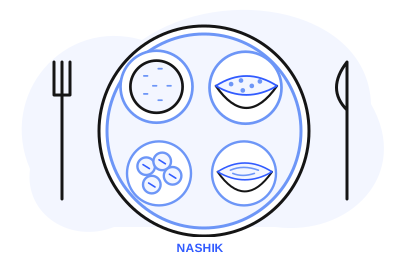
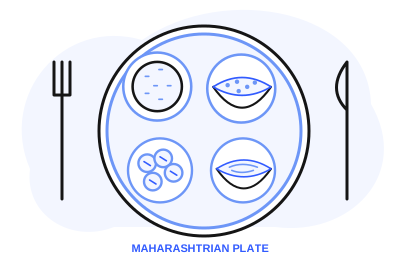
Nashik takes its misal seriously. India's official tourism site calls the city the place for your ultimate misal pav fix, and describes the Nashik style as a mildly spiced usal made from matki (moth beans), sev, a spicy rassa and soft, untoasted pav, with curd, papad, lime, onions and tarri, the spicy oil skimmed off the top of the rassa, as extras. A plate costs ₹60–120 in most Nashik restaurants, the same page notes. Some places serve a darker, spicier version with kaala masala; others a milder one with an optional multigrain pav.
Nobody has lab-tested a Nashik misal as it's served, so it's more useful to know what each part brings. Our raw-ingredient figures are from IFCT 2017, the national food tables from ICMR-NIN in Hyderabad; cooked dishes are from INDB, a public recipe database assembled from those same tables. INDB's deep-fried recipes are left out here, since they assume you eat every drop of the frying oil.
| Part of the plate | What it brings | Numbers |
|---|---|---|
| Matki usal | The protein and fibre | Raw moth beans: about 309 kcal and 19.8 g protein per 100 g; 50 g raw makes a good bowl of usal (about 154 kcal, 9.9 g protein, before oil) |
| Rassa and tarri | Flavour, heat and oil | Fat is 9 kcal per gram, so every 10 g of tarri adds about 90 kcal |
| Sev | Crunch; fried gram flour | Fried, so we give no database figure; treat it as a garnish, not a layer |
| Pav | The starch | Soft refined-flour bread; one or two is a choice, four is a habit |
| Buttermilk (taak) | Protein and cooling | About 80 kcal and 5.7 g protein in a tall glass (INDB) |
| Curd, onion, lime | Freshness, a little protein | Low in calories; ask for them |
How to order a better misal in Nashik
- 1
Ask for extra usal, less farsan
The usal carries almost all the protein. More of it, and a light sprinkle of sev rather than a heap, makes the plate more filling for fewer calories.
- 2
Skip the tarri, or take a spoon
Tarri is mostly oil. A spoon gives the flavour; a ladle adds oil you won't notice eating, at about 90 kcal for every 10 g.
- 3
Two pav, not a refill
Decide before you start. If you're still hungry, ask for more usal, not more pav.
- 4
Add buttermilk or curd
A glass of taak adds 5.7 g of protein for about 80 kcal and cools the heat of the rassa.
- 5
Make misal the meal
A full misal breakfast before a fort climb is good fuel. On a desk day, keep lunch light.
Sprouting helps too. The ICMR-NIN Dietary Guidelines for Indians (2024) note that germination, a common Indian practice, improves digestibility and the availability of micronutrients and increases some vitamins. A misal made with sprouted matki is a better plate than one made with plain usal.
Khandeshi food in Nashik: kaala masala, mutton rassa and bajra bhakri
Nashik borders Khandesh, and the official tourism site points visitors to Khandeshi cooking, built around kaala (black) masala of red chillies, cloves and cinnamon, used without onions or cream. Its signature is a thin mutton curry or rassa eaten with crumbled bajra bhakri, alongside tadka pithla, bharli vangi (stuffed brinjal), green-chilli chicken sukka and fried freshwater fish from near Gangapur Dam. Plenty of it is protein-rich, and the swaps are easy:
| Dish or ingredient | Calories | Protein | Notes |
|---|---|---|---|
| Bajra flour (for bhakri) | about 348 kcal per 100 g | 11.0 g | 11.5 g fibre per 100 g; one 40 g bhakri is about 139 kcal before ghee |
| Mutton yakhni, a thin mutton curry (closest INDB match to rassa) | about 242 kcal a bowl | 19.2 g | Thin gravies like this are lighter than thick, oily ones |
| Goat leg meat, raw | about 160 kcal per 100 g | 22.1 g | Lean cuts make the leanest rassa |
| Tandoori chicken (closest match to a dry chicken sukka) | about 145 kcal per 100 g | 16.3 g | Dry, grilled or tawa dishes beat gravies |
| Stuffed brinjal (bharli vangi) | about 52 kcal per brinjal | 0.8 g | A vegetable side, low in protein |
| Rohu, raw (a freshwater fish) | about 102 kcal per 100 g | 19.7 g | Choose curry or tawa fish over deep-fried |
| Bengal gram dal, raw (the base of besan for pithla) | about 329 kcal per 100 g | 21.6 g | Pithla is a good vegetarian protein side |
The pattern is simple: the mutton, chicken, fish and besan dishes carry the protein, and bajra bhakri is one of the best grains you can eat with them. Keep the bhakri count to two, go easy on ghee, and choose rassa or sukka over anything fried.
Grapes, wine and Nashik's vineyards
Maharashtra Tourism calls Nashik the Wine Capital of India and says it hosts half of the country's vineyards and wineries, with the winter months bringing the grape harvest and vineyard tours. For your diet, the grapes are the easy part. IFCT 2017 gives seedless round green grapes about 54 kcal and 0.6 g protein per 100 g, and seedless oval black grapes about 94 kcal and 1.4 g, so a 150 g bowl is roughly 80–140 kcal depending on the variety. Eat them by the bunch, not by the glass: juice drops the fibre and goes down far too quickly.
Wine needs more care. ICMR-NIN's 2024 guidelines recommend avoiding alcohol altogether, and point out that wine contains 8–10% alcohol and that alcohol provides 7 kcal per gram, more than carbohydrate or protein. By that arithmetic, the alcohol alone in a 150 ml glass of 9% wine is about 75 kcal, before any sugar, and a vineyard afternoon of three glasses with cheese can match a full meal. If you visit the vineyards, enjoy the tour and the view, and keep the tasting small.
Sabudana vada, khurchan wadi and other Nashik treats
Nashik's snacks and sweets are part of the city's character. The tourism site's list includes sabudana vada with curd and peanut chutney (₹25 for a plate of two at one well-known stall), spicy zhatka pani puri, jalebis, kesar falooda topped with malai kulfi, Diwali anarsa and chakli, and khurchan wadi, a sweet of sooji, coconut and mawa rarely found outside Nashik. These aren't diet foods, and that's fine in moderation. A few numbers to keep the portions honest:
- Sabudana khichdi: about 508 kcal and only 7.4 g protein a bowl (INDB). On fasting days, keep the bowl smaller and add curd or milk.
- Kulfi: about 266 kcal and 8.7 g protein for one (INDB); a falooda adds noodles, syrup and more on top.
- Sabudana vada and jalebi: both are deep-fried, so database recipes overstate them; treat two vadas or a few jalebis as a once-a-week snack, not a daily one.
- Sweets after meals: the ICMR-NIN guidelines advise keeping added sugar under 5% of daily energy, about 90 kcal on an 1,800 kcal day.
A Nashik fat-loss day, with vegetarian and muscle-gain versions
The plan below eats like a normal Nashik household, not a diet chart: misal-style usal without pav to start, bajra bhakri at lunch, grapes mid-afternoon and a thin Khandeshi mutton curry at night. Total: roughly 1,650 kcal with 82 g of protein. For comparison, ICMR-NIN's recommended allowance is 0.83 g of protein per kg a day, which is 54 g at 65 kg; anyone lifting or running regularly tends to need more, and our protein intake calculator works out your own number.
| Meal | What's on the plate | Calories | Protein |
|---|---|---|---|
| Breakfast | Usal from 50 g raw matki cooked in 5 g oil, 1 chapati, 2 boiled eggs, a tall glass of buttermilk | about 489 kcal | 31.1 g |
| Lunch | 2 bajra bhakris (80 g flour), a bowl of whole moong dal, 1 stuffed brinjal | about 514 kcal | 17.3 g |
| Afternoon | 150 g green grapes, a bowl of sprouted moong salad, 2 cups of tea | about 225 kcal | 7.2 g |
| Dinner | A bowl of thin mutton curry, 1 bajra bhakri (40 g flour), cucumber and curd salad | about 423 kcal | 26.0 g |
| Total | about 1,650 kcal | about 82 g |
- Vegetarian: swap the mutton curry for 100 g of paneer cooked dry with kaala masala (305 kcal and 18.9 g protein per 100 g, plus 5 g oil), and the eggs for a 250 ml glass of milk (about 182 kcal, 8.2 g protein). The day becomes about 1,800 kcal and 76 g of protein.
- Muscle gain: add a plate of rice at lunch (about 352 kcal, 7.8 g protein) and a bowl of grape raita (about 115 kcal, 6.3 g protein, INDB). The day rises to about 2,120 kcal and 96 g.
- Oil and salt: the ICMR-NIN guidelines suggest 25–30 g of cooking oil and no more than 5 g of salt a day. One restaurant misal with tarri can use much of that oil, so cook simply on misal days.
Healthy restaurants in Nashik: how to order anywhere
Whether you're at a misal house on College Road, a kebab stall in Doodh Bazaar or a café on Gangapur Road, the same few choices keep a meal out on track. Prefer grilled, tandoor and seekh kebabs over shawarma wraps with mayonnaise (INDB puts a mutton seekh kebab at about 60 kcal and 5.1 g protein each), choose rassa or sukka over fried dishes, ask for bhakri over extra rice or pav, and drink buttermilk or water instead of sweet drinks. Then balance a big meal out with simple home food the next day.
For the bigger picture, our Maharashtrian diet plan for weight loss lays out a full week of Maharashtrian meals, protein in Indian food compares protein sources across the country, and calories in Indian food covers dishes this page doesn't. If you train in a gym, Personal Gym Training in Nashik adds a live coach to your sessions there, and all our programs and prices are on the online personal training in Nashik page. Burning off the misal on a fort? See treks near Nashik and running tracks in Nashik.
Sources
- Nashik food guide, Incredible India, Ministry of Tourism
- Nashik: where culinary delights come alive, Incredible India, Ministry of Tourism
- Nashik district, Department of Tourism, Government of Maharashtra
- Indian Food Composition Tables 2017, ICMR-National Institute of Nutrition
- Indian Nutrient Databank (INDB), Vijayakumar, Dubasi, Awasthi and Jaacks, on GitHub
- Development of an Indian Food Composition Database, Current Developments in Nutrition (2024)
- Dietary Guidelines for Indians 2024, ICMR-National Institute of Nutrition
Written by the MakeMyFitness team from the sources above. First published , last updated . Spotted something out of date? Tell us at hello@makemyfitness.com.