Most Indian vegetarians eat enough food but not enough protein, because the plate is mostly rice or roti with a thin dal. That is fine for the minimum, but not for someone who wants to lose fat without losing muscle, or build muscle with strength training. This guide shows exactly how to raise protein with ordinary vegetarian Indian food, with every number taken from published food composition data.
How much protein does a vegetarian need?
ICMR-National Institute of Nutrition (NIN) sets the recommended dietary allowance for healthy Indian adults at 0.83 g of protein per kg of body weight a day. NIN notes that people on a cereal-based diet with lower-quality protein need about 1 g per kg, which is typical of many vegetarian diets in India.
Those numbers prevent deficiency; they are not designed for people who train. The International Society of Sports Nutrition (ISSN) recommends 1.4 to 2.0 g per kg a day for people who exercise, and notes that resistance-trained people eating in a calorie deficit may need 2.3 to 3.1 g per kg to hold on to muscle. A 2018 meta-analysis in the British Journal of Sports Medicine found muscle gains from training levelled off at about 1.6 g per kg a day, a practical target for most.
| Body weight | ICMR-NIN RDA (0.83 g/kg) | Training (1.6 g/kg) | Upper training range (2.0 g/kg) |
|---|---|---|---|
| 50 kg | 41.5 g | 80 g | 100 g |
| 60 kg | 49.8 g | 96 g | 120 g |
| 70 kg | 58.1 g | 112 g | 140 g |
| 80 kg | 66.4 g | 128 g | 160 g |
For your exact number, use our protein intake calculator. If you carry a lot of extra weight, ask your coach or dietitian whether to base the target on a goal weight instead.
Why 100 g of protein is hard on a vegetarian Indian diet
The problem is protein per calorie. Cereals and many pulses bring a lot of carbohydrate with their protein, and paneer brings a lot of fat. If you are eating 1,500 to 1,800 kcal to lose weight, you need foods that pack more protein into fewer calories. This table, calculated from IFCT 2017 and USDA values, shows the difference.
| Food | Protein per 100 g | Calories per 100 g | Protein per 100 kcal |
|---|---|---|---|
| Hung curd / Greek yogurt, plain, non-fat (USDA) | 10.2 g | 59 kcal | 17.3 g |
| Soya chunks, dry (USDA defatted soy flour) | 51.5 g | 327 kcal | 15.7 g |
| Firm tofu (USDA) | 17.3 g | 144 kcal | 12.0 g |
| Moong dal, raw (IFCT 2017) | 23.9 g | 326 kcal | 7.3 g |
| Rajma, raw (IFCT 2017) | 19.9 g | 299 kcal | 6.7 g |
| Paneer (IFCT 2017) | 18.9 g | 305 kcal | 6.2 g |
| Curd, whole milk (USDA) | 3.5 g | 61 kcal | 5.7 g |
| Cow's milk, whole (IFCT 2017) | 3.3 g | 73 kcal | 4.5 g |
| Peanuts (IFCT 2017) | 23.6 g | 520 kcal | 4.5 g |
| Wheat flour, atta (IFCT 2017) | 10.6 g | 320 kcal | 3.3 g |
| White rice, raw (IFCT 2017) | 7.9 g | 356 kcal | 2.2 g |
The pattern is clear. Getting to 80 to 120 g on a vegetarian diet means putting a lean protein food in every meal (dal, hung curd, tofu or soya chunks), using paneer and nuts in measured amounts, and keeping cereals as the base rather than the bulk. Full values for more than 80 foods are in our protein in Indian food chart.
The building blocks: protein per serving
| Food and serving | Protein | Calories |
|---|---|---|
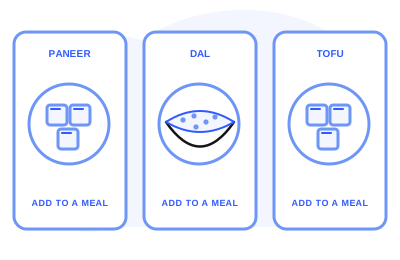
| Soya chunks, 30 g dry (USDA) | 15.4 g | 98 kcal |
| Firm tofu, 150 g (USDA) | 25.9 g | 216 kcal |
| Paneer, 100 g (IFCT 2017) | 18.9 g | 305 kcal |
| Hung curd / Greek yogurt, non-fat, 200 g (USDA) | 20.4 g | 118 kcal |
| Moong dal chilla x2, from 60 g dal and 1 tsp oil (IFCT 2017) | 14.3 g | 240 kcal |
| Besan chilla x2, from 60 g besan and 1 tsp oil (IFCT 2017) | 12.9 g | 242 kcal |
| Home dal, 1 bowl from 30 g raw dal (INDB) | 7.4 g | 139 kcal |
| Milk, 250 ml (IFCT 2017) | 8.2 g | 182 kcal |
| Curd, 150 g (USDA) | 5.2 g | 92 kcal |
| Peanuts, 30 g (IFCT 2017) | 7.1 g | 156 kcal |
| Boiled chickpeas, 150 g (USDA) | 13.3 g | 246 kcal |
| Phulka, from 30 g atta (IFCT 2017) | 3.2 g | 96 kcal |
Protein quality: combine cereals, pulses and milk
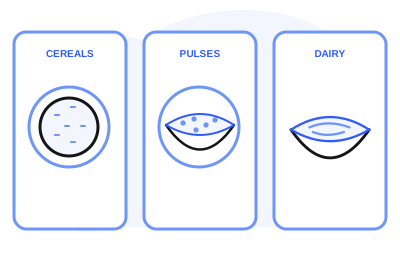
Plant proteins differ in their amino acids: cereals are low in lysine and pulses are lower in the sulphur amino acids, so eating them together fills the gaps. ICMR-NIN recommends a cereal, pulse and milk ratio of roughly 3 : 1 : 2.5 for good protein quality. The 2024 Dietary Guidelines for Indians, as summarised in the Indian Journal of Medical Research, suggest about 85 g of uncooked pulses a day (30 g of which can be swapped for meat by non-vegetarians), 300 ml of milk or curd and 35 g of nuts and seeds.
Those daily amounts alone supply a good base. 85 g of raw dals gives roughly 17 to 21 g of protein (IFCT 2017), 300 ml of milk about 10 g, and 35 g of peanuts about 8 g, all before counting cereals, paneer, tofu or soya.
High-protein vegetarian Indian diet plan: three sample days
Each plan below is built from measured raw quantities, so you can copy it with a kitchen scale. Values come from IFCT 2017 for Indian ingredients, USDA for tofu, curd, soya chunks and hung curd, and INDB for one bowl of home dal (30 g raw moong dal cooked with 1 tsp oil). Cooking oil is listed; spices, onion and tomato add little. Pick the calorie level closest to the target from our calorie deficit calculator.
About 1,500 kcal and 98 g protein (for weight loss)
| Meal | What to eat | Protein | Calories |
|---|---|---|---|
| Breakfast | 2 moong dal chillas (60 g dal, 1 tsp oil) + 100 g hung curd | 24.5 g | 299 kcal |
| Mid-morning | 1 banana (100 g) | 1.2 g | 105 kcal |
| Lunch | 2 phulkas (60 g atta) | 6.3 g | 192 kcal |
| Lunch | 1 bowl moong dal (30 g raw dal) | 7.4 g | 139 kcal |
| Lunch | 150 g cauliflower sabzi, 1 tsp oil | 3.2 g | 79 kcal |
| Lunch | 150 g curd | 5.2 g | 92 kcal |
| Evening | Soya chunk chaat (30 g dry chunks, tomato, onion) + 15 g roasted peanuts | 19.4 g | 186 kcal |
| Dinner | Tofu bhurji (150 g firm tofu, 1 tsp oil, tomato) | 26.4 g | 271 kcal |
| Dinner | 1 phulka (30 g atta) + 100 g salad | 4.1 g | 116 kcal |
| Total | about 98 g | about 1,480 kcal |
About 1,800 kcal and 100 g protein (slower fat loss or maintenance)
| Meal | What to eat | Protein | Calories |
|---|---|---|---|
| Breakfast | 2 besan chillas (60 g besan, 1 tsp oil) + 150 g curd | 18.1 g | 334 kcal |
| Lunch | 3 phulkas (90 g atta) | 9.5 g | 288 kcal |
| Lunch | Rajma (40 g raw rajma, 1 tsp oil) | 8.0 g | 165 kcal |
| Lunch | 150 g palak sabzi, 1 tsp oil | 3.2 g | 82 kcal |
| Evening | Soya chunk chaat (30 g dry) + 15 g roasted peanuts | 19.4 g | 186 kcal |
| Evening | 1 banana (100 g) | 1.2 g | 105 kcal |
| Dinner | Paneer bhurji (100 g paneer, 1 tsp oil, tomato) | 19.3 g | 360 kcal |
| Dinner | 1 bowl moong dal (30 g raw dal) + 1 phulka (30 g atta) | 10.6 g | 235 kcal |
| Dinner | 100 g hung curd as raita | 10.2 g | 59 kcal |
| Total | about 100 g | about 1,810 kcal |
About 2,200 kcal and 122 g protein (for muscle gain)
| Meal | What to eat | Protein | Calories |
|---|---|---|---|
| Breakfast | 3 moong dal chillas (90 g dal, 1.5 tsp oil) | 21.5 g | 361 kcal |
| Breakfast | 250 ml milk | 8.2 g | 182 kcal |
| Mid-morning | 1 banana (100 g) | 1.2 g | 105 kcal |
| Lunch | 150 g cooked rice + 2 phulkas (60 g atta) | 10.4 g | 387 kcal |
| Lunch | Chana curry (40 g raw kala chana, 1 tsp oil) | 7.5 g | 160 kcal |
| Lunch | 200 g curd | 6.9 g | 122 kcal |
| Evening | Soya chunk chaat (40 g dry) + 20 g roasted peanuts | 25.8 g | 245 kcal |
| Dinner | Tofu curry (150 g firm tofu, 2 tsp oil, tomato gravy) | 26.8 g | 326 kcal |
| Dinner | 2 phulkas (60 g atta) + 1 bowl moong dal (30 g raw dal) | 13.7 g | 331 kcal |
| Total | about 122 g | about 2,220 kcal |
Swap freely within a group: paneer for tofu (more calories, slightly less protein), masoor or toor dal for moong, jowar or bajra roti for a phulka. If you eat eggs, two eggs add about 13 g of protein for about 135 kcal (IFCT 2017).
High-protein vegetarian Indian diet for weight loss
Weight loss comes from eating fewer calories than you burn; protein's job is to protect muscle and keep you full while you do it. Losing about 1 kg of body fat takes a deficit of roughly 7,700 kcal, so 0.5 kg a week means eating about 550 kcal a day below maintenance. Find your maintenance with the TDEE calculator, then your target with the calorie deficit calculator.
- Lead with the leanest proteins. Hung curd, tofu and soya chunks give 12 to 17 g of protein per 100 kcal, against about 6 g for paneer.
- Measure oil and ghee. Each teaspoon of oil (5 g) adds about 45 kcal. Three extra teaspoons a day add about 135 kcal, a quarter of a 550 kcal deficit.
- Keep paneer to about 100 g a day on a 1,500 kcal plan; it is 305 kcal per 100 g.
- Eat protein at breakfast. A moong dal chilla breakfast with hung curd gives 24.5 g, compared with about 4.8 g for a bowl of vegetable poha (INDB).
- Lift weights two or three times a week. Strength training tells your body to keep muscle while you lose fat. Our fat loss page explains the approach.
High-protein vegetarian Indian diet plan for muscle gain
To build muscle, eat at maintenance or slightly above, reach about 1.6 g of protein per kg, and train each muscle group two or three times a week with sets taken close to failure. Check with the TDEE calculator whether the 2,200 kcal day is close to your maintenance; lighter people may need less, and very active people more.
- Split protein into four servings of 20 to 40 g, as the ISSN suggests, every 3 to 4 hours.
- Use paneer, milk and peanuts here: their extra calories help rather than hurt when you need to eat more.
- Add a second bowl of dal or use 60 g of raw dal per bowl to add about 7 g of protein.
- Track your training. Food alone will not build muscle; read our muscle building page and how to build muscle at home.
Common mistakes on a vegetarian high-protein diet
- 1
Counting sprouts as a big protein source
Sprouting adds water. USDA lists sprouted moong at about 3 g of protein per 100 g, so a 150 g bowl of sprouts gives under 5 g.
- 2
Relying on paneer for everything
200 g of paneer gives 37.7 g of protein but 611 kcal. Mix in tofu, soya and hung curd.
- 3
A thin dal that is mostly water
One bowl from 30 g of dal is about 7 g of protein. Thicker dal, or two bowls, makes a real difference.
- 4
Leaving breakfast to chance
Tea and biscuits or plain poha give very little protein. See our high-protein Indian breakfast list for 20+ better options.
- 5
Buying protein powder before fixing meals
ICMR-NIN's 2024 guidelines advise against regular use of protein supplements to build muscle. Powder can help on busy days, but food comes first.
Prefer regional food? Our South Indian, Gujarati and Punjabi diet plans apply the same protein rules to local meals, and the calories in Indian food chart helps you count the rest of your plate.
Sources
- Indian Food Composition Tables 2017 (Longvah, Ananthan, Bhaskarachary, Venkaiah), ICMR-National Institute of Nutrition, Hyderabad
- Nutrient Requirements for Indians 2020: brief note (protein RDA 0.83 g/kg/day), ICMR-National Institute of Nutrition
- Dietary guidelines across different countries and comparisons to Dietary Guidelines for Indians, 2024 (Shah, Sachdeva, Chaudhari), Indian Journal of Medical Research
- International Society of Sports Nutrition position stand: protein and exercise (Jäger et al., 2017), Journal of the International Society of Sports Nutrition
- Protein supplementation and resistance training-induced gains in muscle mass and strength: meta-analysis (Morton et al., 2018), British Journal of Sports Medicine
- Indian Nutrient Databank (INDB): an open-access database of Indian foods and recipes (Vijayakumar et al., 2024), Current Developments in Nutrition
- Indian Nutrient Databank: recipe data files, Jaacks Lab, GitHub
- FoodData Central datasets (SR Legacy and FNDDS), U.S. Department of Agriculture
Written by the MakeMyFitness team from the sources above. First published , last updated . Spotted something out of date? Tell us at hello@makemyfitness.com.