Can you lose weight on Maharashtrian food?
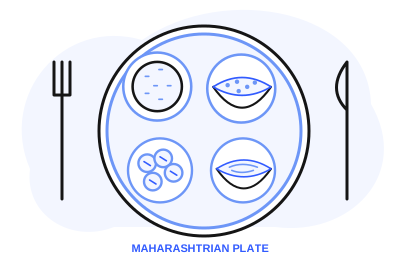
Yes. A Maharashtrian diet plan for weight loss works best when it stays Maharashtrian. Jowar and bajra bhakri, varan-bhaat, matki usal, pithla, a dry bhaji and a glass of taak make a plate that is already close to what nutrition guidelines ask for. On the coast, bangda, surmai, paplet and bombil add lean protein that most Indian vegetarian diets struggle to match.
Where Marathi food tips into a calorie surplus is mostly outside the home thali: vada pav and misal on the go, farsan or chivda with tea, rava-fried fish, coconut-heavy gravies, and festival sweets such as puran poli, modak and shrikhand. This guide shows the numbers for each, then builds a 7-day veg plan with fish, egg and chicken swaps. Calorie and protein values come from the Indian Food Composition Tables 2017 (IFCT, ICMR-National Institute of Nutrition), the open Indian Nutrient Databank (INDB), and, for two street foods, the FatSecret food database.
The Maharashtrian plate: what helps fat loss and what gets in the way

The ICMR-NIN Dietary Guidelines for Indians (2024) recommend that at least half of all cereals be whole grains, with 20–30% of an adult's cereals (by raw weight) from millets such as jowar and bajra, a pulse with every meal, and plenty of vegetables. Traditional Maharashtrian food, especially rural and Deshi cooking, meets these more naturally than most regional cuisines.
- Bhakri is a millet staple. By IFCT 2017 values, jowar has about 10 g and bajra about 11 g of protein per 100 g of grain, with more fibre than polished rice. A bhakri made from 40 g of flour is about 134 to 139 kcal before any ghee.
- Usal is a protein dish. Matki, moong, chawli and vatana usal bring 7 to 8 g of protein per katori, more than most vegetable bhajis.
- Varan-bhaat is fine in sensible amounts. Plain toor dal with a teaspoon of ghee and a small katori of rice is under 260 kcal by our IFCT calculation. The issue is the third helping of rice, not the dish.
- Konkan fish is lean. IFCT 2017 lists raw mackerel (bangda) at about 101 kcal and 21.5 g of protein per 100 g. How it's cooked decides the rest.
- Street food is dense. A single vada pav is about 304 kcal in the FatSecret database, roughly a fifth of a 1,500 kcal day, and most of it is fried potato and white bread.
- Oil and coconut add up quietly. The 2024 guidelines suggest 20 g of visible fat a day for a sedentary woman and 30 g for a sedentary man. A teaspoon is 5 g and about 45 kcal, so a heavy phodni, rava-fried fish and a coconut gravy can pass that in one meal.
- Dairy is lower than in the north or west. National Dairy Development Board figures put milk availability in Maharashtra at about 347 g per person a day in 2023-24, below the all-India 471 g. Many Maharashtrian vegetarians get less protein from milk and dahi than they think.
Calories and protein in Maharashtrian food: 25 dishes compared
Servings are typical home portions. “IFCT calc” means we worked the value out from IFCT 2017 raw-ingredient data for the amounts shown, counting 1 teaspoon of oil or ghee as 5 g (about 45 kcal). INDB values are from standard Indian cookery-manual recipes. Hotel and festive versions are usually richer. For more dishes from across India, see calories in Indian food.
| Dish | Serving | Calories | Protein | Source |
|---|---|---|---|---|
| Kanda poha | 1 bowl | about 177 kcal | 4.8 g | INDB (vegetable poha) |
| Upma | 1 bowl | about 157 kcal | 3.5 g | INDB |
| Thalipeeth | 1, from 40 g jowar, besan and atta, 1 tsp oil | about 177 kcal | 5.8 g | IFCT calc |
| Besan dhirde (chilla) | 2 small, from 40 g besan, 1 tsp oil | about 177 kcal | 8.6 g | IFCT calc |
| Jowar bhakri | 1, from 40 g flour, no ghee | about 134 kcal | 4.0 g | IFCT calc |
| Bajra bhakri | 1, from 40 g flour, no ghee | about 139 kcal | 4.4 g | IFCT calc |
| Poli (chapati) | 1 poli | about 73 kcal | 2.1 g | INDB |
| Bhaat (plain rice) | Small katori, from 30 g raw rice | about 107 kcal | 2.4 g | IFCT calc |
| Varan | 1 katori: 30 g raw toor dal, 1 tsp ghee | about 144 kcal | 6.5 g | IFCT calc |
| Amti (with goda masala, kokum, jaggery) | 1 katori: 30 g toor dal, 1 tsp oil, 5 g jaggery | about 162 kcal | 6.6 g | IFCT calc |
| Matki usal | 1 katori: 40 g raw matki, 1 tsp oil | about 168 kcal | 7.9 g | IFCT calc |
| Mugachi usal (whole moong) | 1 bowl | about 143 kcal | 7.3 g | INDB |
| Pithla | 1 katori: 25 g besan, 1 tsp oil | about 127 kcal | 5.4 g | IFCT calc |
| Kobichi bhaji | 1 bowl | about 106 kcal | 5.4 g | INDB (cabbage and peas) |
| Bharli vangi (stuffed brinjal) | 2 small brinjals | about 103 kcal | 1.6 g | INDB |
| Kakdi koshimbir with dahi | 1 bowl | about 90 kcal | 6.2 g | INDB (cucumber raita) |
| Taak (buttermilk) | 1 tall glass | about 80 kcal | 5.7 g | INDB (salted lassi) |
| Misal pav | 1 serving, 140 g | about 312 kcal | 10.2 g | FatSecret |
| Vada pav | 1 piece, 140 g | about 304 kcal | 9.2 g | FatSecret |
| Puran poli | 1 piece | about 196 kcal | 5.1 g | INDB |
| Bangda (mackerel) tawa fry | 100 g raw fish, 1 tsp oil | about 146 kcal | 21.5 g | IFCT calc |
| Surmai tawa fry | 100 g raw fish, 1 tsp oil | about 181 kcal | 22.3 g | IFCT calc |
| Paplet (white pomfret) tawa fry | 100 g raw fish, 1 tsp oil | about 168 kcal | 19.0 g | IFCT calc |
| Fish or prawn curry with coconut | 1 bowl | 282 to 313 kcal | 22 to 24 g | INDB |
| Kombdi rassa (chicken curry) | 1 bowl | about 320 kcal | 29.2 g | INDB |
Konkan fish and Malvani food on a weight-loss diet
For anyone eating a Maharashtrian non-veg diet, coastal fish is the single biggest advantage. Per 100 g raw, IFCT 2017 lists bangda (mackerel) at about 21.5 g of protein, surmai (seer fish) at about 22.3 g, white paplet at about 19 g and bombil (Bombay duck) at about 13.5 g for only 69 kcal. That is roughly three times the protein of a katori of matki usal, for similar calories.
- Tawa fry with a thin masala coat and 1 teaspoon of oil, not a thick rava crust shallow-fried in several spoons.
- Bombil is easy to overdo: it's light on its own, but bombil fry soaks up batter and oil. Have it as a curry or tawa-roasted.
- Malvani and Konkani curries: a bowl of fish or prawn curry with coconut is about 282 to 313 kcal in INDB. Have one bowl with bhakri or a small katori of rice, not rice in second and third helpings.
- Sol kadhi: kokum and coconut milk; enjoy a small glass, but don't treat it as a free drink like taak.
- Kombdi and mutton rassa: a bowl of chicken curry is about 320 kcal and 29 g of protein in INDB. Skim the oil that rises on Kolhapuri tambda rassa before serving.
Swaps that keep Marathi food Marathi
| Instead of | Try | What changes |
|---|---|---|
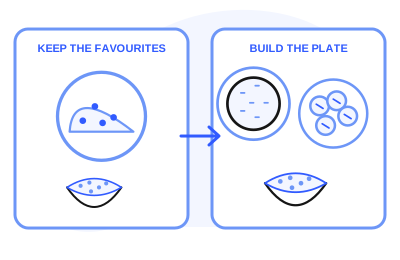
| Vada pav for a quick lunch | Matki usal with one bhakri, or misal without the farsan on top | More protein, less fried potato and white bread |
| Chivda or farsan with tea | 15 g roasted shengdana or 30 g roasted chana | About 80 to 90 kcal with 3.5 to 5.6 g of protein |
| Tup (ghee) poured on varan-bhaat | 1 teaspoon, measured | Each extra teaspoon is about 45 kcal |
| Three helpings of bhaat | One small katori of bhaat plus one bhakri | Adds millet and keeps rice to about 107 kcal |
| Rava-fried pomfret or bombil | Tawa-fried bangda or surmai with 1 tsp oil | Keeps the 19 to 22 g of protein, drops most of the oil |
| Sabudana khichdi every upvas | Fruit, dahi and roasted peanuts, or rajgira with milk | More protein, less plain starch |
| Shrikhand or puran poli every Sunday | Keep them for Gudi Padwa, Holi and Ganeshotsav | Puran poli alone is about 196 kcal a piece |
Protein targets for a Maharashtrian veg diet plan for weight loss
ICMR-NIN's 2024 guidelines put the protein allowance for healthy adults at 0.83 g per kg of body weight a day, about 54 g for someone weighing 65 kg. They also note that during a typical weight-loss deficit of 500–750 kcal a day, getting around 15% of calories from protein may help hold on to muscle: about 56 g on a 1,500 kcal day.
Research on dieting points slightly higher. A 2017 review in *Advances in Nutrition* recommends 1.25 to 1.5 times the RDA for people who don't exercise, and more than 1.5 times for those who do, which on ICMR's 0.83 g figure is roughly 1.0 to 1.25 g per kg. ICMR adds that going above about 1.6 g per kg does nothing extra for muscle gains from strength training. A practical target for most Maharashtrian vegetarians is 55 to 75 g a day, and fish-eaters reach the top of that range easily. Get your own figure from the protein intake calculator.
- Make usal or dal a full katori at both main meals, not a side spoon.
- Add 100 g of dahi or a glass of taak to breakfast and lunch.
- Use sprouted matki or moong as the evening snack, not chivda or biscuits.
- If you eat eggs or fish, have them at dinner on most days.
For more vegetarian options, see protein in Indian food.
7-day Maharashtrian diet plan for weight loss (about 1,500 kcal)
This Marathi diet plan for weight loss is vegetarian and comes to about 1,480 to 1,550 kcal and 58 to 73 g of protein a day, using the values in the dish table. Chai is 100 ml of milk without sugar (a teaspoon of sugar adds about 20 kcal). Raw salad and koshimbir vegetables aren't counted, so add them freely. If you eat fish, eggs or chicken, use the swap table below the plan.
| Day | Breakfast | Lunch | Evening | Dinner |
|---|---|---|---|---|
| Monday (about 1,500 kcal, 65 g protein) | Kanda poha, 100 g dahi, chai | 2 poli, varan, small katori bhaat, kobichi bhaji, taak | 1 guava, 30 g roasted chana | 1 jowar bhakri, matki usal, kakdi koshimbir, 100 g dahi |
| Tuesday (about 1,550 kcal, 61 g) | 1 thalipeeth, 100 g dahi, chai | 1 jowar bhakri, amti, bharli vangi, taak | 1 apple, 15 g roasted shengdana | 2 poli, pithla, mugachi usal, sprouted moong (30 g dry), 100 g dahi |
| Wednesday (about 1,540 kcal, 58 g) | Upma, 100 g dahi, chai | 2 poli, matki usal, bhendi bhaji, taak | 200 g papaya, 30 g roasted chana | Small katori bhaat, varan, paneer bhurji (50 g), 100 g dahi |
| Thursday (about 1,510 kcal, 73 g) | 2 besan dhirde, 100 g dahi, chai | 1 bajra bhakri, pithla, kobichi bhaji, taak | 1 guava, sprouted moong (30 g dry) | 2 poli, mugachi usal, koshimbir; 200 ml milk and 15 g shengdana later |
| Friday (about 1,480 kcal, 59 g) | Kanda poha, 100 g dahi, chai | 2 poli, amti, bharli vangi, koshimbir | 1 banana, 30 g roasted chana | 1 jowar bhakri, matki usal, sprouted moong (30 g dry), 100 g dahi |
| Saturday (about 1,500 kcal, 63 g) | 1 thalipeeth, 100 g dahi, chai | 1 poli, small katori bhaat, varan, kobichi bhaji, taak | 1 apple, 30 g roasted chana | 1 bajra bhakri, pithla, 50 g paneer, 100 g dahi |
| Sunday (about 1,550 kcal, 58 g) | Upma, 100 g dahi, chai | 2 poli, mugachi usal, bhendi bhaji, taak | 200 g papaya, sprouted moong salad | Small katori bhaat, varan, matki usal; 200 ml milk at bedtime |
| Day | Swap | New day total |
|---|---|---|
| Monday | Dinner matki usal for bangda tawa fry (100 g fish, 1 tsp oil) | about 1,480 kcal, 76 g protein |
| Wednesday | Paneer bhurji for surmai tawa fry (100 g fish, 1 tsp oil) | about 1,520 kcal, 71 g protein |
| Friday | Dinner matki usal and dahi for a bowl of Malvani-style fish curry | about 1,520 kcal, 70 g protein |
| Saturday | 50 g paneer for 2 boiled eggs | about 1,490 kcal, 65 g protein |
| Sunday | Dinner matki usal and bedtime milk for a bowl of kombdi rassa | about 1,550 kcal, 73 g protein |
If you're a man, very active, or simply hungry all the time on this plan, you may need more than 1,500 kcal. Add a bhakri (about 135 kcal) or an extra katori of usal (about 170 kcal) before you add anything fried. Check your number with the calorie deficit calculator. The chart prints cleanly from your browser if you want it on paper.
How fast you can lose weight on a Marathi diet
The ICMR-NIN guidelines describe a loss of half a kilogram a week as safe, warn against rapid weight-loss approaches, and say weight-reduction diets should not go below 1,000 kcal a day or cut more than 40% of your energy needs. The US Centers for Disease Control and Prevention notes that people who lose about 1 to 2 pounds a week, roughly 0.5 to 0.9 kg, are more likely to keep the weight off.
In practice that's about 2 to 4 kg in a month for many people, some of it water in the first week, and less for those who start lighter. Plateaus are normal. If your weekly average weight and waist haven't moved for three weeks, trim 100 to 150 kcal (one poli and a little oil) rather than slashing meals.
Why strength training matters on a Maharashtrian weight-loss diet
Eating less without training means some of the weight you lose is muscle. The 2017 *Advances in Nutrition* review reports that fat-free mass accounts for about 20–30% of the weight people with overweight or obesity lose, and that resistance exercise can lessen or even prevent that muscle loss. ICMR-NIN's guidelines also call regular strength training necessary for keeping muscle, and ask adults for muscle-strengthening exercise on at least two days a week.
Two or three strength sessions a week, plus a daily walk, are enough to start. Bodyweight squats, push-ups, lunges and rows with a backpack work at home; our home workout plan for weight loss lays out a full week, and our fat loss page explains how coaching for it works.
Eating out in Mumbai, Pune, Thane and Navi Mumbai
City life makes the plan harder: vada pav outside the station, misal on Sunday, a Malvani thali with friends. Order fish tawa fry over rava fry, ask for misal with less farsan and one pav, and pick a bhakri thali over a poli-and-rice one. Our city food guides go further for Mumbai, Pune, Thane and Navi Mumbai.
Sources
- Dietary Guidelines for Indians (2024), ICMR-National Institute of Nutrition
- Indian Food Composition Tables 2017 (Longvah et al.), ICMR-National Institute of Nutrition
- Indian Nutrient Databank (INDB): recipe nutrient dataset, Jaacks Lab, University of Edinburgh (GitHub)
- Development of an Indian Food Composition Database (Vijayakumar et al., 2024), Current Developments in Nutrition
- Vada pav: calories and nutrition, FatSecret India
- Misal pav: calories and nutrition, FatSecret India
- Per capita availability of milk by states, National Dairy Development Board
- Preserving healthy muscle during weight loss (Cava, Yeat and Mittendorfer, 2017), Advances in Nutrition
- Losing weight, US Centers for Disease Control and Prevention
Written by the MakeMyFitness team from the sources above. First published , last updated . Spotted something out of date? Tell us at hello@makemyfitness.com.