In short
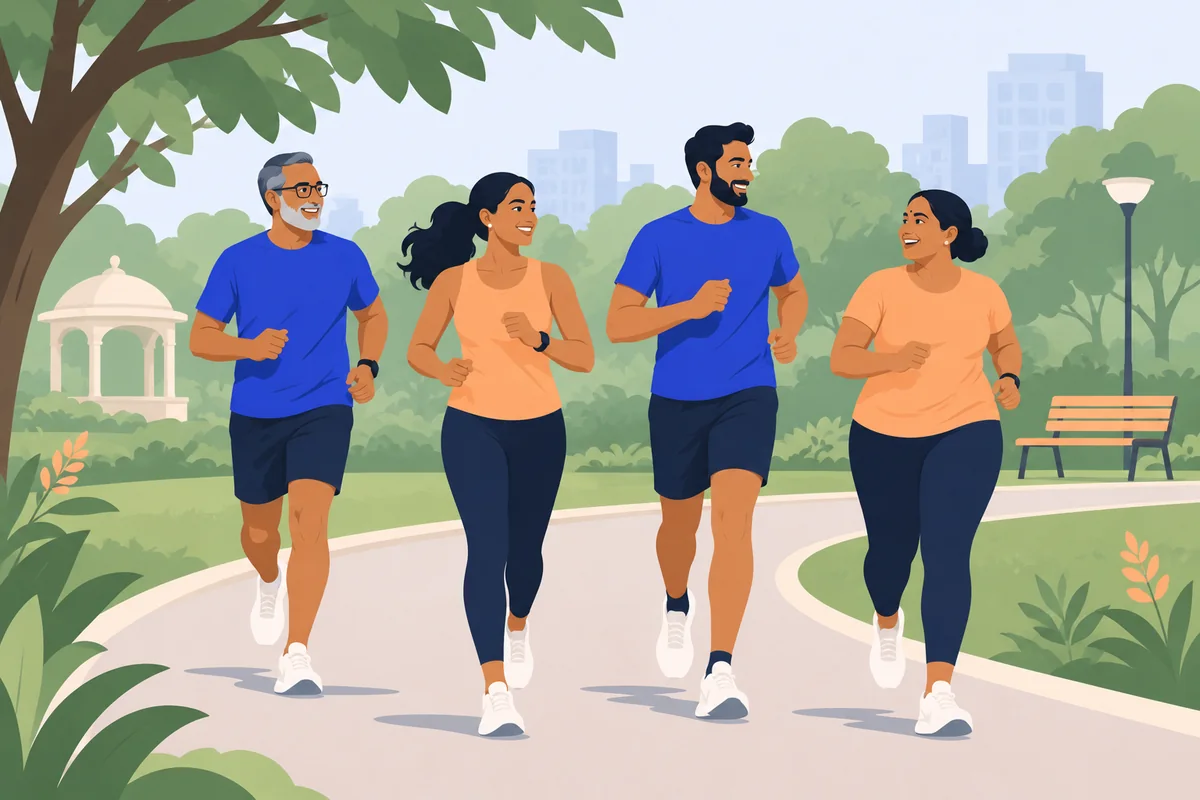
- Run clubs are free or paid groups that meet on fixed mornings, usually at a park or sea front, and welcome beginners who walk, jog or run.
- Indian press in 2026 reports clubs growing in cities including Mumbai, Delhi, Hyderabad and Chennai.
- Before your first group run, spend four weeks on a run-walk routine three times a week, then pick a club by its start time, distance and how it treats slower runners.
If you have scrolled past photos of people in matching caps outside a café at 7 AM, you have seen a run club. They are no longer a Bengaluru or Mumbai habit alone. This post covers what the evidence says about why clubs grew, what a typical club run looks like, how to pick one without feeling out of place, and what to do over the four weeks before you turn up. Today is 16 November 2026, and the cooler months are a good time to start.
Why have run clubs spread across Indian cities?
Nobody publishes a clean count of Indian run clubs, so treat any single number with care. What we can point to is reporting from two directions. Strava's Year in Sport trend report, released on 3 December 2025, said new clubs on the platform nearly quadrupled in 2025 to reach one million, and that running clubs grew 3.5 times, behind only hiking clubs at 5.8 times. That is global platform data, not an Indian figure.
Indian press tells a similar story in its own words. A Deccan Chronicle feature of 13 February 2026 describes clubs as social communities where members share routines and shoe advice, and says weekend runs in Hyderabad often end at a neighbourhood café. It also reports that the Tata Mumbai Marathon grew from about 47,000 participants in 2019 to over 65,000 in 2025, and that more than 1,500 running events were held across India in 2025. A DT Next piece of 25 July 2026 describes a Chennai club that began with three runners and now has over 4,000 members. These are reports about individual clubs and events, so read them as signs of a trend rather than a national census.
The common thread is company. A group gives you a fixed time, a place to be and people who notice if you skip. That helps beginners most, because the hard part of running is turning up in week three.
How does a typical club run work?

Clubs differ, so ask before you go. The reports we read describe a loose pattern: a regular day, usually a weekend morning, a meeting point such as a park or sea front, a short warm-up, the run, and time to chat afterwards. A Time Out Mumbai list from 7 October 2026 says one Mumbai club holds Sunday runs with stretches, pep talks and yoga, and is free to join. The DT Next article says the Chennai club lets newcomers walk, jog or run at their own pace.
| Question | What the press describes | What to ask |
|---|---|---|
| Cost | Some clubs are free to join. Others sell tickets to sessions and events, and one is described as on the expensive side. | Is the weekly run free? What do events or coaching cost? |
| Distance | Not stated in the articles we read. | What is the shortest route on offer? Can I walk part of it? |
| Pace groups | Not confirmed in the articles we read. Many clubs say beginners can go at their own pace. | Is there a slower group, and does anyone stay at the back? |
| Meeting point | Parks and sea fronts are typical, then a café. | Where exactly, and what time do we start? |
| How to join | Clubs announce runs on Instagram and WhatsApp, and sometimes sell tickets through an events app. | Which group chat should I join before the first run? |
We do not rank clubs, and we cannot vouch for any single one. A club is a group of volunteers or a business, and it can change its day, place or fees. Check its own page or Instagram for the latest.
How do you choose a run club as a beginner?
Pick for logistics first and for vibe second. A club you can reach by 6 AM without stress beats a famous one across the city. Our own running guides make the same point about Mumbai's long commutes.
- Start time and distance from home. If getting there takes more than 30 minutes, you will quit by week four.
- A walk-friendly culture. Ask directly: can I walk the hard bits? A club that says yes is a good sign.
- Free first run. Try one group run before paying for a coaching batch or a membership.
- Lit, public meeting point. Choose a place with other people around and a way home.
- A group chat with a real person in it. Message the organiser, ask your questions, and notice whether they reply.
- Women-only or mixed. Some clubs focus on women. Choose what makes you comfortable.
Talk to a doctor first if any of these apply
If you have a heart condition, high blood pressure, asthma, joint or back problems, are pregnant, or have not exercised for a long time, see a doctor before you start running. The NHS says to book a GP appointment to discuss it first if you are worried about your health before starting a plan like Couch to 5K. Stop and get help if you feel chest pain, dizziness or unusual breathlessness. This post is general information, not medical advice.
What should you do in the four weeks before your first group run?

Use a run-walk method. The NHS Couch to 5K plan is built this way: it runs over nine weeks, three times a week with rest days between, and week one starts with 1-minute runs followed by 1 minute 30 seconds of walking. We have not copied that plan. The table below is our own shorter version of the same idea, for someone who wants to feel comfortable at a relaxed club run. It is not a replacement for the full plan, and you can repeat any week if it feels hard.
| Week | Each session (after a 5-minute brisk walk) | Total time | Aim |
|---|---|---|---|
| 1 | 8 rounds of 1 minute jog, 1 minute 30 seconds walk | About 25 minutes | Finish feeling you could do more |
| 2 | 6 rounds of 2 minutes jog, 1 minute 30 seconds walk | About 26 minutes | Keep the jog slow enough to talk |
| 3 | 5 rounds of 3 minutes jog, 1 minute 30 seconds walk | About 28 minutes | Do one session at your club's start time |
| 4 | 4 rounds of 5 minutes jog, 2 minutes walk | About 33 minutes | Visit the meeting point once, at the same hour |
Pace matters more than speed. The CDC describes moderate activity as being able to talk but not sing, and says that during vigorous activity you cannot say more than a few words without pausing for breath. Aim for the first when you jog. If you are gasping, walk.
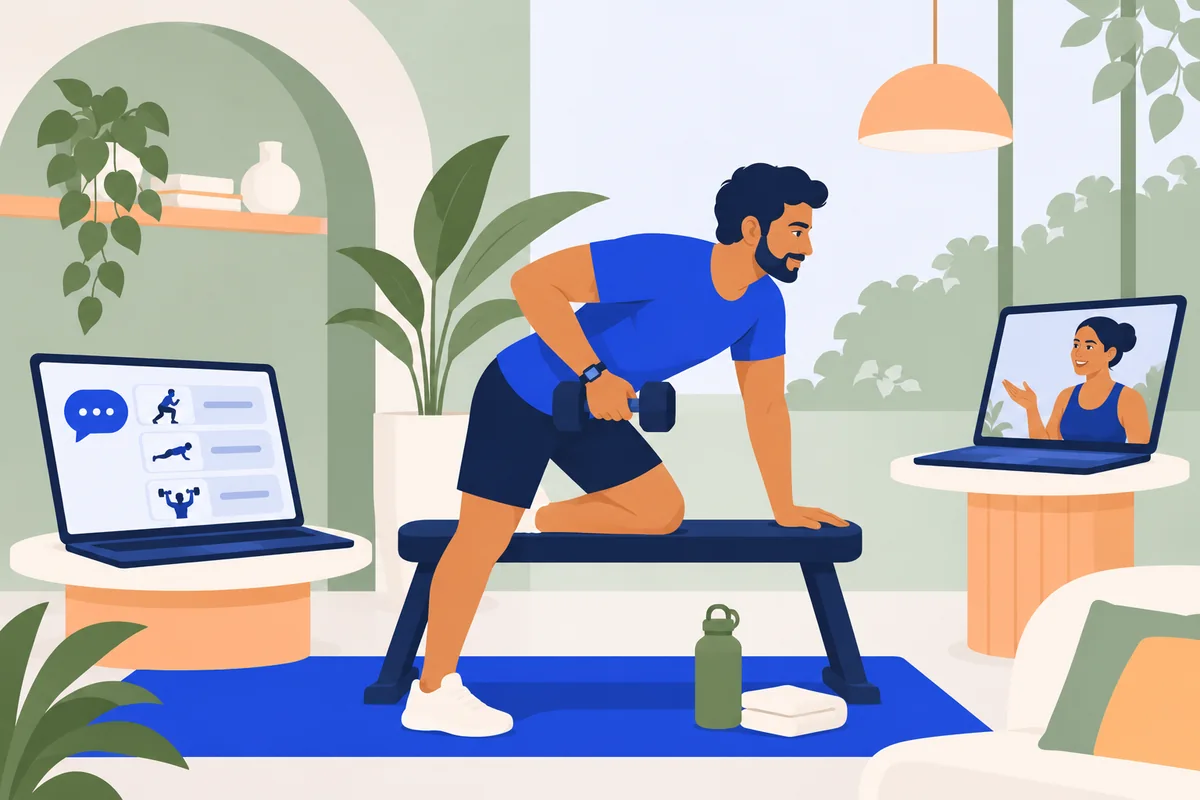
Add two easy extras. Walk for 30 to 40 minutes on one other day, and do two short strength sessions a week for hips, calves and core. Our guide to strength training for runners shows simple moves, and walking for weight loss is a good base if you are starting from very little. A live coach on a video call can watch your form and adjust the intervals if a week goes badly, which a crowd at the park cannot do for you.
What are the etiquette and safety basics?

- Arrive early. Many group runs start at first light. Reach the meeting point ten minutes before, say your name to the organiser and tell them you are new.
- Mind the traffic. Run facing oncoming vehicles where there is no pavement, keep headphones low or leave one ear free, and obey marshals at crossings.
- Drink before and after. Eat something light if you run on an empty stomach and carry water for anything over 30 minutes. In warm cities, sip along the way.
- Stay behind the front runners. Do not try to match a fast group on day one. Starting too hard can leave beginners with sore shins.
- Tell someone. Share your route and whether you are going home alone, especially on early dark mornings.
- Respect the space. Keep pavements clear, bin your litter and thank the volunteers.
Winter air
In north India the winter months can bring poor air. If the AQI is high, swap the outdoor group run for a walk indoors or a lighter session. Our guide on exercising in Delhi's smog and AQI explains how to decide. Most clubs post a message when they change a run.
Where can you run in your city?

Our running guides list routes, distances and seasons for each city. Clubs usually meet at the same well-known places, so reading the guide for your city tells you where to look and when it is comfortable to run. Search the park name with the words 'run club' to find who meets there.
- Running tracks in Mumbai
- Running tracks in Delhi
- Running tracks in Bengaluru
- Running tracks in Pune
- Running tracks in Hyderabad
- Running tracks in Chennai
- Running tracks in Kolkata
- Running tracks in Ahmedabad
- Running tracks in Gurugram
- Running tracks in Noida
- Running tracks in Jaipur
What should you do after the first month?

Go to your club's run three weeks in a row before deciding if it suits you. Then pick a goal with a date. A first 5K or 10K is a realistic target within a few months of steady running, and race entries give you a reason to keep going. Our India winter marathon calendar lists the events between December 2026 and February 2027, and most have shorter distances alongside the full marathon. Check each organiser's website for dates, since they can change.
If you later want a half marathon, the beginner half marathon training plan is the next step.
Sources
- Strava Releases 12th Annual Year in Sport Trend Report (3 December 2025), PR Newswire via Webull
- The Running Renaissance (13 February 2026), Deccan Chronicle
- The new Sunday ritual (25 July 2026), DT Next
- The best running, cycling and climbing clubs in Mumbai (7 October 2026), Time Out Mumbai
- Get running with Couch to 5K, NHS
- Measuring physical activity intensity, CDC
Written by the MakeMyFitness team from the sources above and reviewed by Kumar Abhishek, our lead coach (Diploma in Personal Training, K11 School of Fitness Sciences). First published , last updated . How we write and check our guides: editorial policy. Spotted something out of date? Tell us at hello@makemyfitness.com.