In short
- ChatGPT is good at answering common exercise questions: in one 2026 study it was rated higher than nine personal trainers on six of nine questions.
- It is weaker at writing individual plans.
- Expert reviewers found AI plans generic, sometimes unsafe for people with health conditions, and unable to adapt as you progress.
- Use it as a draft, not a prescription.
Many people now ask an AI assistant for a workout plan before they ask a person. That is a reasonable thing to do. It is free, fast and available at 11 pm. The better question is what it does well and where researchers have found it falling short. This post goes through the published studies, reports them as their abstracts state them, and ends with a checklist you can use today.
What have studies found when ChatGPT was compared with personal trainers?

The studies below ask different questions, so they should not be read as one verdict. Some test answers to common questions. Others test whole training plans written for imaginary people. None of them replace what happens when a real person trains for months with real feedback. Most also tested early versions of ChatGPT (GPT-3.5 or GPT-4), so newer models may do better.
| Study | What was compared | Who took part | What it found |
|---|---|---|---|
| D'hoe et al., Journal of Sports Science and Medicine, 2026 | ChatGPT (version 3.5) against personal trainers on common exercise questions | 9 active personal trainers supplied questions and answers. 18 trainers and 9 topic experts rated the responses | ChatGPT outperformed the trainers in six of nine questions overall. No trainer response was rated higher than ChatGPT on any question or metric |
| Dergaa et al., Biology of Sport, 2024 | GPT-4 30-day programmes for five imaginary patient profiles, judged by exercise prescription experts | 5 hypothetical profiles, each with a different health condition and goal | Programmes were general and safety-conscious but lacked precision for individual conditions and goals, and often put excessive safety ahead of training effect |
| Washif et al., Biology of Sport, 2024 | 12-week strength programmes written by GPT-3.5 and GPT-4.0, checked against NSCA guidance | Imaginary 20-year-old male and female intermediate trainees (GPT-4.0 also wrote an advanced programme) | Programmes generally followed principles such as progressive overload and variation, but likely need additional fine-tuning. Authors say ChatGPT may be a complementary tool for drafting programmes and likely needs human expertise |
| Havers et al., Biology of Sport, 2025 | Hypertrophy and strength plans from GPT-3.5 (ChatGPT and Copilot) and Gemini | 10 experienced coaches rated plans for a fictional advanced trainee on 27 criteria | Coaches rated overall quality as moderate. Authors say expert supervision is still needed |
| JMIR Medical Education, 2024 | ChatGPT exercise recommendations for 26 clinical conditions, scored against gold-standard guidance | Two reviewers scoring ten categories across the conditions | 41.2% comprehensive (107 of 260) and 90.7% accurate (146 of 161). Most errors were failing to say medical clearance is needed |
A 2026 systematic review in Biology of Sport pooled 24 empirical studies with 2,512 participants. It reports that in head-to-head trials against human experts, AI-generated plans were inferior in 5 of 6 cases for driving physiological adaptation, and that safety flaws appeared in 14 of the 24 studies. The authors describe current language models as powerful assistive tools that cannot safely replace human experts.
Where did ChatGPT do better than the trainers?

In the 2026 Journal of Sports Science and Medicine study, the nine questions came from the questions trainers say they hear most often. Raters scored answers on scientific correctness, comprehensibility and actionability. ChatGPT scored higher on scientific correctness in 5 of 9 questions, on comprehensibility in 6 of 9 and on actionability in 5 of 9. The authors conclude it can be used as a tool for answering questions that people often put to trainers.
That fits what most daily users already know. An assistant explains what a set, a rep and progressive overload mean, why protein matters, how long to rest between sets, and how to swap an exercise you cannot do. It does this patiently, at any hour, as often as you ask. It does not get tired of beginner questions.
Be careful about one point. These were written answers to general questions, rated by people reading text. The study did not measure whether anyone trained better, got stronger or stayed injury-free afterwards.
What can an AI plan not do?
Only some of this is tested directly. The rest follows from how a text chat works, and we say which is which.
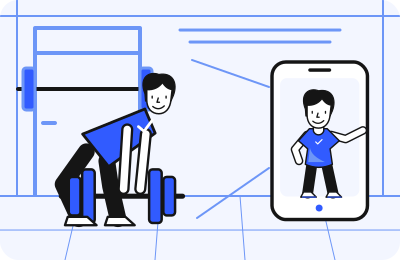
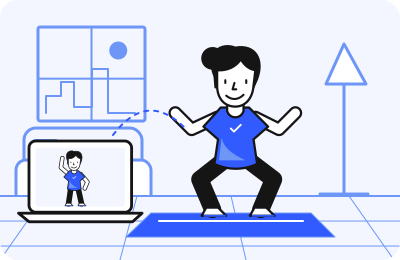
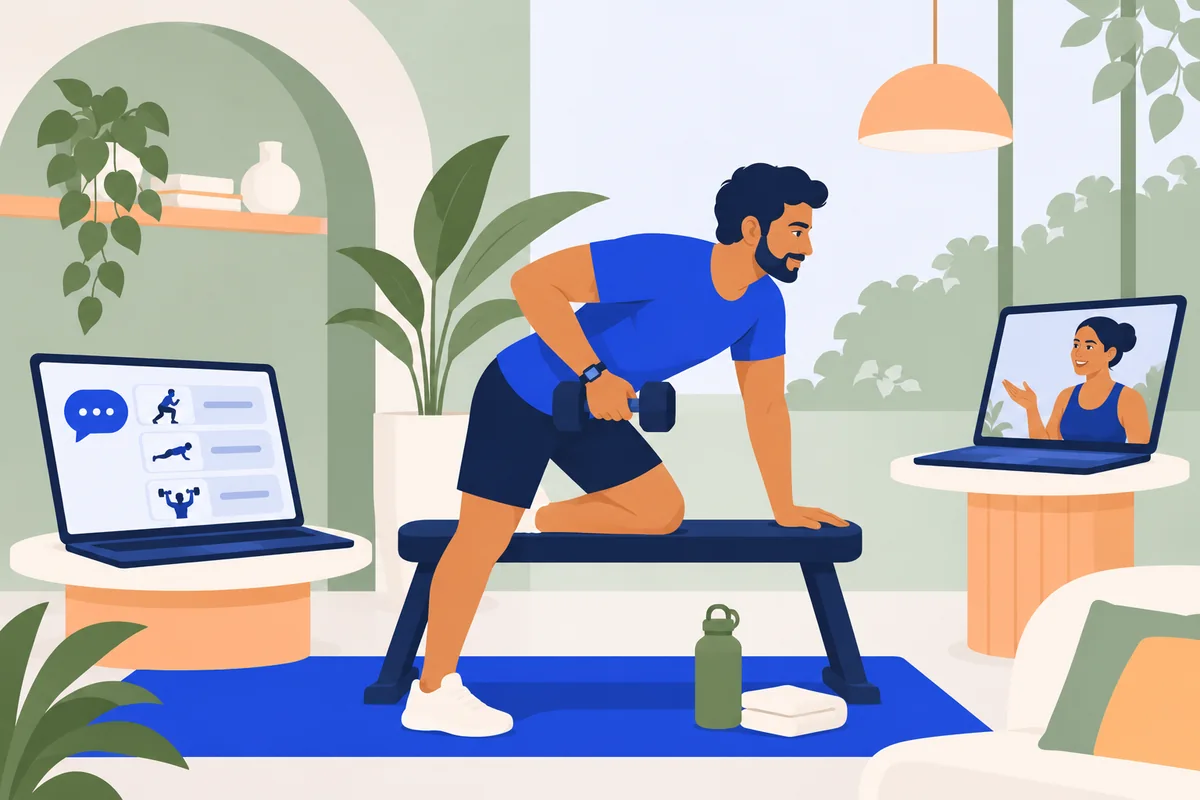
- It cannot see you move. This follows from the format: a text chat has no video of your squat. Technique is a large part of safe lifting, and a written plan cannot correct a rounded back or knees caving in. See what a live coach can do about this in can an online personal trainer correct your form.
- Plans tend to be general. Dergaa and colleagues found GPT-4 programmes lacked precision for individual conditions and goals. Havers and colleagues' coaches called overall quality moderate.
- It may lean too cautious or miss the safety basics. Dergaa et al. saw excessive safety taking priority over training effect. In the JMIR study, most inaccuracies were a missing note that you need medical clearance before starting.
- Adjusting over time is weak. Dergaa et al. reported that the model's ability to refine recommendations through ongoing interaction was not fully satisfactory. Havers et al. conclude the models cannot account for individual responses to training. A tool that does not know how last Tuesday went cannot easily change next Tuesday.
- Gaps in method. Washif et al. noted that the plans left out some techniques (cluster sets, blood flow restriction, drop sets) and repeated a debatable claim that muscle damage drives growth.
See a doctor first if you have a health condition
If you have heart or lung disease, high blood pressure, diabetes, are pregnant, or have an injury or ongoing pain, speak to a doctor before you start any plan, including one from an AI. The JMIR study found that missing medical clearance was the most common error in ChatGPT's exercise advice for people with health conditions. This post is general information, not medical advice.
How do you get a usable beginner plan out of an AI assistant?

The studies tested short prompts about imaginary people. You can do better, because you know the real facts about yourself. Treat it like a conversation with a well-read friend who has never met you.
- 1
Tell it who you are
Give your age, height, weight, sex, any injuries or medical conditions, medicines, and how active you are now. Say plainly if you have never trained.
- 2
Give it your real limits
State how many days a week you can train, how long each session can be, and what equipment you have: nothing, a pair of dumbbells, or a full gym. A plan you cannot follow is a bad plan.
- 3
Name one goal
Pick one: fat loss, strength, a first 5 km, or simply moving more. Mixed goals produce vague plans.
- 4
Ask it to justify each choice
Ask why it picked each exercise, the sets and reps, the rest times, and how many weeks the plan runs. If it cannot explain a choice in plain words, question that part.
- 5
Ask for progression and a deload
Ask exactly when and how to add weight or reps, what to do if you miss a session, and when to take an easier week. Studies note that progression is where generic plans are thin.
- 6
Ask what it assumed and what it cannot know
Ask it to list its assumptions and the risks for someone like you. Then ask which parts a doctor or coach should check.
- 7
Cross-check before you start
Compare the plan with a second prompt in a fresh chat, and with the advice of a doctor or qualified coach. If two runs disagree sharply, trust neither until a person has looked.
- 8
Record a video of your first sessions
Film your squat, hinge and push-up from the side. Compare them with a reputable demonstration, or show a qualified person. This covers the part the chat cannot see.
Is a human coach worth paying for?

It depends on your starting point and what could go wrong. Here is a fair way to think about it.
| Your situation | AI assistant alone | A human coach |
|---|---|---|
| Healthy beginner, bodyweight or light dumbbells at home | Often enough for a first 4 to 6 weeks, if you film your form | Useful if you want technique checked early |
| Questions about terms, exercise swaps, rest times | Good: this is where it did well in the studies | Not needed for this alone |
| Injury, pain, pregnancy, heart, lung or blood pressure issues | Not enough. Studies found safety gaps for health conditions | Worth it, alongside your doctor's advice |
| Heavy barbell lifts such as squat and deadlift | Cannot judge your technique | Worth it, at least for the first sessions |
| You start plans and stop within weeks | Free, but nobody notices when you skip | A fixed appointment and someone expecting you can help |
| Plateau after months of steady training | Can suggest ideas, but cannot see your sessions | Worth it: a coach adjusts using what you actually did |
A coach is not automatically worth the money. If you are healthy, self-motivated and training with light loads, you may not need one yet, and a careful AI-assisted plan is a sensible start. For a fuller look at costs and what you get, read is online personal training worth it. If you decide to hire, how to choose a personal trainer lists what to check.
Many people use both: the assistant for quick questions and drafts, a person for form, safety and changes over time. The authors of the studies above reach a similar view in their own words, calling AI a supplementary tool or a draft-writer. If you are planning for January, New Year fitness resolutions looks at making a plan stick, and our blog has more posts like this one.
What is the sensible way to use both?
- Use the assistant to learn the basics and draft a four-week plan with the checklist above.
- Start easy for two weeks and film your form.
- Keep a simple log of weights, reps and how each session felt.
- Paste the log back into the chat each week and ask what to change. Treat the answer as a suggestion.
- Bring in a qualified coach when you add heavy lifts, feel pain, stop progressing, or find you are not turning up.
Sources
- ChatGPT Outperforms Personal Trainers in Answering Common Exercise Training Questions, Journal of Sports Science and Medicine
- Using artificial intelligence for exercise prescription in personalised health promotion: A critical evaluation of OpenAI's GPT-4 model, Biology of Sport (PubMed)
- Artificial intelligence in sport: Exploring the potential of using ChatGPT in resistance training prescription, Biology of Sport (PubMed Central)
- A professional assessment of training plans for muscle hypertrophy and maximal strength developed by generative artificial intelligence, Biology of Sport (PubMed)
- Comprehensiveness, Accuracy, and Readability of Exercise Recommendations Provided by an AI-Based Chatbot, JMIR Medical Education (PubMed)
- The AI recommendation paradox: a systematic review of large language models in exercise recommendation, Biology of Sport (PubMed)
- Evaluation strategies for large language model-based models in exercise and health coaching: scoping review, Journal of Medical Internet Research (PubMed)
Written by the MakeMyFitness team from the sources above and reviewed by Kumar Abhishek, our lead coach (Diploma in Personal Training, K11 School of Fitness Sciences). First published , last updated . How we write and check our guides: editorial policy. Spotted something out of date? Tell us at hello@makemyfitness.com.