In short
- You cannot choose where your body loses fat, and a six-week trial of abdominal exercise alone found no drop in belly fat or waist size.
- What helps is slow, repeated work: regular walking, some strength training, enough sleep, and a waist you measure the same way each time.
- For Asian Indians, a waist of 90 cm for men or 80 cm for women is the published cut-off for abdominal obesity.
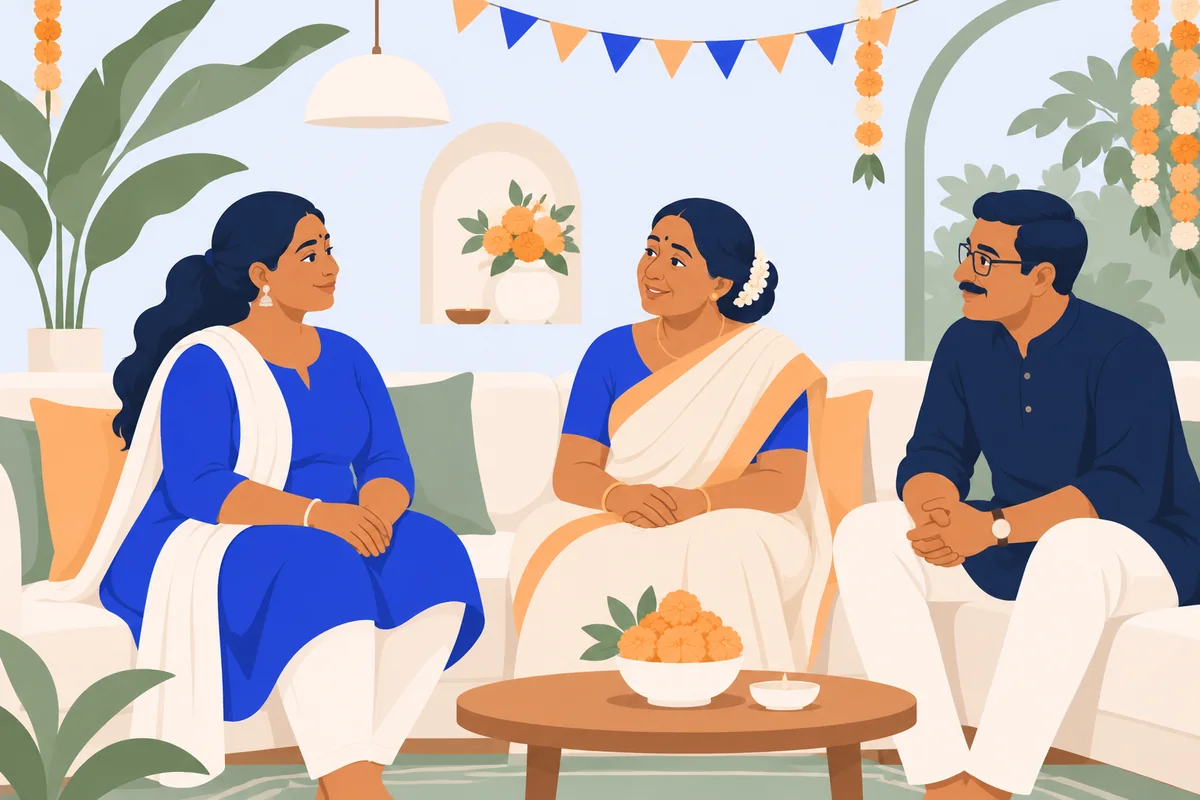
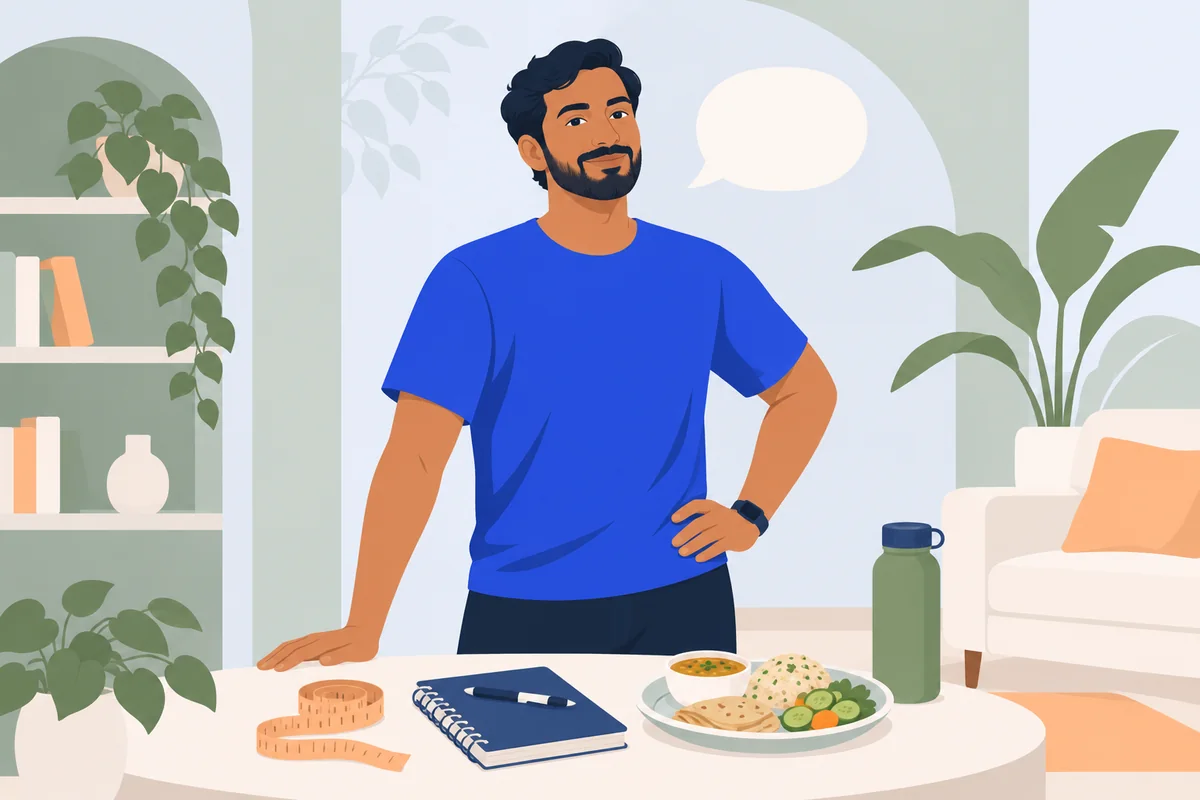
Someone at a wedding pats your stomach and says "Tond nikal aayi" (your belly has come out). Another calls it "prosperity". An uncle adds "Shaadi ke baad toh hota hai" (it happens after marriage). Most of it is meant as affection, and it still lands badly. This post gives you a few replies, then the facts: how to measure your waist, how common a larger waist is in India, and what the research says about the things people try.
What do you say when someone jokes about your tond?

You do not owe anyone an explanation of your body. You also do not have to laugh. A reply works best when it is short, calm and closes the topic. Pick the one that suits the person.
- Light and quick: "Haan, khaana achha hai ghar mein. Aur batao, kaisa chal raha hai?" (Yes, the food at home is good. Tell me, how are you?)
- Plain and firm: "My body is not a topic for today. How is your work?"
- For someone close: "That comment stings a bit. I would like you to stop, please."
The people who joke are usually repeating what they heard at their own table. A flat, friendly answer rarely starts a fight, and it often ends the joke. If the comments come from family every visit, our post on relatives who comment on your weight has more words to use. Men who put on weight after the wedding hear this a lot too, and we cover that in weight gain after marriage.
How do you measure your waist properly?

A mirror or a trouser size tells you little. A tape measure is more reliable, provided you use it the same way every time. The NHS gives four steps:
- Find your lowest rib and the top of your hip bone on the side of your body.
- Locate the midpoint between them, which should sit around belly-button height.
- Wrap the tape around your body at that point.
- Breathe out normally, without pulling your stomach in, then read the number.
Do this bare-skinned or over a thin vest, first thing in the morning, once every two weeks. Write the number down. A single day's reading moves with a heavy meal or a full bladder, so look at the trend over a month, not the day.
What waist size counts as high for Indians?
A 2009 consensus statement by Misra and colleagues in the Journal of the Association of Physicians of India set waist cut-offs for Asian Indians. A later review by Misra and Shrivastava reports them as 90 cm or more for men and 80 cm or more for women. These numbers are lower than the cut-offs used for white European populations, because Asian Indians tend to carry more body fat and more fat inside the abdomen at a given weight.
| Who | Waist at or above | In inches (approx.) |
|---|---|---|
| Men | 90 cm | 35.4 inches |
| Women | 80 cm | 31.5 inches |
A cut-off is a screening line, not a verdict on you. It tells a doctor where to look more closely, for example at blood sugar and blood pressure. If your number is above the line, it is a reason to get a routine check, not a reason for shame. Our post on whether you can be fat and fit looks at what studies say about fitness at any size.
How common is a large waist in India?
Very common. A 2026 analysis in Scientific Reports used the National Family Health Survey 2019–2021 (NFHS-5), covering 664,646 women aged 15–49 and 96,010 men aged 15–54. Using waist-to-hip ratio cut-offs from the WHO (above 0.85 for women, above 0.90 for men), it found abdominal obesity in 56.6% of women and 48.9% of men. It was higher among older adults, wealthier groups and urban residents.
The method matters. A separate NFHS-5 analysis of women in Cureus found that 39.9% had a waist above 80 cm, against 56.6% when waist-to-hip ratio was used. The two measures pick out different people, and the authors found the waist measure tracked diabetes and high blood pressure more closely. So "how many people have a paunch" depends on how you count, but on either count it is a large share of adults. You are not an exception.
Can you reduce belly fat from just one area?

No. Fat does not leave the part you exercise. In a randomised trial by Vispute and colleagues (2011, Journal of Strength and Conditioning Research), 24 healthy, sedentary adults aged 18–40 did either nothing or seven abdominal exercises, 2 sets of 10 repetitions, 5 days a week for 6 weeks, while eating the same amount of energy as before. The study found no significant effect on body weight, body fat percentage, abdominal circumference or abdominal skinfolds. The exercise group did get better at curl-ups, so the muscles improved, but the fat over them did not change.
The trial was small and short, so it does not settle every question. It does match what coaches see: sit-ups build the muscle under the paunch, not the paunch itself.
What works against belly fat and what does not?
Here is what people usually try, set against what we could find. Where we found no good trial, we say so.
| What people try | What the evidence says |
|---|---|
| Crunches and sit-ups | No effect on belly fat or waist in a 6-week trial (Vispute 2011). They build abdominal muscle endurance. |
| Sauna belts and slimming belts | We could not find trials showing they reduce belly fat. Evidence is lacking. |
| Special drinks (jeera water, apple cider vinegar, green tea) | Evidence is limited, see our guide to these drinks. |
| Walking | Aerobic training lowered waist size more than strength training alone in a 2013 pooled analysis. See walking for weight loss. |
| Strength training | On its own it lowered waist size less than aerobic work, but combined aerobic and strength training did better than strength alone. |
| Sleep | In a small trial, two weeks of 4-hour sleep nights increased abdominal fat. Evidence for the long term is lacking. |
Two of these rows need detail. In the 2013 analysis by Schwingshackl and colleagues (15 trials, 741 overweight or obese people, PLoS One), aerobic training cut waist circumference by 1.10 cm more than resistance training, and combined training cut it by 1.57 cm more than resistance training alone. The differences are modest, and the authors noted that most of the trials were small and that the results call for cautious interpretation.
On sleep, Covassin and colleagues (2022, Journal of the American College of Cardiology) kept 12 healthy adults, mostly men, in a hospital for 21 days. Over 14 days of a 4-hour sleep opportunity, compared with 9 hours, they ate more, gained more weight, and added abdominal fat, including the deeper visceral fat. It was a tiny study and an extreme change, so we do not read it as a rule for ordinary short nights. It does suggest sleep deserves a place beside exercise. Stress sits near it, and our guide on stress and belly fat covers that link.
See a doctor before hard exercise in these cases
A large waist together with chest pain, breathlessness on small effort, diabetes or high blood pressure needs a doctor's check before you start anything hard. Stop and get medical help if exercise brings on chest pressure, severe breathlessness or faintness. This post is general fitness information, not medical advice.
What does a gentle four-week start look like?

If you have not exercised in years, begin smaller than feels necessary. The aim of the first month is a habit you can keep, not a result. This is a general outline, not a prescription. For the full training plan, including strength work and how to progress, go to our guide on belly fat training.
| Week | Walking | Strength | Also |
|---|---|---|---|
| 1 | 10 minutes, 4 days | None yet | Measure your waist, fix a bedtime |
| 2 | 15 minutes, 4 days | 5 minutes of sit-to-stand from a chair, 2 days | Keep the same bedtime |
| 3 | 20 minutes, 5 days | 10 minutes, 2 days (wall push-ups, chair squats) | Measure again at the end of the week |
| 4 | 25 minutes, 5 days | 10–15 minutes, 3 days | Compare both waist readings |
Walk at a pace where you can talk but not sing. If a week feels too hard, repeat the previous one. For a home routine to build on, see our home workout plan for beginners. Your waist may move slowly or hardly at all in a month, and that is normal. Energy, sleep and how stairs feel often change first.
Do you have to want a smaller waist at all?

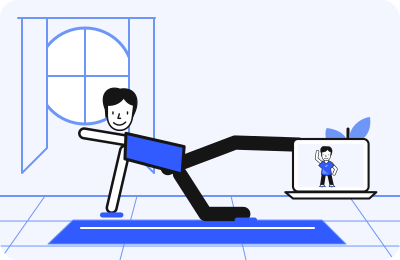
No. Some readers want to change their weight and some do not, and both are fine. The measurement and the plan above are there for those who want them. If you do start, training live with a coach on video at home means nobody else is watching, and the coach works with the body you have today. Our guide for overweight beginners starting online explains what a first session involves.
Sources
- Consensus statement for diagnosis of obesity, abdominal obesity and the metabolic syndrome for Asian Indians (Misra et al., 2009), Journal of the Association of Physicians of India, via PubMed
- Obesity and Dyslipidemia in South Asians (Misra and Shrivastava, 2013), Nutrients, via PubMed Central
- Abdominal obesity in India: sex stratified multilevel estimates across 707 districts from a nationally representative cross-sectional survey, Scientific Reports
- Comparison of Waist Circumference and Waist-to-Hip Ratio in Assessing Abdominal Obesity and Cardiometabolic Risk Among Women Aged 15-49 Years in India, Cureus, via PubMed
- The effect of abdominal exercise on abdominal fat (Vispute et al., 2011), Journal of Strength and Conditioning Research, via PubMed
- Impact of Different Training Modalities on Anthropometric and Metabolic Characteristics in Overweight/Obese Subjects, PLoS One, via PubMed Central
- Effects of Experimental Sleep Restriction on Energy Intake, Energy Expenditure, and Visceral Obesity (Covassin et al., 2022), Journal of the American College of Cardiology, via PubMed
- Check how to measure your waist correctly, NHS
Written by the MakeMyFitness team from the sources above and reviewed by Kumar Abhishek, our lead coach (Diploma in Personal Training, K11 School of Fitness Sciences). First published , last updated . How we write and check our guides: editorial policy. This is general fitness information, not medical advice: see the medical disclaimer.