Can belly fat training target your stomach?
Belly fat training can help you become fitter, stronger and more active, but an exercise that makes your stomach muscles work is not a dependable way to remove the fat above them. The practical distinction is between training a muscle and reducing body fat. Keep abdominal exercises for strength and control; build your fat-loss plan around your whole week.
In a small randomised trial of abdominal exercise, six weeks of ab training improved muscular endurance without significantly reducing abdominal fat or waist measurements. That study does not answer every question about regional fat loss, but it shows why a daily crunch challenge is a poor promise of a smaller waist. There is no reliable exercise sequence that guarantees lower-belly fat will disappear first.
This guide is for adults looking for a general training routine. It is not a plan for pregnancy, early postpartum recovery, a hernia or ongoing abdominal pain. Those situations need individual guidance. If your stomach has become newly swollen, painful or persistently uncomfortable, do not assume that a harder workout is the answer.
Give each part of the plan a clear job
| Part of the plan | What you do | What to track |
|---|---|---|
| Aerobic activity | Walk briskly, cycle, swim or use a suitable cardio machine | Time completed and how the effort feels |
| Whole-body strength | Practise a squat, hinge, push and pull | Controlled repetitions and gradually increasing resistance |
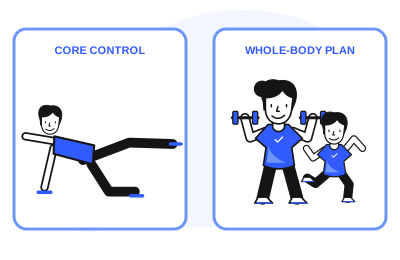
| Core practice | Use a few manageable trunk-control exercises | Steady breathing and movement without compensation |
| Food habits | Choose meals and portions that suit your overall needs | Repeatable habits rather than a perfect single day |
| Review | Compare consistent measurements over time | Waist trend, training attendance and everyday energy |
The CDC explains energy balance as the link between activity, food intake and weight loss. Exercise can contribute to that balance, but you cannot infer a calorie deficit from how much a session made you sweat. A plan with normal meals and manageable activity is easier to evaluate than alternating severe restriction with exhausting workouts.
A short core routine to add after strength work
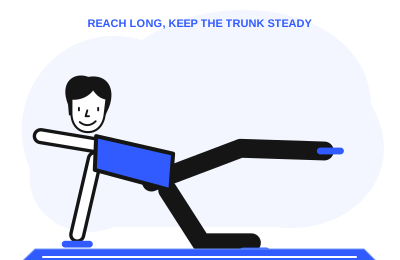
Treat this as a suggested practice routine, not a belly-fat-burning treatment. Begin with one round and take whatever rest you need between exercises. If you can keep the movements comfortable and breathe normally, build towards two rounds. Quality matters more than holding a position until you shake. Stop or simplify an exercise that produces pain or makes you repeatedly lose control.
- 1
Heel slide: 5 to 8 slow repetitions per side
Lie on your back with knees bent and feet on the floor. Breathe out gently and slide one heel away, only as far as you can keep your pelvis steady and back comfortable. Bring it back and change legs. Keep the movement small at first. This is a starting option before trying longer-lever dead bug variations.
- 2
Bird dog: 5 to 8 repetitions per side
Start on hands and knees with a comfortable back position. Reach one arm forwards, return, then try sliding the opposite leg backwards. Combine the arm and leg only when you can avoid rotating your trunk. Reach long rather than lifting high. A short movement with control is enough; you do not need to hold an exaggerated arch.
- 3
Wall plank: 15 to 25 seconds
Place your forearms on a wall and step your feet back slightly. Keep your head, trunk and legs in a comfortable line while breathing steadily. Move closer if it feels too difficult. Progress to a fixed counter only when the wall version is easy. Finish the hold before your lower back begins sagging or your shoulders become uncomfortable.
- 4
Light suitcase hold: 15 to 25 seconds per side
Stand with a light dumbbell or securely held bag beside one leg. Keep your shoulders roughly level and resist leaning towards or away from the weight. Breathe normally, set the weight down under control and switch hands. Use a lighter load if your grip or balance distracts you from keeping a steady position.
These exercises give you several ways to practise controlling the trunk without a long floor circuit. If getting down to the floor is difficult, start with the wall plank and a light standing hold. Do not make the transition to the mat the hardest part of the session. A coach can help you choose a setup that fits your mobility and available space.
As these become familiar, change just one detail: slide the heel a little farther, make the bird dog smoother, use a slightly lower plank support, or add a small amount to the hold. You can also keep the same versions and improve their control. Longer and harder are options, not obligations you have to meet every week.
Build the rest of your belly fat training week
The CDC's adult guidelines recommend at least 150 minutes of moderate aerobic activity plus muscle strengthening on two days. The schedule below separates walking from strength so you can see where the aerobic minutes come from. It is a target example to build towards, not a minimum entry requirement for someone who has been inactive.
| Day | Main activity | Core practice |
|---|---|---|
| Monday | Whole-body strength and a 20-minute walk | One comfortable round |
| Tuesday | 30-minute brisk walk | None needed |
| Wednesday | 20-minute brisk walk | None needed |
| Thursday | Whole-body strength and a 20-minute walk | One comfortable round |
| Friday | 30-minute brisk walk | None needed |
| Saturday | 30-minute brisk walk | Optional technique practice if recovered |
| Sunday | Rest or easy movement | None needed |
For the strength days, choose a squat or sit-to-stand, a hip hinge or bridge, an incline push-up and a row. Our fat loss exercises guide explains the movements and their gym alternatives. Do those first, then add the core routine if you have time and energy. If your session gets cut short, you do not need to squeeze in abdominal work at the expense of every other muscle group.
Start with shorter walks if the example is a large jump from your current week. Split them into convenient blocks and choose a route you can repeat. Walking in a shaded park, around a building or on a treadmill can all fit the plan. Use your actual breathing and comfort to choose the pace, rather than copying somebody else's speed setting.
What about crunches, leg raises and mountain climbers?
Crunches, leg raises and mountain climbers are exercise choices, not mandatory steps to losing belly fat. A crunch can train abdominal movement if it feels comfortable. Leg raises are harder to control when the lever gets longer. Mountain climbers combine a supported upper-body position with repeated leg movement, so they may become tiring for your wrists or shoulders before your intended cardio work is complete.
| If this is happening | Try this adjustment |
|---|---|
| You pull on your neck during crunches | Reduce the range, support your head lightly or choose heel slides |
| Your back arches during leg raises | Bend the knees, shorten the movement or return to heel slides |
| Mountain climbers become hurried and uncomfortable | Use standing marching for cardio and a separate comfortable core exercise |
| Plank holds turn into breath-holding | Shorten the hold or raise your support surface |
There is no prize for choosing the floor version before you are ready. If a movement remains painful after a sensible adjustment, leave it out and get advice. For more ways to train quietly without jumping, see the home workout for weight loss. Your neighbours do not need to hear the session for it to count.
Make meals support the routine
Avoid building a stomach-focused diet around a single drink, supplement or forbidden food. Instead, look at the meals you repeat most often. Does lunch include a protein source? Are vegetables available at dinner? Do long gaps between meals leave you grazing while cooking? These are practical questions you can act on without replacing familiar food with a separate diet menu.
Try planning your next few breakfasts and lunches before changing every meal. You might keep idli or dosa and add a suitable protein source, or keep rice and dal while reviewing portions and the rest of the plate. The high-protein Indian breakfast guide and calories in Indian food guide can help you make specific comparisons. Use them to plan, not to label ordinary food as good or bad.
Measure waist changes without a daily verdict
If waist tracking is helpful to you, choose one measurement method and keep it consistent. Use the same tape, the same position and a similar time of day; stand naturally rather than pulling your stomach in. Write down your method so you can repeat it. A weekly check is a practical option, but skip measurement entirely if it makes the process more distressing than useful.
Look at several weeks together and keep the training record beside the measurement record. A single number cannot tell you which tissue changed or whether a workout worked. Note other useful changes: walking a familiar route with less effort, standing up more easily, or controlling a core exercise that initially felt awkward. Those observations help you adjust the plan even before your clothing fits differently.
When progress slows, review the plan before adding more
First check whether the planned sessions happened. If meetings repeatedly displace the evening walk, move it to lunch or shorten it. If you are too sore to train again, reduce the strength volume. If food intake varies widely between weekdays and weekends, review the whole week rather than treating Monday as the only day that counts. Choose one adjustment you can maintain and give it time.
A review of resistance-based exercise supports keeping strength work in a weight-loss program. That does not mean you need a harder abdominal finisher each week. Keep building the broad routine, and ask for help if you are unsure whether your exercise technique or workload suits you. A coach can refine training; unexplained symptoms belong with a clinician.
Sources
- The effect of abdominal exercise on abdominal fat (2011), Journal of Strength and Conditioning Research
- Adult Activity: An Overview, Centers for Disease Control and Prevention
- Physical Activity and Your Weight and Health, Centers for Disease Control and Prevention
- Resistance training effectiveness on body composition and body weight outcomes (2022), Obesity Reviews / Edith Cowan University
Written by the MakeMyFitness team from the sources above. First published , last updated . Spotted something out of date? Tell us at hello@makemyfitness.com.