In short
- Comments like “moti ho gayi ho” (you have become fat) are common at Indian weddings and festivals, and studies suggest family weight talk is not harmless: in young people it is linked to higher weight bias internalisation.
- You can reply lightly, firmly or by closing the topic.
- Choose by who is speaking and how often it happens, and look after yourself afterwards.
It is wedding season, and many of us are about to meet relatives we see twice a year. Within a minute of arriving, someone may say “moti ho gayi ho” (you have become fat) or “kitna weight badh gaya hai” (how much weight you have put on), often with a smile and a plate of food in your hand. This post is for the person on the receiving end. You will find words you can actually say, what researchers have found about family weight comments, and what to do for yourself afterwards.
Why do relatives comment on your weight at weddings and festivals?

Most of us know the pattern without needing a statistic. A wedding or festival is one of the few times a wide family is in one room, and the first thing people notice is what has changed since last time. In many families, remarks about weight, skin colour or marriage plans are treated as a form of attention, even affection. The speaker often does not think of it as an attack.
That does not make it fine, and it does not mean you have to take it. Intent and effect are different things. A comment can be meant kindly and still land badly, especially when it is made in front of others, when it happens every time, or when you are already tired and a little self-conscious about the outfit you chose.
What does research say about weight comments from family?

Researchers have studied this mostly in young people in the United States, so read the findings with that in mind. All of the studies below measure association, not proof that comments cause an outcome.
- In a 2024 survey of 1,859 adolescents aged 10 to 17 (Wu, Puhl and colleagues, Journal of Pediatric Psychology), those teased about weight by both family and peers had the highest weight bias internalisation, meaning they most often applied negative weight stereotypes to themselves. Those teased only by family scored higher than those teased only by peers.
- In a 2024 study of 375 children aged 10 to 15 in Massachusetts (Rancaño, Puhl and colleagues, Pediatric Obesity), children who often heard negative weight talk from family had higher internalisation than children who never did. The link was statistically significant only among non-Hispanic White children in that sample.
- In a 2023 study that followed 1,568 young people from about age 14 into their early twenties (Hooper, Puhl and colleagues, Journal of Adolescent Health), warm and supportive family functioning did not fully offset the effect of weight stigma on disordered eating. Among young people who had experienced family weight teasing, the gap in overeating between high and low parental support for autonomy (17.9% against 22.4%) was not statistically significant.
- In a 2006 online survey of overweight and obese adults (Puhl and Brownell, Obesity), physicians and family members were the most frequently reported sources of weight bias.
A 2010 review by Puhl and Heuer in the American Journal of Public Health concluded that weight stigma is not an effective public health tool for reducing obesity, and that it threatens health and undermines obesity interventions. If you want to read more on whether shaming works, see our post on whether fat shaming works.
These studies do not say that every comment harms every person, and they do not cover adults in Indian families. What they do suggest is that if a remark leaves you feeling low, you are not being oversensitive: researchers see the same pattern.
What can you say when someone comments on your weight?

You do not owe anyone an explanation of your body, your health or your plans. Pick a tone that matches the person and the setting. A short sentence said calmly works better than a long defence. Say it once, then change the subject or move towards something else, such as the food, the bride or a drink.
| Who | Light | Firm | Closing the topic |
|---|---|---|---|
| A relative at a wedding | “Haha, yes, the food here is good. How is your daughter doing?” | “I would rather not talk about my weight. Tell me about the wedding.” | “I am not discussing this. Excuse me, I need to say hello to someone.” |
| A parent | “I know you care, Mummy. Let me handle it my own way.” | “When you comment, I feel worse, not better. Please stop mentioning it.” | “I am not going to talk about this today. Please do not raise it again.” |
| A partner | “That joke did not land with me. Can we skip it?” | “Please do not comment on my body, in public or at home. It hurts.” | “I need this to stop. If it continues, we should talk to someone together.” |
| A colleague | “Thanks, but I am not taking body reviews today.” | “My body is not a work topic. Let us get back to the report.” | “That comment was not okay. Please do not repeat it.” |
A few habits help in all four cases. Keep your voice level. Do not explain your diet, your thyroid or your plans to be polite, because every explanation invites a new opinion. If a comment is made in front of a crowd, you can reply to the room with something short and then turn to a different person. If the person is someone you see often, a private word later (“that comment bothered me, please do not make it again”) usually lands better than a scene at the dinner table.
Have one line ready before you walk in
Decide your reply in advance, say it once in front of a mirror, and pick one person at the venue you can stand next to when it happens. Having a plan makes the first comment much easier to handle, because you are no longer making it up on the spot.
What if the comment comes from a parent who is genuinely worried?

Sometimes a parent says it because they are scared about your health, not because they want to hurt you. Their worry may be real, and the way they say it may still be the problem. You can tell them both things: “I can see you are worried. Comments make it harder for me, not easier.” Then offer them another way to help, for example asking them to walk with you in the evening, or to leave food choices to you.
If you are the parent, partner or friend wondering how to bring up weight without hurting someone, we wrote a separate post for that side of the table: how to talk about someone’s weight. Anything about a child’s health should go to a doctor, not to a relative at a wedding.
How do you look after yourself after a bad evening?

Many of us replay one sentence for days. A few small things can take the edge off:
- Talk to someone who was not there, a friend or sibling, and tell them exactly what was said.
- Write down the sentence and what you would say next time. It moves it out of your head.
- Eat normally. Skipping meals after a comment, or planning a punishing week to “make up” for it, can start a cycle that feels worse than the remark did.
- Spend time with people who do not comment on bodies, and tell family members which topics are off limits before the next event.
When to speak to a doctor or a mental health professional
If comments leave you low for weeks, if you are skipping meals, bingeing, purging or punishing yourself with exercise, or if you have thoughts of harming yourself, please speak to your doctor or a mental health professional. Do not wait for it to pass on its own. If you are in immediate danger, call your local emergency number (112 in India) or go to the nearest hospital.
Is body shaming illegal in India?
We are not lawyers and this is not legal advice. We can tell you only what one news report says. According to LiveLaw and ThePrint, on Monday, 6 January 2025 Justice A. Badharudeen of the Kerala High Court refused to quash a case against a former Kerala State Electricity Board employee, who was accused of telling a woman colleague that her “body structure was fine” and sending her messages. The court said the remark was, prima facie, sexually coloured, and that the ingredients of Sections 354A and 509 of the Indian Penal Code, and of the Kerala Police Act, appeared to be made out.
Two limits matter. The finding was prima facie, so the case continues and nobody had been convicted at that stage. And it concerned a sexually coloured remark to a colleague, not a relative commenting that someone has put on weight. We could not open the order itself. If you want to know whether something said to you is an offence, speak to a lawyer, and read the order in the case (Crl.MC No. 4729 of 2021) instead of relying on summaries.
What if you do want to change something about your body?

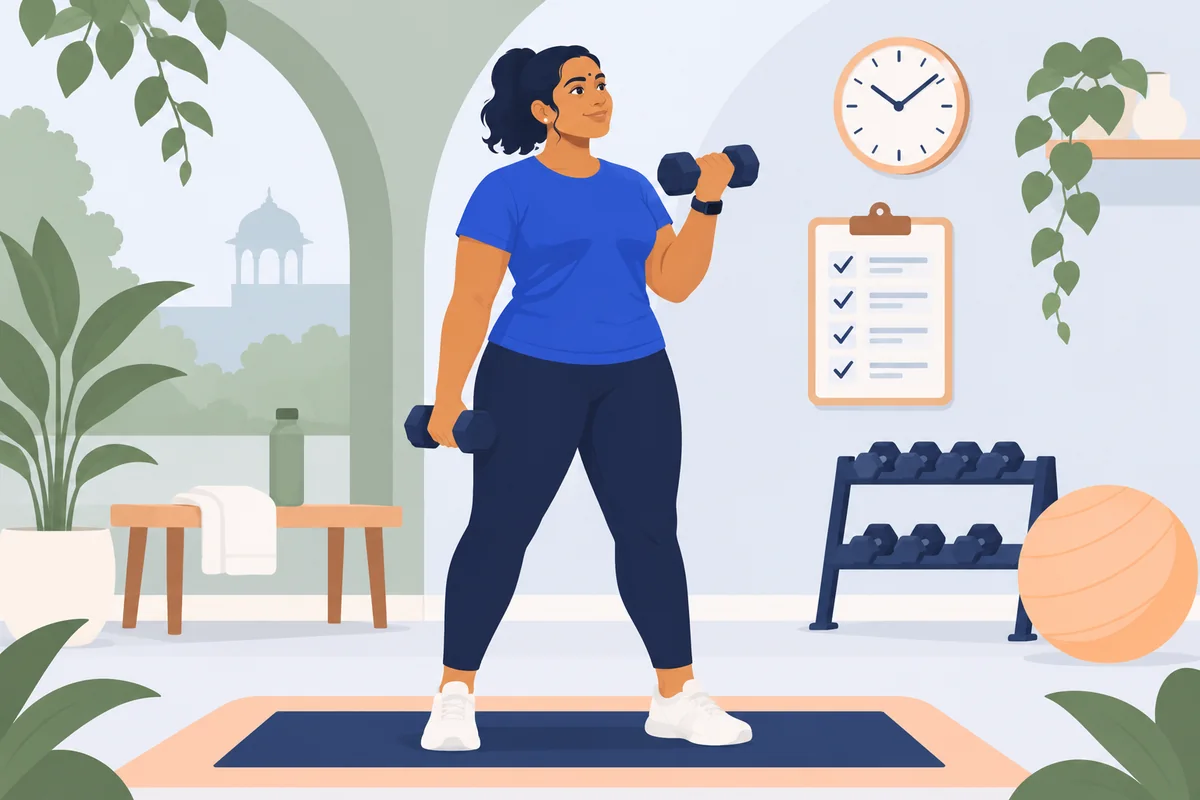
That is a fair thing to want, and equally fair not to want. Either way, it works better when it is your decision and your pace rather than a reaction to a remark at a wedding. Our guides on online personal training for overweight beginners and a home workout plan for beginners are a start.
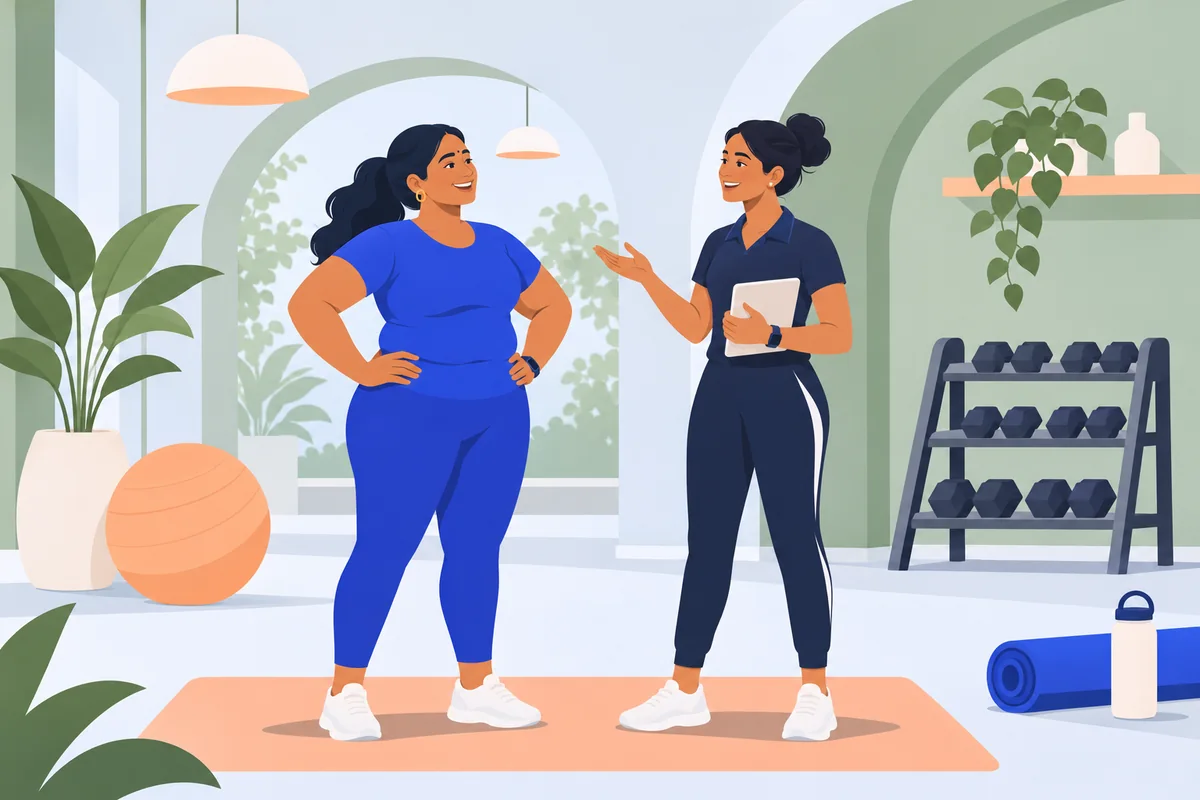
Here is the one thing we would add. Training live with a coach on video, at home, means nobody else is watching, and the coach works with the body you have today rather than the one a relative thinks you should have. If you are weighing it up, our guide asks whether online personal training is worth it. If gyms feel difficult, see gym anxiety when overweight.
Sources
- Exploring the interplay of weight-based teasing and sociodemographic factors in adolescent weight bias internalization, Journal of Pediatric Psychology (Wu, Puhl and colleagues, 2024)
- Negative familial weight talk and weight bias internalization in a US sample of children and adolescents, Pediatric Obesity (Rancaño, Puhl and colleagues, 2024)
- Can Family and Parenting Factors Modify the Impact of Weight Stigma on Disordered Eating in Young People? A Population-Based Longitudinal Study, Journal of Adolescent Health (Hooper, Puhl and colleagues, 2023)
- Confronting and coping with weight stigma: an investigation of overweight and obese adults, Obesity (Puhl and Brownell, 2006)
- Obesity stigma: important considerations for public health, American Journal of Public Health (Puhl and Heuer, 2010)
- Calling a woman's body structure fine is prima facie sexual harassment: Kerala High Court refuses to quash FIR, LiveLaw
- Commenting on woman's body structure amounts to sexual harassment: Kerala HC, ThePrint (PTI)
Written by the MakeMyFitness team from the sources above and reviewed by Kumar Abhishek, our lead coach (Diploma in Personal Training, K11 School of Fitness Sciences). First published , last updated . How we write and check our guides: editorial policy. This is general fitness information, not medical advice: see the medical disclaimer.