In short
- Ozempic-shaming is being judged for losing weight with a medicine, often by people who judged the weight before.
- Experiments in 2024 and 2026 found that a person described as losing weight with a GLP-1 medicine was rated more negatively than one who lost it with diet and exercise.
- Your medical choices are private, and you owe nobody an explanation.
- Below: the studies, the India picture, and replies you can use.
Someone says “Injection lagwaya hoga” (you must have got the injection) when you walk in looking lighter. It may be said as a joke or a compliment. It usually carries a second message: that the weight loss does not count. This is what people now call Ozempic-shaming, and this post is for the person hearing it, and for anyone who loves them.
These are prescription medicines
Ozempic, Wegovy, Mounjaro and similar medicines are prescription-only. Every decision about them, whether to take one, change it or stop, belongs with you and your doctor. This post does not advise on any of that, and it says nothing about who should take one.
What does Ozempic-shaming mean?

It means being judged for losing weight with a medicine, usually one of the GLP-1 injections. The judgement tends to sound like “that is cheating” or “the easy way out”. The odd part is who says it. Often it is the same people who commented on the weight before, with “Moti ho gayi ho” (you have become fat) or “Tond nikal aayi” (your belly has come out). The weight was open to comment when it was higher. Now the loss is open to comment too.
It is not only about people with a larger body. The Boston Globe reported in September 2026 that people are now judged both for taking these medicines and for not taking them, and that some are pressed to explain themselves either way. That is the real pattern: your body is treated as public business, whatever you choose.
Do studies show people judge weight loss by the method?

Yes, in experiments. These are online studies where people read a short description of a fictional person and rate them. They show how strangers react to a story. They do not show how your own family will react, and the samples were not Indian.
| Study | Who took part | What they found |
|---|---|---|
| International Journal of Obesity, April 2024 | 357 US adults read about a woman who lost 15% of her body weight | Negative evaluations were stronger toward a woman who lost weight with a GLP-1 medicine than with diet and exercise. The authors link this to a belief that the medicine is a shortcut, and say it held for a lean woman and one with obesity alike. |
| Annals of Behavioral Medicine, October 2024 | 440 US adults read about a woman who lost 15%, by GLP-1, bariatric surgery or diet and exercise | Reading about GLP-1 weight loss, compared with diet and exercise, led to more support for GLP-1 coverage policies, but shortcut beliefs partly pulled that support down. The difference for surgery was not statistically significant. |
| International Journal of Obesity, April 2026 | 607 people in study 1, 706 in study 2, rating a fictional person | The person who lost weight with a GLP-1 was rated more negatively than one who lost weight with diet and exercise, and than one who did not lose weight. In study 2, people who regained weight after stopping a GLP-1 were rated about the same as those who regained after diet and exercise, and both more negatively than someone who kept the weight off. |
| Frontiers in Psychology, April 2026 | 183 adults in Switzerland, comparing drugs, surgery and diet and exercise | Drug treatment was linked to lower ratings of the doctor and the treatment. Lack of willpower lowered responsibility only in the drug condition. It was a convenience sample, mostly young and female, so the authors caution about generalising. In our view it is too small to settle anything. |
Read the 2026 result slowly. The authors say that people who lose weight with a medicine may face stigma across the whole cycle of losing and regaining. The news release quotes the lead author saying the medicine user was rated “more harshly than someone who didn’t lose weight in the first place”. In other words, in this experiment the judgement followed the method, not the person’s health.
Two limits matter. The studies used made-up profiles, so they measure attitudes, not what happens at a family dinner. And we did not find a peer-reviewed Indian study on this question, so we cannot tell you how Indian relatives or colleagues would rate the same profiles.
Are these injections sold in India, and have cheaper versions arrived?

Yes to the first. Business Today (20 March 2026) reported that Novo Nordisk’s semaglutide patent expired in India that day, that Ozempic treats type 2 diabetes and Wegovy is used for weight management, and that more than 50 brands were expected through 2026. Several Indian companies, among them Sun Pharma, Natco with Eris Lifesciences, and Mankind, were reported as launching their own versions.
Lower-priced versions were reported at launch, which is one reason more people around you may be using these medicines in 2027, and why the question in this post’s title will be asked more often. We are not quoting prices: they change, and what a medicine costs you is a matter for your doctor and your pharmacist. The same report noted that doctors worry about people taking these medicines without medical supervision.
Why mention this in a post about shaming? Because cheaper medicine means more people will be asked the question, and more people will be asking it.
What do you say when someone asks, “Did you take the injection?”

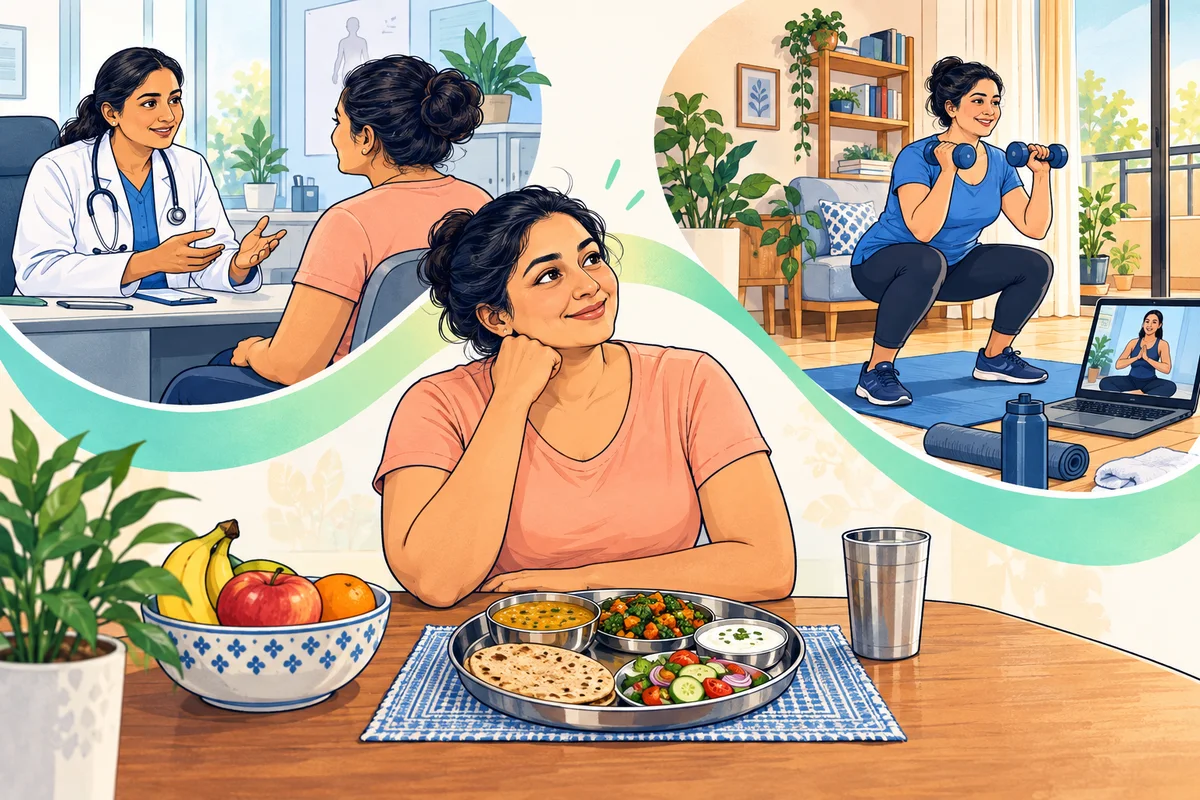
You do not have to answer. Your medical choices are private, in the same way your blood pressure tablets or your thyroid report are private. Pick a reply that fits who is asking and how much you want to say.
| Who is asking | A reply | What it does |
|---|---|---|
| A relative at a function | “That is between me and my doctor. Have you tried the jalebi?” | Closes the topic and changes it, kindly. |
| A colleague | “I do not discuss my health at work, but thanks for noticing.” | Takes the compliment, skips the question. |
| Someone who means it as a dig | “Why do you ask?” | Hands the question back and waits. |
| Someone who truly wants to know for themselves | “I am not the right person to advise. A doctor can tell you what suits you.” | Honest, and points them to the right place. |
| A close friend you trust | Say as much or as little as you like. | Telling is allowed too. It is your choice, not a duty. |
Say it once, calmly, and say it again if they repeat the question. You do not have to defend your choice, and you do not need to prove you also walked 10,000 steps. For more words to use in awkward moments, see how to talk about someone’s weight, and our post on whether shaming works.
Does exercise still matter if you are on one of these medicines?

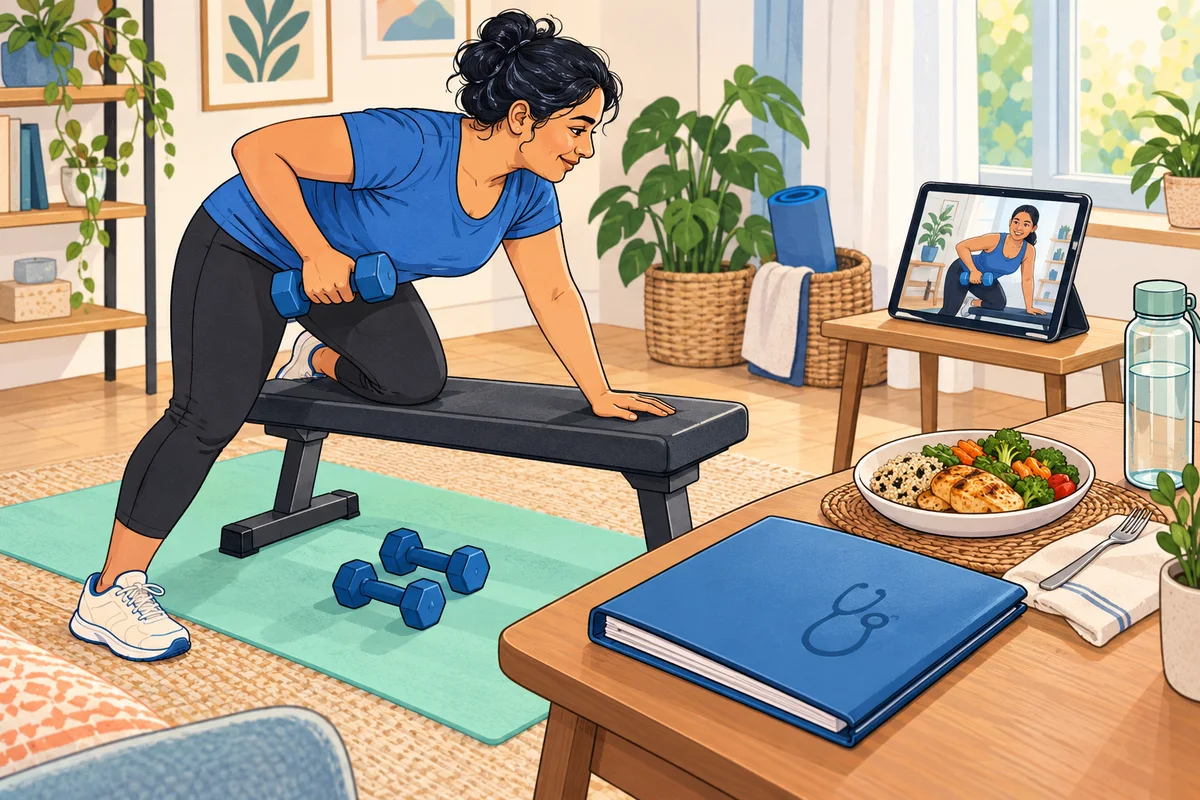
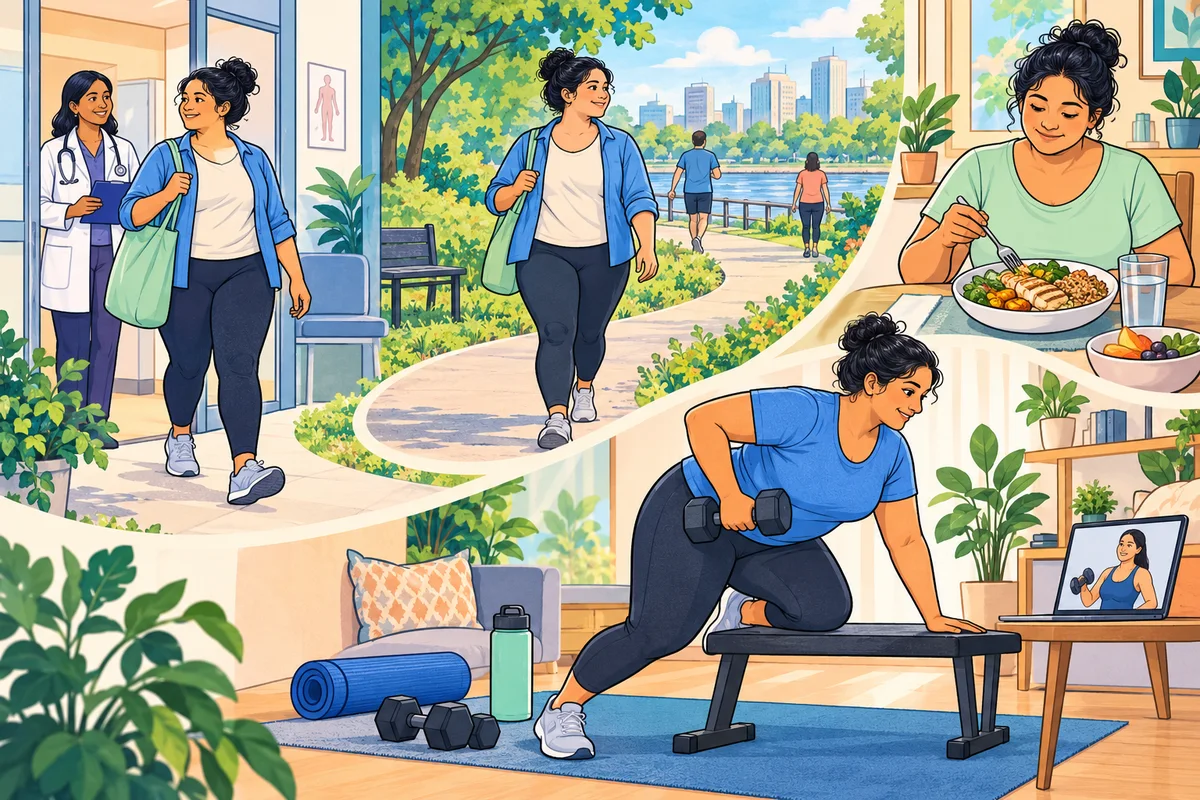
Yes, though not because anyone is checking your effort. Exercise, and strength training in particular, is about what the body keeps and how it functions, whatever the scale does. Our guides cover this without repeating it here: exercise on weight-loss injections, protein on weight-loss injections, what happens after stopping, and injections against diet and exercise. If you want to train with a coach who works with the body you have today, live on video at home so nobody else is watching, online personal training for overweight beginners explains how that works.
There is a quieter cost too. The Boston Globe piece quotes people who feel pushed to explain themselves, and one who says she avoids medical care because of a doctor’s pressure to start a medicine. If the judgement is making you dread a check-up, tell your doctor that plainly. A good doctor wants to hear it, and can adjust how the conversation goes.
If the comments are getting to you
Persistent low mood, or a growing fear of eating in front of others, deserves more than a witty reply. Please speak to your doctor or a mental health professional.
What can the person doing the judging do instead?

If you have said it, you are in good company. Most people repeat what they have heard, and the 2024 study suggests the “shortcut” idea is common. A few small changes help.
- Skip the question. Whether someone used a medicine, a gym or a lucky metabolism is not yours to know.
- Say “You look well”, or nothing about the body at all. Ask how they are feeling instead.
- Remember that a loss which people judge is still someone’s health, and they may have worked hard for it.
- If a person tells you, thank them for trusting you and keep it to yourself.
- Notice the urge to rate someone’s method. A health history is rarely visible from outside, and the method says little about the person.
Sources
- An experimental investigation of the stigmatization of weight loss and regain from GLP-1 receptor agonist use and cessation, International Journal of Obesity
- The effect of GLP-1 receptor agonist use on negative evaluations of women with higher and lower body weight, International Journal of Obesity
- Exposure to GLP-1 Receptor Agonist and Bariatric Surgery Use on Obesity Policy Support, Annals of Behavioral Medicine
- Drugs, diet, or surgery? How treatment type and willpower shape responsibility for weight loss, Frontiers in Psychology
- Study news release: stigma around GLP-1 weight loss drugs, EurekAlert
- Don't take GLP-1s? Be prepared to explain yourself, The Boston Globe
- India's weight loss drug moment: What happens when semaglutide goes generic, Business Today
Written by the MakeMyFitness team from the sources above and reviewed by Kumar Abhishek, our lead coach (Diploma in Personal Training, K11 School of Fitness Sciences). First published , last updated . How we write and check our guides: editorial policy. This is general fitness information, not medical advice: see the medical disclaimer.