In short
- Start by asking whether they want to talk, not by telling them what you see.
- In one large US study of 14-year-olds and their parents, weight talk at home went with more dieting and binge eating, while talk only about healthy eating went with less dieting in teens of higher weight.
- Speak about health and how they feel, listen, offer to do something together, and accept a no.
- If the worry is breathlessness or chest pain, ask them to see a doctor.
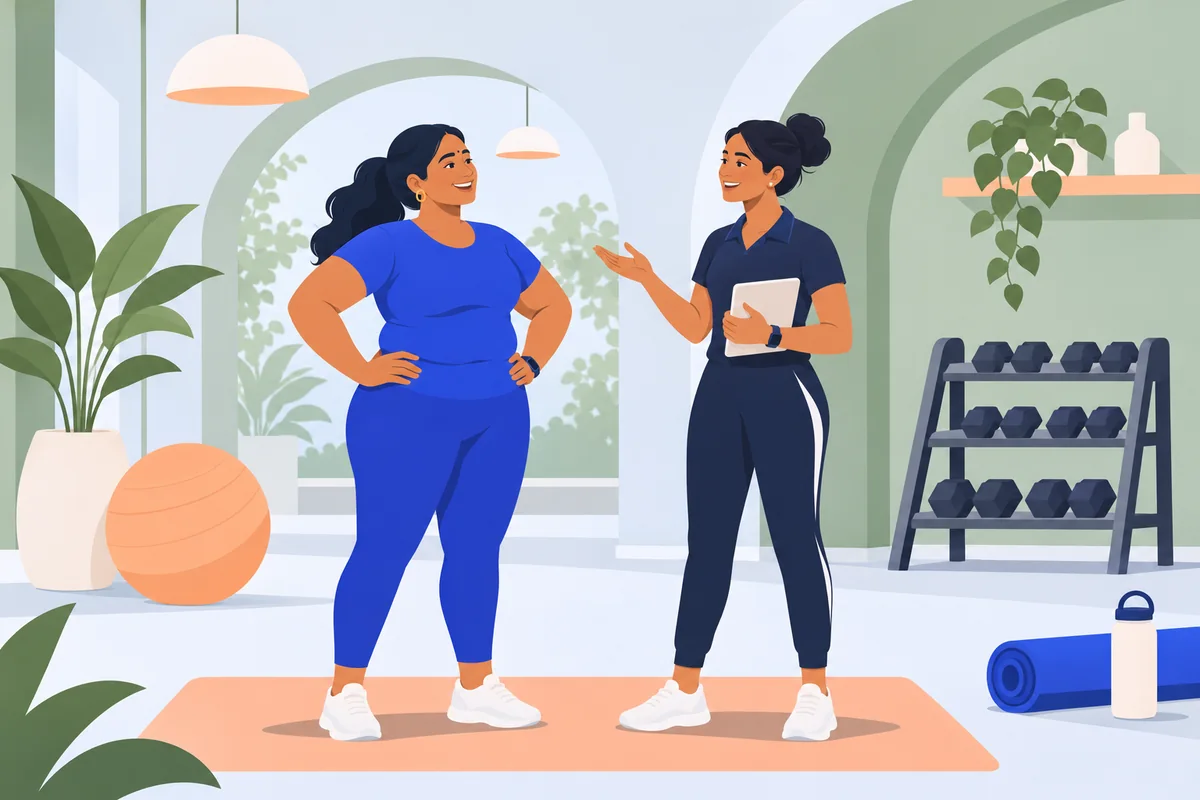
You have probably rehearsed this in your head more than once. You love them, you are worried, and you cannot find a sentence that does not sound like an accusation. That is a fair place to be. This post is for the relative, partner or friend who wants to say something kind and useful, and for the person on the other side, who has the right to be spoken to with respect.
Should you say anything about someone's weight at all?

Sometimes yes, but less often than you might think, and almost never as an opening remark. Before you speak, ask yourself three things. Is this about their health, or about how their body looks to me? Have they asked for my view? Is there something I can offer, other than an opinion?
Remember that they already know. Most people with a larger body have heard about their weight from relatives, doctors and strangers for years. A comment from you is rarely news. What may be new is a person who listens and does not judge.
If you are the one being commented on and want words for the people around you, our post on what to say when relatives comment on your weight is written for you.
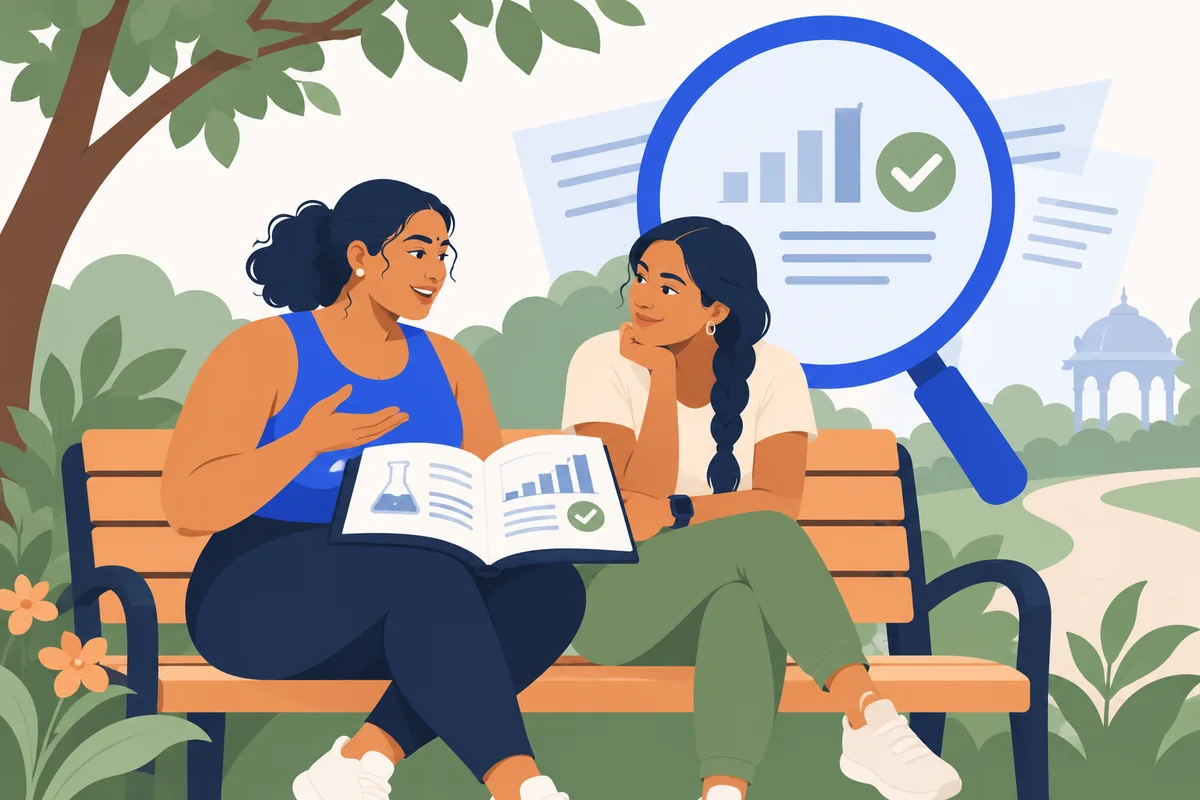
What does research say happens when families talk about weight?

The best-known study is by Berge and colleagues, published in JAMA Pediatrics in 2013. It looked at 2,793 adolescents (mean age 14.4 years) and 3,709 parents in the United States, in a diverse sample, 81% from ethnic minority groups and 60% low income. The researchers found that adolescents whose parents had weight-related conversations were more likely to diet, to use unhealthy weight-control behaviours and to binge eat. Among adolescents with a higher weight, those whose mothers talked only about healthful eating were less likely to diet or use unhealthy weight-control behaviours.
Two limits matter. These were teenagers, not adult partners or parents, and the data were gathered at one point in time, so the study shows an association, not proof that the talk caused the behaviour. Still, the direction is consistent with what the other research below suggests: talk about size tends to go badly, and talk about food and health tends to go better.
A 2008 study by Puhl and colleagues surveyed 318 adults with a higher weight online (274 women, 44 men) about their worst experiences of weight stigma. Close relationship partners, such as friends, parents and spouses, were the most common source of those worst encounters. That is not meant to make you feel guilty. It shows how much your words weigh, because you matter to this person.
In 2020, a group of international experts, including representatives of scientific organisations, published a joint consensus statement in Nature Medicine. It reviewed the evidence and concluded that weight stigma can cause physical and psychological harm and that people affected are less likely to receive adequate care. It called on academic institutions, professional organisations, the media, public-health authorities and governments to act, and it is worth reading if you want the full picture. Our post on whether shaming works goes deeper on this.
How do you raise the subject kindly?

We could not find a guide written for families, so we looked at guidance written for doctors by a recognised body and adapted the ideas. The Royal College of Physicians' Nutrition Committee published ten tips for clinicians on raising the topic of overweight. They are written for consultations, so treat them as a model, not as rules for your dinner table. Three ideas carry over well.
- Ask how they feel, rather than giving your view. The guidance suggests opening with a question such as how the person feels about their weight. Your version could be: "How have you been feeling lately, in yourself?"
- Check whether it is a priority for them right now. The guidance asks the clinician to find out whether weight is a priority for the patient now and whether other health matters should come first.
- Offer, do not insist. It also suggests asking whether they would like to discuss it further or get more support, which hands them the choice.
Research on language agrees. A 2020 systematic review by Puhl of 33 studies (23 quantitative, 10 qualitative) found that neutral words such as "weight" or "unhealthy weight" were generally preferred, and that "obese" and "fat" were least acceptable, especially in conversations with health providers. Preferences varied by race or ethnicity, gender and weight status, and the studies came from a limited range of samples. So use plain words, skip the labels and, if in doubt, ask what language they prefer.
- 1
Pick the moment
Choose a private, calm time. Not at a family meal, not in front of children, not after a comment from someone else, and not when either of you is angry.
- 2
Ask permission
"Can I talk to you about something that has been on my mind? You can tell me to stop." If the answer is no, stop. That is a complete answer for today.
- 3
Say what you notice and how you feel, about health
"I have noticed you get out of breath on the stairs, and I worry because I want you around for a long time." Talk about what you see and feel, not about their size or shape.
- 4
Then listen
Ask what they think and what has been hard. Let them finish. Do not answer with advice unless they ask for it.
- 5
Offer something small and shared
A walk after dinner, a class you both try, cooking together. Let them decide whether and how.
What can you say to a partner, a parent or a friend?

The table below gives example sentences. Change the words so they sound like you. The point is the shape: a question, a feeling, an offer.
| Who | Try | Avoid |
|---|---|---|
| Partner | "I miss our evening walks. Would you like to start them again, with me?" | "You have let yourself go." Comparisons with how they looked when you met. |
| Ageing parent | "I get worried when you are out of breath. Would you be happy to see the doctor with me?" | "Amma, you should not eat that." Policing their plate in front of others. |
| Friend | "You do not have to answer, but how have you been feeling about your health lately?" | Jokes, "concern" posted in group chats, or advice they did not ask for. |
| Any of them | "If you ever want company, I am in." | Diet tips, before-and-after stories, or "just" try harder. |
A note on jokes: banter that feels light to you may land hard. Phrases like "Moti ho gayi ho" (you have become fat) or "Tond nikal aayi" (your belly has come out) are common in Indian families and are often meant as affection. They are also what people say hurt most. If you are unsure, leave the joke out.
How can you help without giving advice?

Doing something together is often kinder than saying something. It shows you are with them, not watching them. Two of our guides fit common cases. For partners, online fitness classes for couples covers how to train together over video without either of you being the "coach". For older parents, exercise for seniors at home explains how to begin safely in a small space.
If they are the one who wants to start, and fear being stared at, online personal training for overweight beginners explains what a first month can look like. The idea is simple: when a coach trains you live on video at home, nobody else is watching, and the coach works with the body you have today.
Offer, then let go. "I found a class we could try together, no pressure" is an offer. "I booked you in" is a decision made for them.
What if they say no, or get angry?

Then you say "Okay, thank you for listening" and change the subject. It may feel like failure, but it is not. You have shown that you can raise something hard without cruelty, and that you will respect a boundary. That makes a later conversation more likely.
Pushing tends to backfire. In the Berge study, weight talk went with more dieting and binge eating. The Puhl review found that the words people dislike most are the blunt ones. And shame rarely produces the change people hope for, as we explain in does fat-shaming work. If you have already said something hurtful, an honest "I handled that badly, I am sorry, and I do care" is worth more than a second attempt at persuasion.
Remember also that they may not want to change their weight at all, and that is theirs to decide. You can still care about their sleep, mood, energy and strength. Those are good topics in themselves.
When is it a medical worry, not a weight worry?
Encourage a doctor's visit if you notice these
Breathlessness that is new or getting worse, chest pain or tightness, swollen ankles, a racing or skipping heartbeat, or weight that changes very quickly in either direction, without a reason such as a deliberate diet. The NHS lists chest tightness or pain spreading to the arms, back, neck or jaw as a reason to get emergency help straight away. In India, call your local emergency number or go to the nearest hospital. This is general information, not medical advice, and only a doctor can say what is going on.
Your role here is practical, not diagnostic. Say "I am worried about your breathing, can we book a check-up this week? I will come with you." Offering to go along removes the biggest barrier for many people, which is putting it off.
If you notice that someone is eating very little, skipping meals, hiding food or seems consumed by food and weight, ask a doctor or a mental health professional for advice. Do not comment on their body.
What if you are worried about a child?
Children need a different approach, and a doctor should lead on anything to do with a child's weight. If a child has been called names, read what to do when your child is called fat at school.
Sources
- Parent conversations about healthful eating and weight: associations with adolescent disordered eating behaviors, JAMA Pediatrics (Berge and colleagues, 2013)
- Joint international consensus statement for ending stigma of obesity, Nature Medicine, 2020 (via Europe PMC)
- Ten Top Tips: Raising the topic of overweight, Royal College of Physicians, Nutrition Committee
- What words should we use to talk about weight? A systematic review, Obesity Reviews (Puhl, 2020)
- Weight stigmatization and bias reduction: perspectives of overweight and obese adults, Health Education Research (Puhl and colleagues, 2008)
- Shortness of breath, NHS
Written by the MakeMyFitness team from the sources above and reviewed by Kumar Abhishek, our lead coach (Diploma in Personal Training, K11 School of Fitness Sciences). First published , last updated . How we write and check our guides: editorial policy. This is general fitness information, not medical advice: see the medical disclaimer.