In short
- Skinny-shaming means being criticised or teased for being thin, with comments like "kuch khaya karo".
- It is a form of body shaming, and a small body of research suggests it can make people self-conscious and avoid social situations.
- If you want to change, aim for muscle and strength, not only weight.
- Unexplained weight loss needs a doctor.
If you are thin, you have probably heard it at a wedding, at a family lunch or in a WhatsApp group. Someone looks at you and says "kuch khaya karo" (eat something once in a while). This post is for you, or for someone you love who hears it. We explain what skinny-shaming is, what research says, how common low weight is in India, and what you can say back. Whether you want to change your body or not is your decision.
What is skinny-shaming, and what does it sound like in India?

Skinny-shaming (or skinny shaming) means criticising, teasing or pitying someone for being thin. Many people think it is harmless because thin is supposed to be the "good" side of weight talk. It is still a comment on a body that nobody asked for. In India it often sounds like concern, which makes it harder to push back on.
These are common lines thin people hear, quoted here so you can recognise them:
- "Kuch khaya karo" (eat something once in a while).
- "Hawa se ud jaoge" (the wind will blow you away).
- "Haddi dikh rahi hai" (your bones are showing).
- "Shaadi kaise hogi?" (how will you get married?), often said to thin women and men alike.
- "Tum toh bilkul kamzor ho" (you are so weak). Men hear this one with a sting: it questions whether they are "man enough".
Search terms like "skinny shaming quotes" and "skinny shaming men" are full of people looking for exactly this: words for something they cannot quite name. The name is body shaming. It works in both directions.
What does research say about being othered for being thin?
Honestly, this is studied far less than stigma towards higher weight. What exists is small, and we report it as it is.
- Beggan and DeAngelis (2015), Symbolic Interaction. The paper, titled "Oh, My God, I Hate You: The Felt Experience of Being Othered for Being Thin", was a small interview study of 18 women and men. The authors found that thin people often receive unwanted comments about their size, that these comments produce an unpleasant self-consciousness, and that expecting such comments leads thin people to avoid certain social situations. They describe thinness as a "hypervisible condition". Eighteen interviews cannot tell us how common this is, but they show what it feels like.
- Kohlmann and colleagues (2018), Frontiers in Psychology. In one of four exploratory studies, of 178 German adolescents, girls who felt too fat and boys who felt too thin reported more teasing, and teasing was linked to less enjoyment of school and more fear of being laughed at. For boys, feeling underweight was linked to that fear through weight-related teasing. This was in teenagers in Germany, not Indian adults.
- Marini (2017), Obesity Science and Practice. Among 4,806 volunteers on the Project Implicit website, people explicitly favoured underweight over overweight or obese bodies, but implicitly favoured the opposite. Normal weight was preferred at both levels. The study is about preferences, not about how thin people are treated, so it only shows that attitudes to weight are not simple.
None of this says thin people suffer more than anyone else. It says the comments are real, they land, and they are worth taking seriously.
Why do men get skinny-shamed, and is the pressure to be muscular real?

Men are often told that a body is a measure of strength and status. A 2005 review by Cafri and colleagues in Clinical Psychology Review describes how developing a lean, muscular figure has become a central issue for males, and notes that this pursuit can lead to health-threatening behaviours such as harmful dieting and the use of steroids. It also discusses muscle dysmorphia, a clinical disorder linked to extreme versions of these behaviours.
So a thin man can be squeezed from both sides: teased for being small, then pushed towards extremes to fix it. If a comment has made you want a shortcut, such as unregulated supplements or injections, speak to a doctor first.
How common is being underweight among Indian adults?
More common than most people think. Underweight here means a body mass index (BMI) below 18.5. The National Family Health Survey's fifth round (NFHS-5, 2019–21) is widely reported as finding 18.7 per cent of women and 16.2 per cent of men aged 15 to 49 below that line: roughly one adult in six. We could not open the official fact sheet ourselves, so check it before you quote the numbers. A newer round was reported in the press in May 2026 with different figures. We could not confirm those from an official page, and the report we read does not match NFHS-5 on one number, so we have left them out.
The point stands: in that survey, roughly one in six Indian adults aged 15 to 49 was below the usual BMI cut-off. Thin people are not rare, and they are not doing something wrong. Some are simply built that way, and some are not, which is a question for a doctor, not a relative.
Is being underweight a health risk?
It can be, and it is fair to say so. The NHS notes that being underweight could mean you are missing out on vitamins and minerals, which may lead to problems such as a weaker immune system and bone fractures. BMI is only a rough guide: it does not show how much of your weight is muscle, where you carry fat, or how you feel. Plenty of thin people are healthy, and some are not. A doctor can tell the difference. We cannot, and a comment from a relative certainly cannot.
When to see a doctor, not a relative
See a doctor if you have lost weight suddenly, lost weight without changing your food or exercise, lost your appetite, or find that you use food control to cope with feelings. The NHS says unexplained weight loss could be a sign of an underlying health condition. A difficult relationship with food is also a reason to speak to a doctor or a mental health professional. Do not start a training plan until that is checked.
Is thin the same as fit?

No, and this works against the shamers and the compliments alike. A thin outside tells you little about strength, stamina or how much muscle you carry. Someone can be slim and still have little muscle and a soft midsection, which our guide on skinny fat explains. So "you are so lucky, you can eat anything" is not a health report either.
How do you build muscle if you want to change?
You do not have to. If you do want to, aim for strength and muscle rather than just a higher number on the scale. Weight can go up through fat alone, and that is not what most people mean when they say they want to look or feel stronger. Strength is also easier to measure: you can see yourself lift more or do more repetitions.
Three of our guides cover the detail, so we do not repeat them here: build muscle at home, the Indian vegetarian diet for muscle gain, and how an online personal trainer for muscle gain works. If you are new to exercise, a home workout plan for beginners is a gentler start.
| Week | Strength days | What to do | How to judge it |
|---|---|---|---|
| 1 | 2 | Squat to a chair, wall or knee push-up, hip hinge, plank. 2 sets of 8 slow reps. | Clean form matters more than speed. |
| 2 | 2–3 | Same moves, 3 sets. Add a row with a backpack or resistance band. | Last two reps feel hard but not shaky. |
| 3 | 3 | Slightly harder versions: full push-up on the knees, split squat, glute bridge. | You can finish all sets with good form. |
| 4 | 3 | Add a little load or an extra rep to each move. | Note what you lifted or repeated, and compare with week 1. |
Rest days, sleep and enough food matter as much as the sets. Eating more than you are used to can feel hard if your appetite is small. Small, regular meals are one common approach, and a doctor can tell you if a low appetite needs checking.
What can you say when someone says "kuch khaya karo"?

You do not owe anyone an explanation. Here are replies for different moods and different relatives. Pick the one you can say without strain.
| The comment | A light reply | A firmer reply |
|---|---|---|
| "Kuch khaya karo" | "I eat plenty, thank you. Pass the chutney?" | "Please do not comment on how much I eat." |
| "Hawa se ud jaoge" | "Then I will fly home quickly." | "I would rather we talk about something else." |
| "Shaadi kaise hogi?" | "I am not worried about it." | "My body is not a topic for the family." |
| "You are so weak" | "I train, and it is going well." | "That is not true, and I do not like it." |
| "You can eat anything, lucky you" | "Thanks, but it is not always easy." | "I would rather not talk about my body." |
For more on handling the family circle in general, see what to do when relatives comment on your weight. People at both ends of the scale get comments, and the replies work the same way.
What if the comment comes from someone who cares about you?

Often it does. A parent who grew up with scarcity may equate a fuller body with safety, and "kuch khaya karo" is how they say they worry. You can answer the worry without accepting the comment: "I know you care. Here is what I am eating, and I see my doctor when I need to." If the comment keeps coming, a short, calm, repeated sentence works better than an argument.
Where does live coaching fit in?
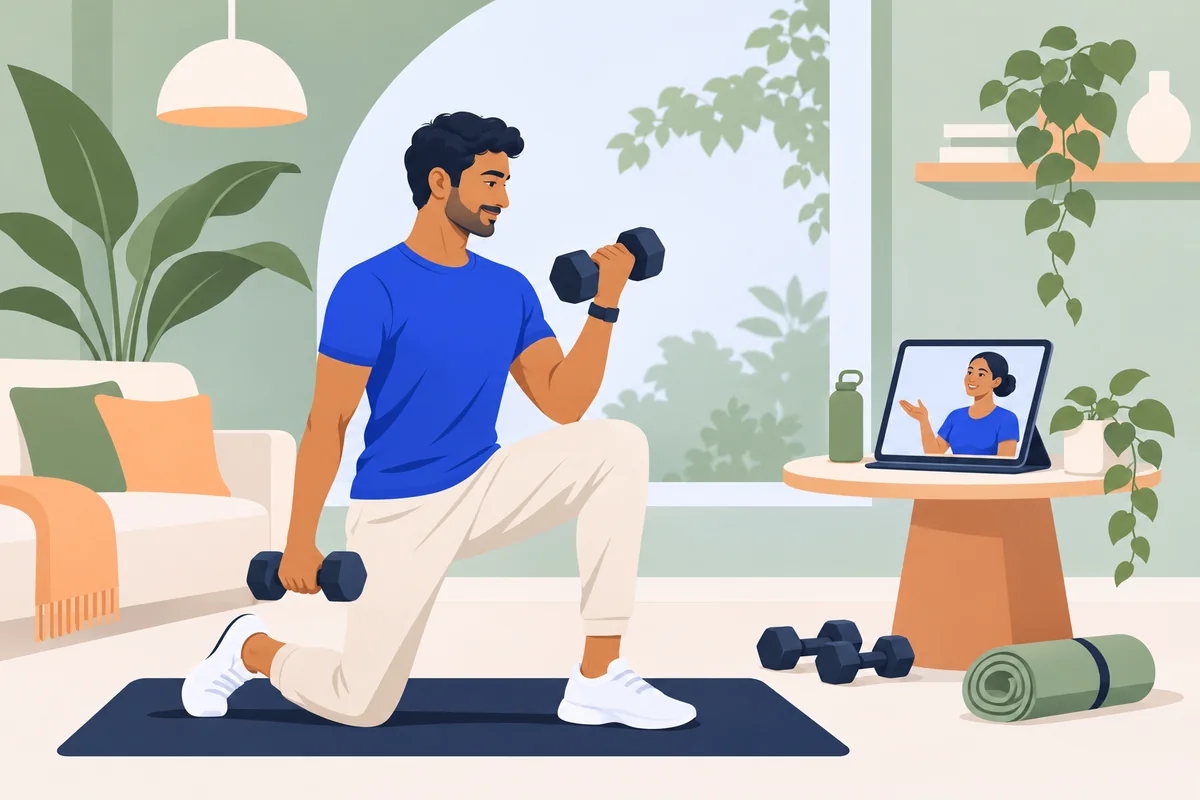
If you want to build strength, training live with a coach on video at home means nobody else is watching, and the coach works with the body you have today. It is fitness coaching, not medical or diet advice. If you want to start, a coach can set a first month that matches your current strength.
Sources
- "Oh, My God, I Hate You:" The Felt Experience of Being Othered for Being Thin (Beggan and DeAngelis, 2015), Symbolic Interaction, Wiley
- Fear of Being Laughed at in Children and Adolescents: Exploring the Importance of Overweight, Underweight, and Teasing, Frontiers in Psychology
- Underweight vs. overweight/obese: which weight category do we prefer?, Obesity Science and Practice
- Pursuit of the muscular ideal: Physical and psychological consequences and putative risk factors, Clinical Psychology Review
- Gaining weight, losing health: national survey finds India trapped between obesity and undernutrition, ThePrint
- Advice for underweight adults, NHS
Written by the MakeMyFitness team from the sources above and reviewed by Kumar Abhishek, our lead coach (Diploma in Personal Training, K11 School of Fitness Sciences). First published , last updated . How we write and check our guides: editorial policy. This is general fitness information, not medical advice: see the medical disclaimer.