What does fat burn training actually mean?
Fat burn training is a loose label used for everything from treadmill walking to fast circuits. It is not a standard exercise prescription. Before choosing a video or class, look past the name: what movements are involved, how hard are the work periods, how long are the rests, and can you adjust them? Those details tell you much more than a promise to melt fat.
The CDC's weight and activity guidance links weight loss to energy balance across activity and food intake. One energetic session cannot guarantee that balance. Treat the workout as something you can schedule, repeat and recover from. If a session leaves you unable to manage the rest of your week, it may be the wrong dose for now.
This guide helps you choose the structure of your cardio. For individual strength movements, use our fat loss exercises guide. For a complete home routine with bodyweight work, see the home workout for weight loss. You do not have to combine every plan; choose the parts that fill a real gap in your current week.
Steady cardio, intervals or a strength circuit?
| Format | What a session looks like | When it may fit | What to watch |
|---|---|---|---|
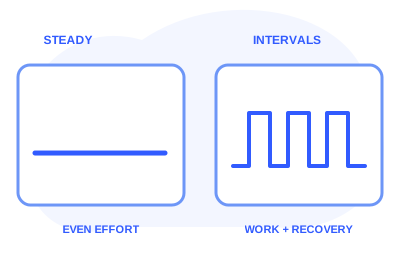
| Steady cardio | Continuous walking, cycling or similar movement at a sustainable pace | Building an aerobic habit or keeping a day manageable | Starting faster than you can comfortably maintain |
| Moderate intervals | A slightly quicker effort alternated with easier movement | Adding variety without an all-out session | Letting every work period turn into a sprint |
| HIIT | Hard work periods separated by recovery | An optional format for people prepared for vigorous exercise | Insufficient recovery or loss of technique |
| Strength circuit | Several resistance exercises with planned rests | Combining strength movements in a structured session | Rushing repetitions to keep the heart-rate display high |
Intervals do not automatically mean high intensity. A brisk minute followed by an easier minute is interval training even if neither is very hard. That can be a sensible way to learn pacing. Equally, a strength workout is not automatically an aerobic workout because you feel warm. Keep track of what you intended to train, and let the session structure support that intention.
Use effort, not a fat-burning-zone label
A machine's fat-burning-zone label is not a personalised guarantee of body-fat loss. Use the CDC's intensity guidance instead: moderate effort is roughly 5 or 6 out of 10, with conversation possible but singing difficult. Vigorous effort makes continuous conversation much harder. The same speed may feel very different to two people.
For most of your first sessions, aim to finish knowing you could have continued a little longer. You can learn your usual effort without checking a screen every few seconds. If you use a heart-rate monitor, read its result alongside breathing, comfort and the session goal. A number is information, not an instruction to push harder when you feel unwell.
A 20-minute low-impact fat burn session
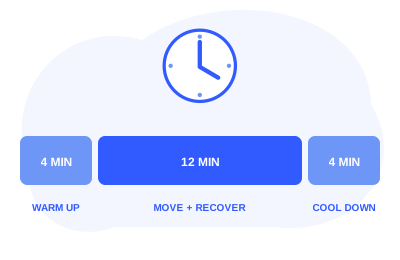
This is a suggested moderate cardio session for generally healthy adults who can comfortably march and step. It includes warm-up and cool-down time, so the full 20 minutes should not automatically be counted as moderate aerobic work. Keep a clear floor, supportive footwear if you need it, and enough room to move your arms. There is no jumping and no need to get down to the floor.
| Part | Time | What to do |
|---|---|---|
| Warm-up | 4 minutes | Begin with easy marching, then gentle side steps and comfortable arm swings |
| Main block | 12 minutes | Do the four movements below for 40 seconds each, followed by 20 seconds of easy marching; repeat three times |
| Cool-down | 4 minutes | Gradually slow the march and walk around gently until breathing settles |
- 1
Brisk march
March in place with a comfortable knee lift and natural arm swing. Keep the feet landing softly. Increase the pace only while you can keep the movement controlled. During the easier 20 seconds, slow down rather than trying to maintain the same effort. A lower knee lift is fine if balance feels uncertain.
- 2
Side step with an arm reach
Step sideways, bring the other foot towards it and repeat in the opposite direction. Add a comfortable forward or upward reach. Keep the step width small enough that you can change direction smoothly. If reaching overhead bothers your shoulders, keep your hands below shoulder height and continue the footwork.
- 3
Standing punches
Stand in a comfortable stance and alternate gentle forward punches without forcefully locking your elbows. Add small steps only if they feel stable. This is an exercise drill, so the aim is continuous comfortable movement rather than striking power. Slow your arms during recovery and let your breathing settle before the next work period.
- 4
Alternating heel digs
Place one heel lightly in front of you, return it and switch sides, adding arm swings as comfortable. Keep the supporting knee soft and avoid leaning backwards. If the coordination is distracting, replace this movement with another brisk march. Repeating a simple movement well is more useful than struggling through a complicated sequence.
If 40 seconds feels too long, use 20 seconds of work and 40 seconds of easy movement; the clock stays the same. If even that is a large step, do one round and cool down. Record which version you completed so that progress means something concrete next time. You can also perform the work and recovery pattern on a stationary bike if that is more comfortable.
When to try harder intervals
Consider harder intervals after ordinary moderate sessions feel familiar and you are recovering well. You should understand the movement before adding speed or resistance. A stationary bike can make pacing easier to manage than a complicated jumping circuit. There is no requirement to add HIIT if you enjoy steady cardio and it fits your week.
As a conservative example for someone already comfortable with moderate exercise, warm up gradually, then try four 30-second brisk efforts with 90 seconds of easy movement after each. Keep them controlled rather than all-out, then cool down. That main block lasts eight minutes. Repeat the same manageable version on a later day before considering another interval or slightly more resistance. These are suggested practice timings, not a proven optimum for fat loss.
Keep a harder session away from another demanding session when you are learning how you recover. If your next strength workout becomes consistently worse, or you dread the intervals because they feel overwhelming, scale them back. You can improve a routine by removing excess work. A session does not become more effective just because you need to lie down afterwards.
Fit cardio around strength, not on top of everything
The CDC weekly guidelines include 150 minutes of moderate aerobic activity and muscle strengthening on at least two days. Use separate entries for these in your diary. A 20-minute session is a useful contribution, but it is not the whole week's activity requirement and its recovery periods may be below moderate effort.
| Day | Strength plan | Aerobic plan |
|---|---|---|
| Monday | Whole-body session | 20-minute brisk walk |
| Tuesday | None | 30 minutes of steady cycling or walking |
| Wednesday | None | 20-minute brisk walk |
| Thursday | Whole-body session | 20-minute brisk walk |
| Friday | None | 30 minutes of steady cardio |
| Saturday | None | 30-minute brisk walk |
| Sunday | Rest | Optional easy movement |
Once the base week is comfortable, you could replace part of a steady session with intervals for variety. Do not assume that the 20-minute routine above provides the same moderate minutes as a 30-minute brisk walk. Count the time at the intended effort honestly and build your total elsewhere if appropriate. The point is to understand your week, not to hit a number by relabelling every warm-up as hard exercise.
Progress without making every session longer
- First make the session familiar: repeat the same movements and learn where you need an easier version.
- Next make attendance reliable: protect a realistic slot rather than booking five sessions you repeatedly miss.
- Then change one variable: a little more time, one additional interval or a small resistance increase, while keeping technique steady.
- Keep an easier option ready: use it after a demanding workday rather than treating a shorter session as a failure.
A useful session note is simple: activity, time, approximate effort and how you felt afterwards. Compare similar sessions over time. If the same bike setting becomes more comfortable, that tells you something meaningful even if the machine's calorie display is unchanged. Your goal is to make exercise sustainable enough to remain part of your life after the initial burst of motivation.
Avoid turning food into a reward or punishment
Plan a normal meal after training instead of improvising when you are hungry. Keep familiar foods and include a protein source, vegetables or fruit, and suitable portions of other foods. The protein in Indian food guide offers practical choices. There is no need to make dinner depend on whether you completed every interval or reached a particular watch score.
If your routine is exhausting and your meals are becoming smaller at the same time, review both changes. More effort plus less food is not automatically a better plan. Make a modest adjustment you can sustain, then check your energy, attendance and longer-term progress. For personalised training support, a live coach can help adjust the workload; nutrition needs outside general healthy eating may need a qualified dietitian.
Sources
- Physical Activity and Your Weight and Health, Centers for Disease Control and Prevention
- How to Measure Physical Activity Intensity, Centers for Disease Control and Prevention
- Adult Activity: An Overview, Centers for Disease Control and Prevention
- Tips for Starting Physical Activity, National Institute of Diabetes and Digestive and Kidney Diseases
Written by the MakeMyFitness team from the sources above. First published , last updated . Spotted something out of date? Tell us at hello@makemyfitness.com.