Nobody needs to change their body to get married. But plenty of brides and grooms want to walk into a week of functions feeling strong, rested and comfortable in clothes that were measured months ago. This plan is built for that: steady fat loss if you want it, strength and posture for heavy outfits, and enough energy to dance at the sangeet and still stand straight through the pheras.
When is the Indian wedding season, and when should you start?
Most Indian weddings cluster into a few months. For November and December 2024, the traders' body CAIT estimated about 48 lakh weddings across 18 auspicious dates between 12 November and 16 December, with the season pausing for about a month and resuming from mid-January to March, as The Week reported. For this season, BlueStone's 2026 muhurat list gives 21, 24, 25 and 26 November and 2, 3, 4, 5, 6, 11 and 12 December 2026. Lists differ between publishers and families, so confirm your date with your own priest or panchang.
Count back from the first function, not the wedding day itself: the haldi or mehendi is often two or three days earlier, and photos start there. If you're reading this in late October 2026 with a late-November muhurat, you have about four weeks. A December date gives you five to seven. A February or March 2027 wedding still leaves room for a full 12 to 16-week plan.
| Time before the first function | Main focus | Realistic expectation |
|---|---|---|
| 24 weeks (6 months) | Learn the lifts, build the habit, small calorie deficit | Noticeable strength and fitness gains, steady fat loss |
| 12 weeks | Three strength sessions a week, daily walking, a steady deficit | A modest, visible change and clothes fitting better |
| 8 weeks | Keep the plan simple, protect sleep, progress the lifts | Some fat loss, better posture and energy |
| 4 weeks | Consistency, sleep, posture work, no new diets | Feeling fitter and sharper; small changes on the scale |
| Final week | Two short, easy sessions, walking, rest | Fresh legs and good energy for the functions |
How much weight can you lose before the wedding?
Before the wedding, a safe pace of fat loss is the most useful number to know. The CDC says people who lose weight at a gradual, steady pace of about 1 to 2 pounds a week (roughly 0.5 to 0.9 kg) are more likely to keep it off. For people starting a longer plan, the NIDDK notes that experts recommend beginning with a loss of 5 to 10% of your starting weight over 6 months.
| Time available | At 0.5 kg a week | At 0.9 kg a week | What usually happens |
|---|---|---|---|
| 4 weeks | 2 kg | 3.6 kg | Weekly numbers jump around; judge the four-week trend |
| 8 weeks | 4 kg | 7.2 kg | Most people land below the top figure |
| 12 weeks | 6 kg | 10.8 kg | Loss slows as you get lighter; plan for plateaus |
| 24 weeks | 12 kg | 21.6 kg | NIDDK's 5–10% of starting weight is a sensible goal |
Those are upper limits. Weddings come with tastings, shopping trips, travel and family meals, and very few people hit the top of the range every week. A better goal than a number on the scale is how your outfit fits at the final trial, how many push-ups you can do, and how you feel at the end of a long day. Work out a sensible daily target with the calorie deficit calculator and your maintenance calories with the TDEE calculator.
Why crash diets before a wedding backfire
Crash dieting is the most common pre-wedding mistake, and it has real costs. The NHS lists losing weight quickly as a risk factor for gallstones, and the NIDDK says that losing weight very quickly may raise your chances of forming them, and that the more weight you lose and regain in a cycle, the greater the risk. A gallbladder attack in the week of your wedding is not a risk worth taking.
Speed also changes what you lose. A 2022 review of 13 studies in Current Obesity Reports found that faster weight loss may take off more fat-free mass (muscle and water) and less fat while you're losing, with bigger drops in the energy your body burns at rest. Losing muscle is the opposite of what you want for arms, shoulders and posture in wedding photos. And a very hungry, under-slept person is not having fun at their own mehendi.
The strength-first pre-wedding workout plan
A pre-wedding fitness plan works best when strength training leads and cardio supports it. A 2022 meta-analysis of 114 trials in Obesity Reviews found that combining resistance training with calorie restriction was the most effective approach for reducing body fat (about 5.3 kg more fat lost than no intervention), and lean mass was maintained. In plain terms: lift while you eat a little less, and more of what you lose is fat.
The World Health Organization's 2020 guidelines ask adults for 150 to 300 minutes of moderate activity a week plus muscle-strengthening on 2 or more days. This week covers both, and fits around office hours and wedding errands.
| Day | Session | Time |
|---|---|---|
| Monday | Strength A | 40 to 45 minutes |
| Tuesday | Brisk walk, or sangeet dance practice | 30 to 45 minutes |
| Wednesday | Strength B | 40 to 45 minutes |
| Thursday | Walk plus 10 minutes of mobility | 30 to 40 minutes |
| Friday | Strength A or B (alternate weeks) | 40 to 45 minutes |
| Saturday | Longer walk, a hike or a sport you enjoy | 45 to 60 minutes |
| Sunday | Rest | - |
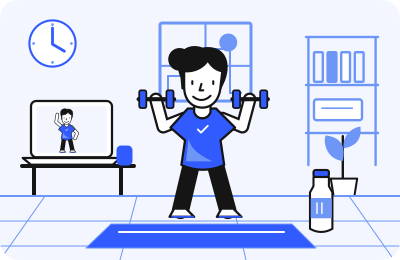
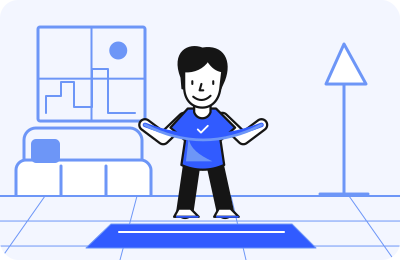
Do 3 sets of each exercise. Choose a load where the last two reps are hard but your form holds. You can do this with dumbbells, resistance bands or bodyweight; our guides to the dumbbell workout at home and the resistance band workout at home show every move in detail. If you train in a gym, the beginner gym workout plan uses the same patterns on machines.
| Exercise | Reps | Rest | Why it helps on the day |
|---|---|---|---|
| Goblet squat | 8 to 12 | 90 seconds | Strong legs for hours of standing and dancing |
| One-arm dumbbell or band row | 10 to 12 each side | 60 seconds | Upper back that holds a blouse or sherwani well |
| Push-up (incline if needed) | 6 to 12 | 60 seconds | Chest, shoulders and arms |
| Romanian deadlift | 10 to 12 | 90 seconds | Hips and hamstrings for bending, lifting and the pheras |
| Band pull-apart | 15 to 20 | 45 seconds | Shoulders back, chest open |
| Dead bug | 8 each side | 45 seconds | Core control under a heavy outfit |
| Exercise | Reps | Rest | Why it helps on the day |
|---|---|---|---|
| Reverse lunge | 8 to 10 each leg | 90 seconds | Balance and leg strength in heels or juttis |
| Overhead press (dumbbell or band) | 8 to 12 | 60 seconds | Shoulders and arms |
| Bent-over row | 10 to 12 | 60 seconds | Upper back and posture |
| Glute bridge or hip thrust | 12 to 15 | 60 seconds | Hips that support your lower back |
| Face pull (band) | 15 to 20 | 45 seconds | The muscles that stop shoulders rounding forward |
| Farmer carry | 30 to 40 seconds | 60 seconds | Grip, posture and carrying weight upright |
Your pre-wedding fitness plan in phases: 12, 8 and 4 weeks out
A pre-wedding plan works in phases so you peak at the functions instead of arriving tired. Use the phase that matches the time you have left, and if you have six months, run the first phase twice.
| Phase | Weeks out | Training | Food |
|---|---|---|---|
| Foundation | 24 to 13 (6-month plan only) | Learn every lift with light loads, 2 to 3 sessions a week | Small deficit or maintenance; build protein into every meal |
| Build | 12 to 9 | 3 sessions a week, add reps then load | Steady deficit, about 0.5 kg a week |
| Progress | 8 to 5 | Same plan, heavier loads, keep 1 to 2 reps in reserve | Keep the deficit; plan for tastings and events |
| Hold | 4 to 2 | Keep loads, drop one set, extra posture work | No new diets; eat the way you will on the days |
| Taper | Final week | Two short, easy sessions; walks | Normal meals, regular water, familiar food |
A two-week pre-wedding workout plan is too short to change your body composition much, and that's fine. Use it for what two weeks can do: regular sleep, daily walks, two or three light strength sessions for posture, and practising standing and walking in your wedding footwear.
Arms, back and shoulders for a lehenga, blouse or sherwani
Wedding outfits are heavy and structured, and most photos are taken from the waist up. A lehenga blouse shows the upper back, shoulders and arms; a sherwani or bandhgala sits on the shoulders and looks best on someone standing tall. What changes how you look in them most is posture: shoulders back and down, chest open, chin level.
- Pull more than you push. Rows, face pulls and pull-aparts strengthen the upper back that holds your shoulders back. Most desk workers need extra of these.
- Train arms honestly. Curls and presses build the muscle underneath, but no exercise burns fat from the arms specifically: a 2022 meta-analysis of 13 studies found training one area had no effect on the fat over it. Overall fat loss does that.
- Carry things. Farmer carries build the grip and trunk strength you need to stay upright under a heavy lehenga or long dupatta for hours.
- Practise in costume. At your final trials, stand and walk for 15 minutes in the full outfit and footwear. Note where it pulls, where it weighs and which shoes hurt.
- Mind your neck. A heavy dupatta pinned on the head or a safa can strain the neck by evening. Chin tucks and shoulder rolls between functions help.
Energy for haldi, mehendi, sangeet and the wedding day
A multi-day Indian wedding is an endurance event: late nights, early starts, long periods standing, irregular meals and a lot of people to greet. The fitness you build in the months before matters less for how you look than for how you feel on day three.
- Treat dance practice as training. Sangeet rehearsals count towards your weekly activity; on rehearsal days, swap the walk out.
- Plan food between functions. Ask someone to keep a snack with protein for you: a paneer roll, sprouts chaat, curd or a boiled egg. Long gaps followed by a huge late dinner leave most people flat the next morning.
- Drink water steadily through the day rather than all at once, especially at outdoor daytime events.
- Keep the last week easy. Two short sessions keep you loose. Hard leg days in the final week can leave you sore exactly when you need to dance.
Sleep and stress in the months before the wedding

Sleep is the part of a pre-wedding plan most people drop first. The CDC recommends 7 or more hours a night for adults aged 18 to 60. It matters for fat loss too: in a small 2010 trial in Annals of Internal Medicine, 10 adults on the same calorie-restricted diet lost 1.4 kg of fat with 8.5 hours in bed but only 0.6 kg with 5.5 hours, and lost more fat-free mass on short sleep. It was a two-week study with 10 people, but the direction is clear.
Wedding planning is also stressful. Keep training sessions fixed in the calendar like a meeting, because they are often the only hour in the day nobody can ask you about caterers. If a week gets out of hand, do two sessions instead of three rather than none. Cut screens for the last half hour before bed, keep the same wake-up time on most days, and say no to one thing a week.
Pre-wedding diet and workout plan: the food side
Food does most of the fat-loss work, and training makes sure what you lose is fat. Aim for protein at every meal: the International Society of Sports Nutrition suggests 1.4 to 2.0 g per kg of body weight a day for people who exercise, in servings of about 20 to 40 g. Work out your own number with the protein intake calculator, and see our guide to protein in Indian food for dal, paneer, curd, soya, eggs and chicken in real servings.
- Build each plate around protein and vegetables, then add roti or rice to suit your target.
- Plan for tastings. Menu tastings, mithai boxes and family dinners are part of the season. Eat normally around them instead of starving before.
- Keep salt and alcohol steady in the last week, so you don't feel puffy or groggy on the day.
- Don't try anything new in the final week: no new supplements and no new diet.
Pre-wedding workout plan for the bride and the groom: what changes
The plan is the same for brides and grooms; the details change with the outfit and the goal. Brides often ask for arms, back and posture for a blouse and a lehenga that can be heavy to carry for hours, so pull-aparts, rows, carries and leg strength for long standing matter most. Strength training won't make you bulky in 12 weeks; it makes you firmer and stronger. Grooms often want shoulders and chest that fill a sherwani and a smaller waist, which comes from the same presses and rows plus the overall fat loss. Grooms can also be on their feet for the baraat and a long ceremony, so leg strength isn't optional.
How couples can train together before the wedding
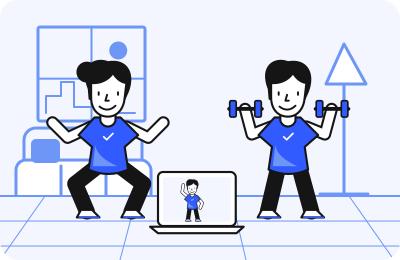
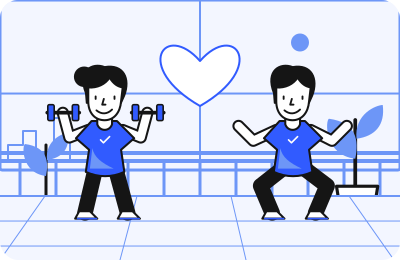
Training together is one of the few wedding tasks that is actually fun. Follow the same plan with different weights or band levels, take turns timing rests, and book your sessions at the same time so neither of you can skip. Keep it supportive: compare reps against your own last week, never against each other, and leave weight and appearance comments out of it entirely. A shared Saturday walk is also the quietest planning meeting you will get all season.
When a coach helps before the wedding
With a fixed date, there is no time to waste on a plan that's too easy, too hard or done with poor form. A coach sets loads, checks your squat and row on camera, and adjusts the week around fittings, travel and functions. Personal Home Training is ₹899 a session, or ₹8,080 for a 4-week plan of 12 sessions: 45 minutes one-to-one on live video, between 6 AM and 8 PM. If you both want coaching on a smaller budget, Group Classes are ₹499 per person. See every option on the pricing page, what happens in a first session, and our fat loss goal page.
Sources
- 48 lakh weddings in November-December 2024 expected to generate business worth Rs 6 lakh crore, The Week
- Best wedding dates in 2026: auspicious Hindu panchang, BlueStone
- Steps for losing weight, Centers for Disease Control and Prevention
- Dieting and gallstones, National Institute of Diabetes and Digestive and Kidney Diseases
- Gallstones: causes, NHS
- The impact of the rate of weight loss on body composition and metabolism (2022), Current Obesity Reports
- Resistance training effectiveness on body composition and body weight outcomes in individuals with overweight and obesity across the lifespan (2022), Obesity Reviews (Edith Cowan University repository)
- World Health Organization 2020 guidelines on physical activity and sedentary behaviour, British Journal of Sports Medicine
- A proposed model to test the hypothesis of exercise-induced localized fat reduction, including a systematic review with meta-analysis (2022), Human Movement
- About sleep, Centers for Disease Control and Prevention
- Insufficient sleep undermines dietary efforts to reduce adiposity (2010), Annals of Internal Medicine
- International Society of Sports Nutrition position stand: protein and exercise (2017), Journal of the International Society of Sports Nutrition
Written by the MakeMyFitness team from the sources above. First published , last updated . Spotted something out of date? Tell us at hello@makemyfitness.com.