Normal lordosis is not the same as a spinal problem
Lordosis describes an inward spinal curve. The neck and lower back naturally have this shape, as Cleveland Clinic explains. Excessive curvature may be described as hyperlordosis, but the appearance of an arch alone does not tell you whether there is a medical problem. A photograph taken from the side cannot establish a diagnosis or create a list of permanently forbidden exercises.
If you are concerned about a changing curve, pain or a diagnosed condition, start with an assessment. Explain what you notice during daily life and training. Do not assume that having a visible lower-back curve means your spine is damaged, or that every squat must flatten it completely. The practical question is which movements and loads fit your current situation.
What excessive arching means during a lift
In a workout, excessive arching often describes a change in position: leaning backwards to finish a deadlift, pushing the ribs up during a squat or extending the lower back to get a weight overhead. That observation is useful when reviewing technique. It does not, by itself, identify a painful structure or prove that you have a spinal deformity. Keep the movement observation separate from the medical diagnosis.
Ask whether the position is comfortable, deliberate and controlled, or whether it appears as the load or fatigue increases. If it is painful or outside your clinician's restrictions, stop that version. If you have no symptoms but are unsure about technique, get coaching feedback rather than trying to correct your posture with a demanding rehabilitation routine. Not every movement variation requires medical treatment.
Exercises to pause or modify when arching becomes a problem
| Exercise | What to review | An adjustment to discuss |
|---|---|---|
| Squat | Painful rib flare or an exaggerated arch that increases as you descend | Less load, a manageable depth, support or a different cleared leg movement |
| Deadlift | Leaning backwards at lockout or losing comfortable control under load | A lighter controlled finish, a raised starting point if appropriate, or unloaded practice |
| Overhead press | Using a large lower-back arch to complete the reach | A different pressing angle, support or reduced resistance |
| Back-extension exercise | Repeated painful end-range extension or a restriction on that movement | Stop the provoking version and ask whether extension work is indicated |
| Loaded bridge or hip thrust | Finishing by arching the back beyond a comfortable range | Review the range, load and purpose rather than forcing a higher finish |
These are discussion points, not a substitute for an assessment. A lighter load can still be inappropriate if you have a specific injury restriction. An unloaded movement can still provoke symptoms. Use the clinician's guidance when a condition has been diagnosed, and use the table to explain which part of the lift needs attention instead of labelling every exercise bad for lordosis.
Squats: avoid forcing either an arch or a flat back
A cue such as chest up can be taken too far if you respond by lifting the ribs and extending the lower back as much as possible. If that is how you squat, ask a coach to help find a more comfortable, controlled setup. The aim is not to erase the spine's normal shape. Avoid replacing one exaggerated position with another by forcefully tucking the pelvis throughout every repetition.
For someone cleared to exercise, reducing the load or choosing a repeatable squat depth can make technique easier to observe. A stable chair or box may provide a useful target when appropriate. Record the height and any hand support so you can compare sessions. Do not use a lower target as proof of progress if reaching it requires pain, loss of control or a movement your clinician has restricted.
Also review fatigue. If the early repetitions are manageable but later ones require a large change in position, the set may be longer or heavier than you can currently control. Stop before the movement becomes an effort to survive the last repetition. You can progress from a repeatable version; you do not need every set to end at the limit of your technique.
Deadlifts: finish standing, not leaning backwards
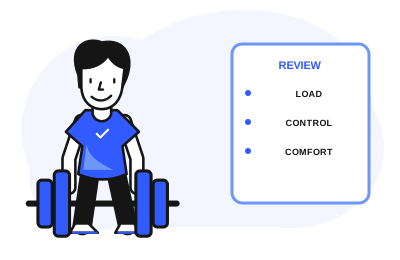
The top of a deadlift does not need to become a backward bend. If you finish by driving the hips forwards and throwing the shoulders behind them, review that habit before adding load. A controlled standing finish is a useful coaching aim. If the movement is painful, stop and seek appropriate advice rather than trying several increasingly forceful cues in the same set.
A raised starting position or a lighter implement may be discussed when the reach or load is currently difficult, but neither is a universal treatment for lordosis. Ask why the variation is being chosen and what would justify progressing it. If you have a diagnosis involving the spine, its restrictions come first. The back-pain guide explains why a spinal level or scan label alone cannot decide the lift.
Arrange feedback so you do not turn your head towards a mirror while lifting. A side-view recording can help a coach discuss the movement afterwards, provided the whole body and weight are visible. The recording shows movement, not the condition of the spinal tissues. Do not turn a frame from the video into a self-diagnosis or a prediction that an injury is inevitable.
Anatomy is context, not a checklist of forbidden positions
The lumbar spine supports movement and includes the five lower-back vertebrae, L1 to L5. Knowing those labels can help you understand a report, but it does not tell you how much weight you may lift. A clinician can relate findings to symptoms and function. A trainer should not assign a different squat rule to each vertebra without that clinical context.
The same care applies to terms such as pelvic tilt, weak core or tight hips. They may be discussed during assessment or coaching, but they are not complete explanations for every painful arch. Avoid buying a large corrective routine based on a single label. Ask what has actually been assessed, what the chosen exercise is intended to do and how the result will be reviewed.
Strength and mobility work should have a clear purpose
The AAOS spine-conditioning program presents exercises to select with professional guidance. It is not a guarantee that a particular abdominal drill or hip stretch will change your spinal curve. If rehabilitation exercises have been prescribed, learn their setup and follow the instructed range and dose before making them harder.
For general training after clearance, discuss which trunk, leg and upper-body movements serve your goals without provoking symptoms. You do not need to make every session a posture-correction session. A manageable strength routine can have practical aims such as lifting household items, standing from a chair or returning to a chosen sport. Those aims give you something useful to measure beyond the appearance of your back.
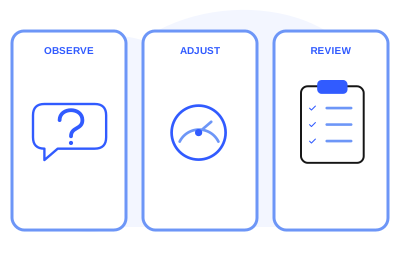
A practical review process for the next session
- 1
Write the problem as an observation
For example, note that you lean backwards during the last repetitions of a deadlift, or that a squat depth is painful. Avoid turning the observation into a diagnosis. Mention new or spreading symptoms before any further exercise.
- 2
Check the guidance you already have
Read any restrictions from your doctor or physiotherapist. If the advice is vague, ask for clarification about the activities you want to do. Do not make up a load limit or a return date based on a general article.
- 3
Change one feature of the cleared exercise
A coach may review load, range, setup or number of repetitions. Keep the other features similar so the effect of the change is easier to understand. Stop if the revised version still produces a concerning response.
- 4
Check the response beyond the gym
Record how ordinary tasks feel afterwards and follow the symptom-monitoring instructions from your clinician. Repeated worsening needs review. Completing all repetitions is not enough evidence that the current plan is appropriate.
Use practical goals instead of a posture deadline
Choose goals you can observe: a controlled lift at the agreed load, a comfortable range or a reliable session schedule. Do not set a deadline to flatten your lower back. A natural curve is expected, and changes in symptoms or function do not have to match changes in appearance. If appearance is your only concern and there is no pain, ask whether anything needs treatment before assuming that it does.
Keep the plan workable at home or in your own gym. Choose stable supports, a clear area to put weights down and enough time between sets to communicate. If you repeatedly need to rush or strain to finish, simplify the session. A smaller version performed consistently can be more useful for learning than an elaborate list of corrective exercises you cannot follow comfortably.
MakeMyFitness coaches can observe technique and follow clinical exercise guidance, but they do not diagnose hyperlordosis or treat a spinal disorder. If symptoms need assessment first, the trainer versus physiotherapist guide explains the next step. If you also have an upper-back concern, the kyphosis guide covers that separately rather than treating every spinal curve as the same issue.
Sources
- Lordosis (Swayback), Cleveland Clinic
- Lumbar Spine, Cleveland Clinic
- Spine Conditioning Program, American Academy of Orthopaedic Surgeons
- Back pain, NHS
Written by the MakeMyFitness team from the sources above. First published , last updated . This is general fitness information, not medical advice: see the medical disclaimer.