The short answer
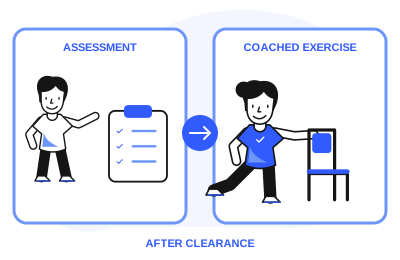
They do different jobs, in order. The physiotherapist comes first: they diagnose what's wrong, treat it and tell you what you can and can't do. The trainer comes second: once you're cleared, they build the strength, mobility and confidence that physiotherapy on its own rarely has time to. Skipping the first step is how a niggle becomes an injury; skipping the second is how an injury comes back.
| Physiotherapist | Personal trainer (post-rehab coaching) | |
|---|---|---|
| Assesses and diagnoses the problem | Yes | No |
| Treats pain and the injured tissue | Yes: hands-on treatment, prescribed exercises, advice | No |
| Tells you what to avoid | Yes | Follows what the physio said |
| Builds general strength and fitness | Sometimes, briefly | Yes, that's the job |
| Progresses you back to normal training | Up to discharge | From discharge onwards |
| When to see them | New pain, after an injury or surgery, pain that's getting worse | After clearance, when you're ready to train again |
See a doctor or physiotherapist first if…
- The pain is new, severe or getting worse, or came from a specific injury.
- There's numbness, tingling, weakness or pain that travels down an arm or leg.
- You've had surgery and haven't been told you can start exercising.
- A joint is swollen, hot or won't take weight.
- Pain wakes you at night or came with a fever or unexplained weight loss.
What happens after physiotherapy ends
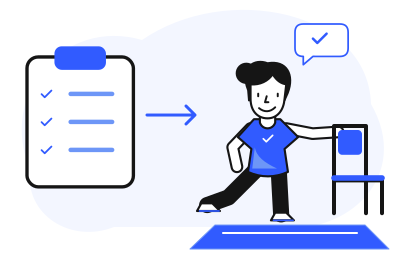
Physiotherapy usually ends at discharge: the pain is down, the range of movement is back, you've been given exercises to keep up. The gap is what comes next. The exercises stop being done, the strength that would protect the joint never gets built, and six months later the same back or knee is sore again. Post-rehab coaching fills that gap. Your coach takes what the physio said, including what to avoid, and builds a progressive strength and movement plan around it, with every rep watched. Remote supervised exercise is well studied for this stage: a 2023 systematic review found telerehabilitation exercise comparable to face-to-face physiotherapy for a range of conditions.
How Rehab & Recovery works alongside your physio
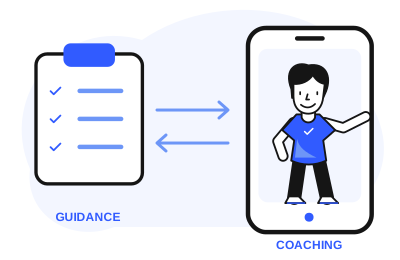
- 1
You're cleared
A doctor or physiotherapist says you can begin exercising. If you haven't seen anyone yet, tell us when you book and we'll talk it through, but we'll point you to a physio first.
- 2
You share their advice
What they treated, what to avoid, any exercises they gave you. The health check before your first session asks for this.
- 3
Your coach builds from there
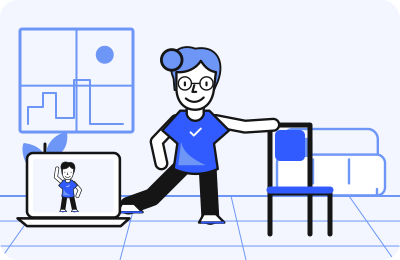
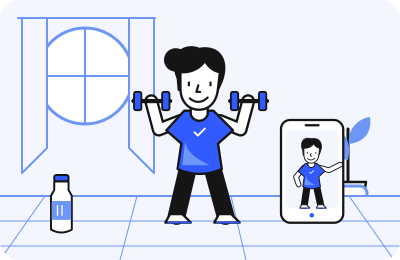
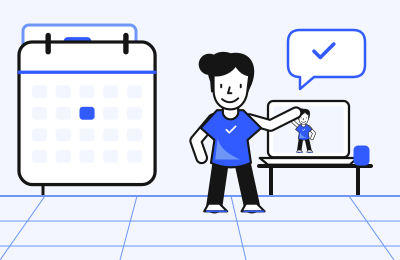
Live one-to-one sessions on video, paced gently: strength around the joint, mobility, then normal training. Anything that hurts is stopped or swapped on the spot.
- 4
You go back to the physio if needed
If something changes, your coach will say so and send you back rather than guess. The two work in sequence, not in competition.
What it is not
Our coaches are certified personal trainers, not physiotherapists or doctors. Rehab & Recovery is coached exercise after clearance, not treatment, not diagnosis, and not a substitute for physiotherapy. Our medical disclaimer and health consent pages say this plainly, and we'd rather lose a booking than train someone who should be seeing a physio.
Back pain, knee pain, shoulders: the usual sequence
- Lower back. Physio for the acute episode and to rule out anything serious; then hinge strength, trunk work and hip mobility with a coach. Most desk-related back pain lives here.
- Knees. Physio to assess the joint; then quad and glute strength, step and squat patterns rebuilt gradually with every rep watched.
- Shoulders. Physio for the rotator cuff and range; then rows, pulls and controlled pressing, progressed slowly.
- After surgery. Only once your surgeon or physio says so. Then the same sequence, slower.
Sources
- Telerehabilitation as a therapeutic exercise tool versus face-to-face physiotherapy: a systematic review (2023), Muñoz-Tomás MT, et al., International Journal of Environmental Research and Public Health, via PubMed
- Back pain, NHS
- WHO guidelines on physical activity and sedentary behaviour (2020), World Health Organization
Written by the MakeMyFitness team from the sources above. First published , last updated . Spotted something out of date? Tell us at hello@makemyfitness.com.