Understand the upper-back curve before banning exercises
Kyphosis is often used loosely to describe a rounded upper back, but it should not be diagnosed from a gym photograph. The NHS kyphosis guidance distinguishes postural, Scheuermann's and congenital forms, and explains that the cause and severity guide care. Spinal injury and conditions such as osteoporosis can also matter. These are not interchangeable situations with one universal workout.
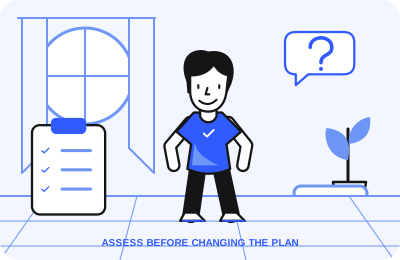
If you think you or your child may have kyphosis, arrange an assessment. Do not use a posture app or a wall test to decide whether the curve is structural. For a child or adolescent, exercise and any bracing decisions belong with the appropriate clinical team. This guide explains adult training questions to discuss after assessment; it does not provide a corrective treatment program.
Can you train chest with kyphosis?
Chest work is not automatically prohibited because the upper back is rounded. The useful questions are whether the exercise fits your assessment, whether the setup is comfortable and whether you can control the movement. A bench press, wall push-up and chest machine are different tasks. Do not treat all pushing as one category that must either be removed or performed without limits.
If a bench position makes your neck or back uncomfortable, stop trying to force your body to fit the bench. Discuss support, a different angle or another cleared exercise. A large deliberate lower-back arch is not a general solution for an upper-back curve. Likewise, pushing your head backwards into the bench to make it touch can turn the setup into a problem before the first repetition begins.
If chest training currently aggravates symptoms, pause that version while you get advice. Its place in a future routine can be reviewed rather than decided permanently in one uncomfortable session. The shoulder-pain guide covers pressing symptoms in more detail. Shoulder pain and a spinal curve may coexist, but one does not explain the other automatically.
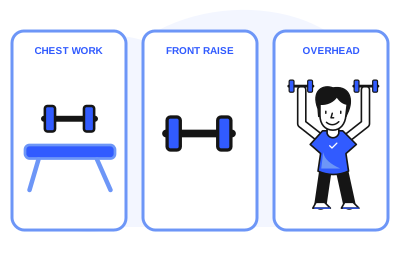
Chest work, front raises and overhead presses: a review table
| Exercise | What makes the current version unsuitable | What to discuss |
|---|---|---|
| Chest press or bench press | Painful support position, forced neck position or load outside your restrictions | An alternative setup, reduced load or a different cleared push |
| Front raise | Swinging the weight, increasing pain or forcing a range you cannot control | Less resistance, a comfortable range or leaving it out |
| Overhead press | Reaching overhead requires painful neck strain or a large uncontrolled back arch | A different pressing direction, support or another exercise |
| Deep chest stretch | Forcing the shoulders or spine into a painful end position | Whether a particular stretch is appropriate at all |
| Loaded spinal bending or twisting | A fracture, osteoporosis-related precaution or other restriction applies | Diagnosis-specific guidance rather than a generic posture routine |
Do not use the alternatives as an automatic sequence to try when something hurts. First clarify the restriction or symptom. If the issue is a diagnosed fracture, a lighter version may still be inappropriate. If the issue is simply an awkward setup in an otherwise cleared routine, a practical equipment change may be enough. An assessment helps distinguish these situations.
Front raises are optional, not a posture test
A front raise is an accessory shoulder exercise. It does not need to be included to prove that your shoulders work, and it does not need to be banned because the upper back looks rounded. Ask what purpose it serves in the routine. If you already have appropriate pushing and other upper-body work, adding another tiring raise may not be a priority during a return to training.
For an approved raise, use the range and resistance you can control without swinging or forcing your posture. Do not make reaching a particular height more important than following your clinical guidance. If the movement causes pain or a new symptom, stop and review it. A smaller range is a possible training adjustment to discuss, not proof that the underlying curve has been corrected.
Overhead work depends on the whole setup
An overhead press asks the arms, shoulders and trunk to work together. If you are repeatedly leaning backwards to finish, the load or movement may not fit your current ability. Lowering the weight does not necessarily solve a restricted or painful range. Discuss whether an alternative angle, support or temporary substitute is appropriate rather than trying to force the arms into the shape shown in an exercise photo.
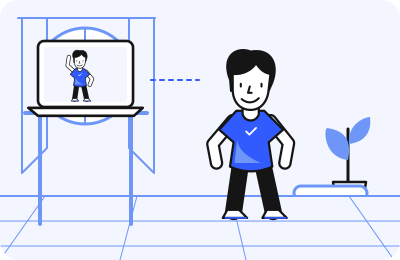
A supported machine is not automatically suitable either. The seat, backrest and handles need to fit you comfortably. If the equipment requires an awkward head position, choose another option with professional advice. For remote coaching, place the camera where your whole body is visible and the screen can be seen without repeated neck turning. The setup should help the session, not add a second movement problem.
What exercise can realistically help with
AAOS guidance on kyphosis describes selected physical therapy exercises for strength, posture and symptoms. This is different from promising that rows, stretches or a particular chest-workout ban will reverse a structural curve. Keep the aim realistic: better capacity for agreed activities, a manageable training routine and the outcomes your clinician considers appropriate.
Do not measure success only by trying to look straighter in a photograph. You might be working towards comfortable reaching, more confidence with daily tasks or improved endurance in a cleared exercise. Record the actual task and how it changes. A photo can document appearance, but it cannot tell you how vertebrae are shaped, whether bone is fragile or whether an exercise is suitable.
The AAOS spine-conditioning resource also emphasises choosing rehabilitation exercises with professional supervision. A public exercise library gives examples, not a prescription for every spinal curve. If your clinician supplies a specific plan, use that as the starting point and ask before adding a separate routine marketed as a kyphosis cure.
Bone health and previous fractures change the conversation
Tell the clinician and coach if you have osteoporosis, a vertebral fracture, unexplained height loss or a recent spinal injury. Ask whether those findings create particular restrictions for bending, twisting, impact or lifting. Do not assume that every adult with an upper-back curve has fragile bones, but do not ignore known bone-health information when selecting exercises either.
The NHS advice for living with osteoporosis includes staying active appropriately and reducing fall hazards. In practice, review the room as well as the exercise: clear loose equipment, avoid unstable supports and plan how you will get on and off the floor. A carefully selected movement still needs a suitable environment.
Practical questions to bring to your clinical assessment
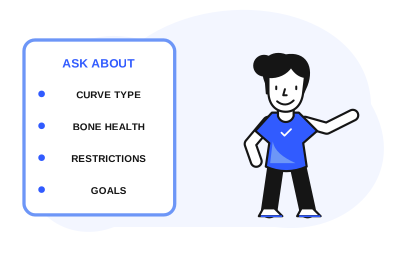
- What type of curve do I have, and does it need treatment, monitoring or specific exercise precautions?
- Do symptoms or bone health create restrictions on pressing, bending, twisting or lifting?
- Which exercise positions and support arrangements are suitable for me?
- What should make me stop a session or arrange another appointment?
- How will we judge progress, and when should the training plan be reviewed?
Ask for the answers in language you can use in the gym. Avoid heavy exercise is less helpful than an explanation of which demands to limit and how to progress. If a brace or other treatment has been prescribed, ask how it affects activity; do not change its use based on a training article. Your coach should follow those instructions rather than treating the curve as a posture problem they can independently correct.
Organise training after clearance
- 1
Start with the assessed goals
Choose the activities you want to return to and the exercises cleared for that purpose. Keep medical treatment and general fitness coaching distinct. The plan should name practical goals, not only an ideal spine shape.
- 2
Make positions comfortable before adding resistance
Check the bench, chair, machine and screen placement. Use the supports your clinician recommends. Do not force the head or back against equipment simply to imitate another lifter's position.
- 3
Keep the first sessions simple
Use a small selection of familiar movements and enough rest to report changes. Avoid combining several new stretches, raises and presses at once. A clear plan makes both the session and its later effects easier to review.
- 4
Progress from evidence, not appearance
Review symptoms, daily function and the agreed exercise response. Change one demand at a time when appropriate. A more upright photo is not sufficient reason to increase load or disregard a bone-health restriction.
If you are unsure who should assess the curve or oversee treatment, start with the trainer versus physiotherapist guide. MakeMyFitness coaches can support a cleared exercise routine but do not diagnose spinal deformity, prescribe braces or offer medical treatment. Keeping those boundaries clear makes the handover more useful for you.
Sources
- Kyphosis, NHS
- Kyphosis (Roundback) of the Spine, American Academy of Orthopaedic Surgeons
- Spine Conditioning Program, American Academy of Orthopaedic Surgeons
- Living with osteoporosis, NHS
- Back pain, NHS
Written by the MakeMyFitness team from the sources above. First published , last updated . This is general fitness information, not medical advice: see the medical disclaimer.