Hip pain needs a movement-specific review
Hip pain can make forward bends, squats, stairs, sitting or lying on one side uncomfortable. Those situations are useful clues for an assessment, but they do not establish one diagnosis. Begin by describing the location and timing of symptoms rather than deciding that your hips are simply tight or weak. The NHS hip-pain guidance explains that several conditions can cause pain and advises against self-diagnosing the cause.
The exercise question is also more specific than whether you should train legs. A deep loaded bend, a short supported movement and a long walk can place different demands on you. If one repeatedly hurts, pause or adjust that demand while seeking appropriate advice. You do not have to keep reproducing a painful pinch to prove that it is present, and you do not have to abandon every activity because one range is difficult.
When forward bending may need to change
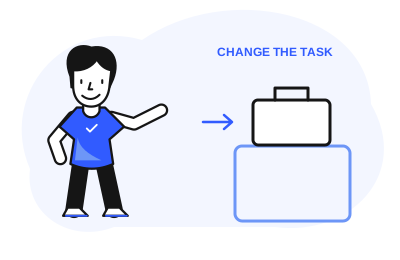
Forward bending can involve the hips, spine and knees in different proportions. The phrase too much bending does not define a medical limit. Describe what actually brings on symptoms: reaching for shoes, sitting in a low chair, lowering into a squat, lifting from the floor or leaning forward repeatedly during a class. Range, resistance, speed and repetition all help explain the task.
If deep bending consistently produces pain, avoid forcing that depth while the problem is reviewed. A higher seat, a shorter reach or a raised object may be worth discussing as a practical adjustment. These are ways to change the task, not treatments for a particular hip condition. Do not force a stretch into the same painful position on the assumption that more flexibility must solve it.
One specific condition, femoroacetabular impingement, can involve pain during squatting or turning, according to AAOS. That does not mean every painful forward bend is impingement. Nor does a home version of an examination manoeuvre establish the diagnosis. If symptoms persist, let a clinician assess them rather than using repeated deep bends as a self-test.
Exercises and positions to pause or modify
| Activity | Reason to review it | An adjustment to discuss |
|---|---|---|
| Deep squat or low-seat exercise | The deep position produces a painful pinch or is restricted | A higher seat or shallower supported range |
| Loaded forward bend or floor deadlift | Reaching down or lifting through that range worsens pain | A raised starting position, less load or another cleared exercise |
| Repeated knee-to-chest movement | High hip flexion repeatedly provokes symptoms | A smaller range or a different agreed movement |
| Aggressive hip stretching | The stretch creates sharp or increasing pain | Stop forcing the position and ask whether that stretch is indicated |
| Side-lying hip exercise | Pressure on the side or lifting the leg is painful | A different position or clinician-selected exercise |
| Long walking or stair sessions | Symptoms accumulate or walking becomes altered | A smaller dose or another suitable activity |
Do not substitute automatically from one row to another. A raised deadlift still involves loading, and a shallow squat still uses the hip. If the easier-looking version also hurts or conflicts with your instructions, it is not the right choice for now. A good modification has a clear reason and a way to review the response, rather than only a reputation for being joint-friendly.
Avoiding all hip strengthening is not the goal
The AAOS hip-conditioning program includes strengthening as well as mobility exercises selected under professional supervision. This supports a more useful distinction: avoid inappropriate loading or a painful version, rather than assuming every exercise for the hip is harmful. A clinician may deliberately include strength work as part of returning you to ordinary activity.
Ask what the selected exercise is meant to improve and how it should be performed. A standing movement with support, a bridge or a side-lying exercise may appear in different plans, but none is universally suitable. Side-lying work is a poor choice if that position itself aggravates your symptoms. A bridge is not automatically appropriate after every operation. Follow the exercise that was chosen for your situation rather than collecting every hip drill you find online.
If your plan feels too easy, ask about progression instead of adding a heavy resistance band or ankle weight on your own. If it is painful, report the problem rather than silently dropping all hip strengthening. Both reactions make it harder for the clinician to know what you are actually doing. The exercise dose and the position matter as much as the name.
Make everyday movements easier to describe
| Task | Detail to record |
|---|---|
| Getting out of a chair | Seat height, use of armrests and whether discomfort occurs when standing or sitting |
| Putting on shoes | Whether reaching down or lifting the knee is the difficult part |
| Walking | Distance, surface and whether pain changes your stride |
| Stairs | Going up or down, use of a handrail and number of trips |
| Sleeping or resting | Whether a particular position or direct pressure is uncomfortable |
This information often helps more than trying to name the painful tissue yourself. For example, a note that a low chair is difficult but a higher firm seat is manageable is specific and repeatable. It does not prove that the joint is being damaged by every bend. Use observations to help the clinician choose a plan, not to build an ever-growing list of feared positions.
If pain is also present in the back or knee, mention it rather than assuming the hip explains everything. The back-pain guide and knee-pain guide address those areas separately. Your clinician can decide which symptoms belong together and which need a different assessment.
Build a return plan after assessment
- 1
Translate advice into practical limits
Confirm any restrictions on bending, weight-bearing or rotation. After surgery, ask about the exact precautions that apply to your procedure and stage of recovery. Do not borrow someone else's hip precautions or assume every hip operation uses the same rules.
- 2
Choose a small, repeatable session
Use movements already selected or cleared for you, and record their setup. Leave space between exercises to notice how you feel. Avoid adding a demanding stretching session and new strength circuit on the same day just because both are labelled rehabilitation.
- 3
Keep ordinary activity in the calculation
Consider walking, stairs, travel and household tasks alongside the workout. A short session can still sit inside a demanding day. Tell the clinician if normal activities are becoming harder even when the gym exercises appear manageable.
- 4
Review before increasing the demand
Follow the symptom limits you have been given. Check the later response and change only one part of the exercise when appropriate. Persistent worsening, new symptoms or a change in walking ability needs review, not simply another exercise swap.
Progress does not have to mean bending deeper
A useful early goal may be completing the agreed activity more comfortably, using the same chair without rushing or walking a familiar route without worsening symptoms. These are practical outcomes. There is no requirement to regain a particular squat depth for an online challenge. Choose a range that serves your daily life and any sports goal, with clinical guidance where needed.
When you are ready to progress, identify the single change you are making. More repetitions, a slightly different range and extra resistance are different demands. Keeping the others stable makes the response easier to interpret. If the new version is not manageable, return to the last agreed level and discuss the next step rather than trying to push through to make the program look linear.
It can help to keep both a normal session and a shorter approved version in your notes. On a busy day, the shorter version may be more realistic than abandoning the plan and making up for it later. This is a scheduling choice, not permission to train through a new injury. New or concerning symptoms take priority over completing either version.
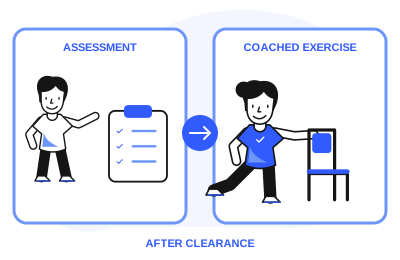
What to bring to a coached session
- The clinician's diagnosis or explanation, along with the actual exercise restrictions and review date.
- The exercises you were shown, their setup and any instructions for monitoring symptoms.
- A brief record of what is comfortable, what is difficult and how symptoms respond later in the day.
- Details of recent surgery, a new injury or a change in symptoms that might mean reassessment comes first.
A trainer can help you organise the cleared work, adjust equipment and maintain a consistent routine. They cannot identify hip impingement, a tendon problem or arthritis from a video of a squat. Our trainer versus physiotherapist guide explains the distinction. A useful coaching handover begins with clear clinical advice rather than a promise that stronger glutes will solve every form of hip pain.
Sources
- Hip pain in adults, NHS
- Hip Conditioning Program, American Academy of Orthopaedic Surgeons
- Femoroacetabular Impingement, American Academy of Orthopaedic Surgeons
Written by the MakeMyFitness team from the sources above. First published , last updated . This is general fitness information, not medical advice: see the medical disclaimer.