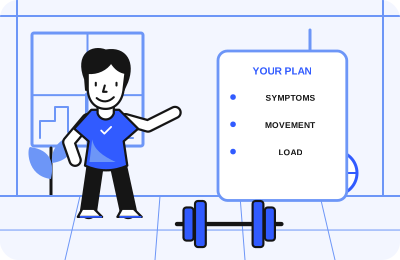
Back pain needs context before an avoid list
Back pain exercises to avoid cannot be chosen from the name of a lift alone. A light squat to a chair and a heavy barbell squat ask different things of your body. The same is true of lifting an empty bar from raised supports and pulling a maximal deadlift from the floor. Start with what brings on symptoms, what has changed recently and whether a clinician has identified a condition that needs specific restrictions.
The NHS back-pain guidance encourages staying active within your abilities rather than prolonged bed rest. This does not mean forcing a painful workout. It means separating everyday movement you can manage from the particular loaded exercise that currently aggravates symptoms. If pain is persistent, worsening or limiting normal life, arrange an assessment rather than repeatedly testing it with heavier sets.
What L1, L2, L3 and L4 do and do not tell you
The lumbar spine has five vertebrae, L1 to L5. These labels locate structures in the lower back. A report may also name a disc space between two vertebrae, such as L3–L4. Saying you have an L4 problem does not explain whether the concern is a fracture, a disc finding, a nerve symptom or something else, and it cannot determine a universal exercise blacklist.
Ask the clinician who assessed you to translate any report into practical instructions. Which movements or loads are temporarily restricted? Is there a limit on lifting from the floor? What changes should prompt another review? A trainer needs those instructions, not a guess about what one line of an MRI report means. Keep a copy of the advice with your training notes so everyone is working from the same information.
Deadlifts, squats and overhead presses: what to review
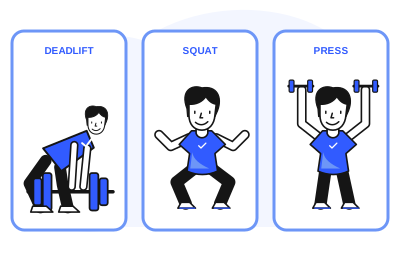
| Exercise | Pause or modify when | A change to discuss |
|---|---|---|
| Deadlift | The pull provokes back or leg symptoms, you cannot control the load, or lifting is restricted | Less weight, a shorter lift from raised supports, or practising an unloaded hinge |
| Squat | Depth, bar position or load repeatedly increases symptoms | A supported sit-to-stand, a shallower range or another cleared leg exercise |
| Shoulder overhead press | You lean back to finish repetitions or the movement aggravates your back | Less load, a supported setup or a different cleared pressing angle |
| Fast loaded circuits | Fatigue makes it difficult to notice symptoms or maintain the planned movement | Separate exercises, longer rests and a smaller total workload |
Use the table to describe the problem precisely. For example, write that symptoms begin during the last few repetitions of a standing press, rather than recording only that shoulder exercise is bad for your back. That detail helps a professional consider whether the session needs a smaller load, more rest, another setup or a medical review. It also prevents you from discarding every form of pushing because one variation is uncomfortable.
Review the deadlift without turning bending into a threat
If deadlifting is currently painful, remove the provoking version from the session. There is no need to demonstrate the same painful repetition several more times to prove it is a problem. Explain whether discomfort appears when reaching the bar, leaving the floor, lowering it or standing at the top. Mention symptoms that travel into a leg, and do not treat new numbness or weakness as ordinary training soreness.
After you have appropriate exercise guidance, an unloaded hip hinge can be a way to practise the movement before adding resistance. A raised starting position is another option to discuss if reaching the floor is the issue. Neither change guarantees that the lift is suitable. Your clearance, comfort and response after the session still determine whether it belongs in the plan.
Avoid a dramatic backward lean at lockout if that is how you are trying to finish the lift. Aim for a controlled standing position instead of pushing your chest up and hips forward as far as possible. You do not need to make your spine perfectly rigid or erase every natural curve. The useful coaching question is whether the chosen movement and load remain comfortable and controlled for you.
Adjust squats and presses one variable at a time
For a squat that has been cleared but feels difficult, discuss the seat or target height, available hand support, load and number of repetitions. Alter one of these before changing all of them. A stable chair can provide a clear target, but it should not become a reason to drop quickly into the seat. If sitting down itself is painful, a chair squat is not automatically the right substitute.
For overhead pressing, check whether the weight is pulling you into a position you cannot comfortably maintain. A supported setup may help some people, while others need a different movement for now. Do not force the arms overhead by increasing the arch in your lower back. Equally, do not assume that every overhead movement must disappear permanently simply because your back has been sore.
Keep the original goal visible. If the goal was general leg strength or upper-body pushing, your program can often use another assessed and tolerated option while you work back towards a specific lift. The lordosis and lifting guide discusses excessive arching in more detail. It is a companion explanation, not a way to diagnose your back posture from a mirror.
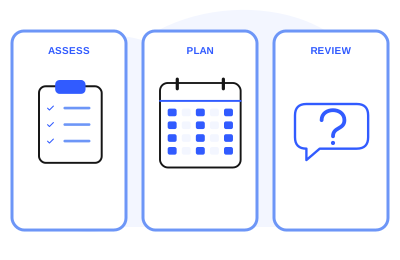
Plan a manageable session after clearance
- 1
Start with the agreed limits
Read the clinician's advice before choosing exercises. Write down any load, range or movement restrictions in plain language. If the advice only says to avoid heavy lifting, ask what that means for the activities you want to do rather than inventing a kilogram limit yourself.
- 2
Choose a small amount of familiar movement
Use the comfortable warm-up and exercise options already agreed for you. Keep the first return session simple enough that you can tell which movement you responded to. Trying several unfamiliar back exercises at once makes that much harder.
- 3
Leave time to observe and rest
Give each exercise enough space that you are not rushing to keep up with a circuit timer. Tell the coach when symptoms change. Stop an exercise that produces new, spreading or clearly increasing symptoms, and seek further assessment when indicated.
- 4
Review later, not just at the last repetition
Record how you felt after training and during ordinary tasks later that day or the next morning. Follow any symptom-monitoring instructions from your clinician. Do not increase the next session simply because you managed to finish this one.
The WHO guideline for chronic primary low-back pain includes exercise within individualised care. Its scope matters: chronic primary pain is not the same as an acute fracture, postoperative restriction or a new neurological problem. A general recommendation to exercise cannot override diagnosis-specific advice.
Keep a useful training and symptom record
| Record | Make it specific |
|---|---|
| Exercise version | Chair height, bar position or pressing setup |
| Work completed | Actual load, sets and repetitions, including stopped sets |
| Symptoms | Location, whether they spread and when they began |
| Later response | Whether normal walking, sitting or sleep changed |
| Next decision | Repeat, reduce, substitute or ask for clinical review |
This record is for communication, not self-diagnosis. If your coach changes the weight, exercise, pace and total volume together, you may struggle to identify what helped. Keep the plan stable enough to learn from it. When you progress, use the smallest practical change consistent with your clinician's advice, and retain an easier version for days when the planned workload is not manageable.
What a coach can help with after assessment
Before returning to a gym, check whether the equipment needed for your agreed variation is available. A plan using raised supports is difficult to follow if you arrive and improvise with unstable objects. Arrange a suitable space, confirm the setup with the coach and keep a cleared alternative in your notes for days when that equipment is occupied.
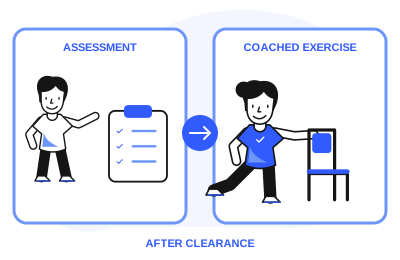
A coach can organise sessions, observe your movement and follow the exercise restrictions supplied by your doctor or physiotherapist. They cannot identify which lumbar structure causes pain through a video call or promise to repair a disc with a particular lift. The AAOS spine-conditioning resource also places rehabilitation exercise under professional guidance rather than presenting it as one routine for every back problem.
Before a remote session, choose a camera position that shows your whole movement and a space where you can stop and set equipment down without rushing. Tell the coach about any new symptoms before warming up. If you have not yet had a concerning or persistent problem assessed, use the trainer versus physiotherapist guide to decide who to contact first.
Sources
- Back pain, NHS
- Lumbar Spine, Cleveland Clinic
- WHO releases guidelines on chronic low back pain, World Health Organization
- Spine Conditioning Program, American Academy of Orthopaedic Surgeons
Written by the MakeMyFitness team from the sources above. First published , last updated . This is general fitness information, not medical advice: see the medical disclaimer.