What are the options for a corporate wellness program in India?
Most comparisons of corporate wellness in India are written by a provider. This page takes a different route. It sorts the market by format, the thing you are actually buying, and for each one sets out what the providers say about themselves and what they charge. We read every provider page on 1 November 2026.
A word on where we stand. MakeMyFitness sells one of these formats: live online fitness classes and one-to-one coaching for teams. We have tried to describe the others in the plain terms we would want used about us, and we say clearly where another format will serve a company better.
| Format | Examples | What employees get | Price on the provider's site |
|---|---|---|---|
| Gym and studio passes | FITPASS, cult.fit for corporates | Entry to a network of gyms and studios, often with nutrition consults and health check-ups | Not published; quote or demo |
| Wellness platforms and challenge apps | Truworth Wellness, Vantage Fit | An app with health content, challenges and rewards; some add doctor consults | Truworth not published. Vantage Fit from 1,600 USD for 200 employees (one 4-week challenge) |
| Perks sold with group health cover | Loop, Onsurity | Insurance alongside wellness webinars, doctor consults or fitness discounts | Not published |
| Online yoga and meditation | Heartfulness | Live yoga classes, meditation programs, in-house wellness champions | Not published on its corporate pages |
| On-site trainer or office gym | cult.fit on-campus, local trainers | A trainer or a gym in your own building | Not published |
| One-off workshops | Heartfulness, MakeMyFitness | A single talk with practical exercises | Heartfulness not published; MakeMyFitness quoted per workshop |
| Live online coaching | MakeMyFitness | 45-minute live classes on video, or one-to-one sessions as a benefit | ₹499 per person per class; ₹799 a one-to-one session |
How much does a corporate wellness program cost in India?
Very few providers put a number on their website. FITPASS, cult.fit, Truworth, Loop, Onsurity and Heartfulness all ask companies to get in touch for a price. Onsurity, for one, says its final figure depends on team size, city spread and tiers. That is reasonable for complex packages, but it makes early budgeting hard.
Two exceptions give a sense of scale at opposite ends. Vantage Fit, a step and activity challenge app, lists its prices in US dollars for a sample company of 200 employees: 1,600 USD (Basic) or 2,000 USD (Pro) for a single 4-week challenge, and 3,200 USD or 4,000 USD for a year of unlimited challenges. The yearly Basic plan works out at 16 USD per employee for the year. Its page says pricing is based on total employee count, with volume discounts applied automatically.
MakeMyFitness publishes its prices in rupees, as the corporate pricing page sets out. A live group class is ₹499 per person, and a 4-week block of 12 classes is ₹4,040 per person. A one-to-one session is ₹799 at the employee's own gym or ₹899 at home, or ₹7,070 and ₹8,080 for a 4-week plan of 12 sessions. Workshops are quoted by length and audience. Here is what that comes to for a few common set-ups, before any team quote:
| Set-up | Sum | Total for 4 weeks |
|---|---|---|
| One class a week for 15 people | 15 × 4 × ₹499 | ₹29,940 |
| Two classes a week for 10 people | 10 × 8 × ₹499 | ₹39,920 |
| One-to-one plan for 5 employees at their gym | 5 × ₹7,070 | ₹35,350 |
| One-to-one plan for 5 employees at home | 5 × ₹8,080 | ₹40,400 |
Whichever provider you talk to, the same few things move the price:
- Who you pay for. Some formats are priced on every employee on the payroll; others only on the people who attend or book.
- How much is human. An app costs far less per head than a coach, a doctor or a counsellor, because a person's time is the expensive part.
- Where people are. A single campus and a team spread across ten cities need different things, and providers price that in.
- How often. A weekly class, a daily class and a one-off talk are very different commitments.
Should you give employees a gym or fitness pass?
A pass lets each employee choose their own gym, studio or class from a network. FITPASS's corporate page describes a network of 12,000+ gyms in 150 cities, and its comparison table lists unlimited one-to-one nutrition consultations, doctor e-consults, health check-ups, diagnostic tests and pharmacy vouchers alongside gym access, plus FITCOACH, which it lists as an AI trainer. It does not publish a price for companies; employers book a demo.
cult.fit's page for organisations says: "Unlock 600+ elite fitness centers, gyms and sports facilities nationwide for your team." It also lists nutrition, mental wellness support and health check-ups, and offers to set up a fitness space in an office or upgrade an existing office gym. Prices are not published. Onsurity, a health-membership company, sells cult.fit and FITPASS memberships to employers at bulk rates, either paid by the company or as a discount the employee pays for.
Suits companies with people in many cities who want to pick their own workout, and staff who already like going to a gym or class. Keep in mind that a pass gives access rather than a plan. It works best for people who will go on their own, so ask the provider how it reports usage.
What do corporate wellness platforms and apps include?
Platforms bundle health services into one app for the whole workforce. Truworth Wellness says it is "Trusted by More Than 300+ Leading Organisations and Insurers & over 1 Million Employees". Its plans page lists three packages: CarePass for sick care (tele-consultations, in-clinic doctor consultations, prescription pharmacy and diagnostics, dental and vision), WellPass, a pick-and-choose plan that can include nutrition and fitness consultations, a mental wellbeing program and gym membership, and Thrive365, a combination of the two with wellness challenges and on-site activities. Prices are by quote.
Challenge apps are narrower. Vantage Fit runs step and multi-activity challenges with leaderboards, wearable sync and rewards, and lists its prices openly, as above. Its site describes its privacy as aggregate-only, with audience targeting "by count, never by name".
Suits large or scattered workforces, companies that want doctor and pharmacy access in the same place as fitness, and teams that enjoy a bit of friendly competition. Keep in mind that an app counts and encourages activity; nobody watches how people move. For many employees that is enough. For beginners, or anyone nervous about exercise, a person may help more.
Does group health insurance include wellness benefits?
Sometimes, and it is worth checking before you buy anything separately. In September 2020 the insurance regulator, IRDAI, issued guidelines on wellness and preventive features. Among other things they let insurers offer redeemable vouchers for membership of yoga centres and gymnasiums, and discounts on premiums or a higher sum insured at renewal based on the wellness regime a policyholder followed. What a particular group policy includes is set out in its own wording.
Some brokers and benefit companies add more on top. Loop, an insurance broker, lists wellness webinars four times a month for yoga, zumba and meditation, unlimited consults with an in-house mental health counsellor, discounts on cult.fit and free virtual doctor consults, all in one app. Its sign-up form says it currently serves only companies with 100 or more employees. Onsurity, mentioned above, builds fitness discounts into its health membership. Neither publishes prices.
Suits companies already buying group cover that want one supplier and one app. Keep in mind that webinars are one-to-many, so the instructor usually cannot see each person, and that the benefits differ from policy to policy.
Are online yoga and meditation programs good for teams?
Heartfulness, which runs meditation and yoga programs, runs workplace programs online and on-premise with certified trainers, from a relaxation session for a town hall to a 10-session resilience course of 60 minutes each, stress management for high-pressure teams and a program for new joiners. Its programs can be customised to suit the organisation's requirements, according to its site.
Its corporate yoga offer adds guided live yoga sessions that employees can join from the office, home or while travelling, with up to five live classes a day. A Wellness Champions course trains employees, over 10 hours of live online training, to lead Yoga on Chair sessions for colleagues, and there are retreats at its centres near Hyderabad and in Uttarakhand. Prices are not published on these pages.
Suits teams where stress, sleep and calm matter most, and companies that like the idea of training their own champions. Keep in mind that the programs centre on yoga and meditation. If your main aim is strength or fitness, ask how much of each class works on that.
When does an on-site trainer or office gym make sense?
A trainer in your own building is the most hands-on option. They can correct people by hand, spot heavy lifts and become a familiar face. cult.fit's corporate page offers to turn "that forgotten corner of your office" into a fitness space or to upgrade an existing office gym, and many local trainers and gyms will also come to an office. Nobody we checked publishes a price; expect a quote to depend on the space, the equipment and how many hours a trainer is there.
Suits a large campus where most people are on site most days. Keep in mind that hybrid and remote staff, and anyone in a branch office, miss out, and classes run at fixed times in one place.
Are one-off wellness workshops worth it?
A workshop is a single live session for a whole team: posture at the desk, starting strength training, eating around a working day, or stress and sleep. Heartfulness lists online workshops facilitated by certified trainers, and workshops are easy to slot into a wellness week or a team meeting. Ours run 45 to 60 minutes, include movements people do on the spot, are quoted per workshop, and can be recorded for internal use if you tell us in advance.
Suits a launch, a themed week, or a team that wants to try something before committing. Keep in mind that research on workplace activity programs finds more benefit with more use (see below), so one talk works best as the start of something regular.
How does live online fitness coaching for employees work?
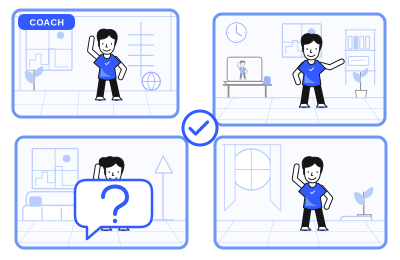
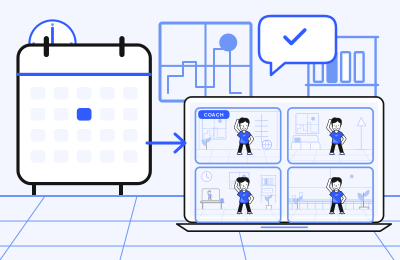
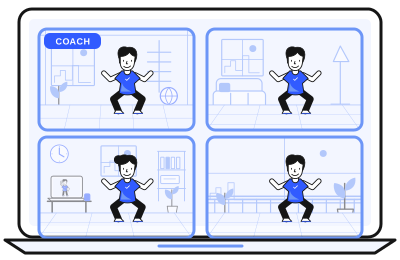
This is the format we sell, so here are the facts as they stand. A certified coach leads a live 45-minute class on video that the whole team joins from one link: an 8-minute warm-up, a 25-minute main block with an easier and a harder version of every exercise, a 5-minute finisher and a 7-minute cool-down. No equipment is needed. With cameras on, the coach corrects form by name; people who prefer cameras off can still follow. Details are on the team fitness classes page.
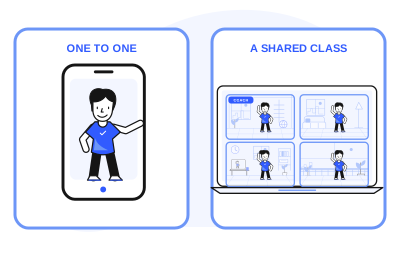
Companies can also offer one-to-one training as a benefit: the company pays for sessions or 4-week plans and named employees book their own slots, at home or at their own gym. It can be a plan per person, a shared pool of sessions, or co-funded with the employee. For teams split across homes and offices, the same class reaches everyone at once; see fitness for remote and hybrid teams.
- Hours: coaching runs from 6 AM to 8 PM India time, every day.
- Who coaches: sessions are led by our lead coach, Kumar Abhishek, who holds a Diploma in Personal Training and is a certified Human Performance Nutritionist, both from K11 School of Fitness Sciences.
- Privacy: the company sees attendance and session counts. Health answers, injuries and anything an employee tells the coach stay between them unless the employee chooses to share.
- Size: group classes work best from about five people; one-to-one works for any number, within the coaching hours we have free.
- Paying: we invoice the company in rupees for each month or block of sessions, with a secure payment link. There is no fixed minimum spend and no long contract.
- What it is not: there is no gym access, no doctor or health check-ups, no counselling and no trainer in your office.
Which kind of corporate wellness program suits which company?
| If your company… | Formats that fit |
|---|---|
| has staff in many cities who already like gyms | A gym and studio pass |
| wants doctor, pharmacy and fitness in one app | A wellness platform, or perks with group health cover |
| has hundreds or thousands of staff and a small budget per head | A challenge app |
| wants counselling or an employee assistance program | A mental health provider, or an insurer package that includes a counsellor |
| is mostly on one campus | An on-site trainer or office gym |
| cares most about stress and calm | Online yoga and meditation |
| is hybrid or remote and wants people coached, not just counted | Live online classes or one-to-one coaching |
| is not sure yet | A workshop, then a month with one team |
Do workplace fitness programs actually work?
There is a real case for doing something. The World Health Organization reports that nearly one third (31%) of the world's adults, 1.8 billion people, are physically inactive, meaning they do not meet the recommendation of at least 150 minutes of moderate-intensity activity a week. Among its policy recommendations are more opportunities for physical activity in workplaces.
The research is encouraging, with caveats. A 2025 meta-analysis of 80 randomised trials of workplace physical activity programs found small to moderate positive effects: fewer mental and physical health complaints, and better organisational outcomes such as absenteeism, job satisfaction and productivity. Group-based programs were associated with better adherence in the studies on health complaints, and in the studies on physical health complaints and organisational outcomes, benefits rose with how much people used the program. The authors warn that substantial differences between studies call for careful interpretation.
A large US trial is a useful reality check. Across 160 worksites, a dietitian-led wellness program raised the share of employees who said they exercised regularly (69.8% against 61.9%) after 18 months, but made no significant difference to clinical measures such as blood pressure and body mass index, to health care spending, or to absenteeism and job performance. Its authors wrote that the findings "may temper expectations about the financial return on investment that wellness programs can deliver in the short term".
So treat any promised return on investment with care, whoever makes it, ours included. The more useful measures are simple: how many people take part, and whether they keep coming back after the first month.
When should a company choose something other than MakeMyFitness?
- You want gym access across cities. A pass from FITPASS or cult.fit covers that; we don't run or partner with gyms.
- You need counselling or an employee assistance program. We cover what exercise does for stress and sleep, not therapy. Choose a qualified mental health provider, or a package that includes a counsellor.
- You want health check-ups, doctor consults or insurance. A wellness platform or a broker's package does this; we are fitness coaches only.
- You want a trainer physically in the office. That is an on-site trainer. All our coaching is on video.
- You want a light-touch benefit for thousands of people at a low cost per head. A challenge app reaches more people for less, though nobody coaches them.
- Your team is under about five people and wants classes. One-to-one sessions work at any size, but a group class needs a few people to feel like one.
What should HR ask before choosing a corporate wellness provider?
- 1
What is the total price, and what is it based on?
Every employee, every enrolled employee, or every session used? Get the figure for your headcount in writing.
- 2
Is there a minimum team size or contract length?
Some services start at 100 employees or need a year's commitment. Others let you try one team for a month.
- 3
What will we see about our employees?
Aggregate numbers are normal. Individual health details should stay with the employee and the professional they speak to.
- 4
Who leads the sessions, and what are their qualifications?
Ask for names and certificates for trainers, and registration for any doctor, dietitian or counsellor.
- 5
How will usage be reported?
Ask for a monthly summary of attendance or sign-ups, so you can see whether it is working and change course.
- 6
Can we start small?
A pilot with one team, or a single workshop, tells you more than any brochure, ours included.
If live classes or one-to-one coaching sound right for your team, the corporate overview explains how we set it up, and our individual prices are on the pricing page. For the difference between a shared class and a personal session, read one-on-one vs group online fitness classes.
Sources
- Employee wellness solutions for modern workplaces, FITPASS
- cult for Corporates: energize your workforce, cult.fit
- Corporate fitness memberships, Onsurity
- Truworth Wellness: T.H.R.I.V.E., Truworth Wellness
- Our plans: CarePass, WellPass and Thrive365, Truworth Wellness
- Corporate wellness software pricing, Vantage Fit
- Loop: health insurance and healthcare for employees, Loop
- Comprehensive health benefits for employees, Loop
- Guidelines on Wellness and Preventive Features, Ref. IRDAI/HLT/REG/CIR/233/09/2020 (4 September 2020), IRDAI, circular text reproduced by TaxGuru
- Heartfulness at work, Heartfulness
- Corporate yoga and wellness programs, Heartfulness Yoga Academy
- Physical activity: fact sheet, World Health Organization
- Move to improve: meta-analysis of workplace physical activity interventions (2025), Nath A, et al., Journal of Occupational Health Psychology
- Effect of a workplace wellness program on employee health and economic outcomes: a randomized clinical trial (2019), Song Z, Baicker K, JAMA
Written by the MakeMyFitness team from the sources above. First published , last updated . Spotted something out of date? Tell us at hello@makemyfitness.com.