The real problem isn't motivation, it's logistics
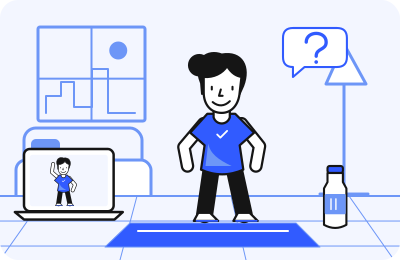
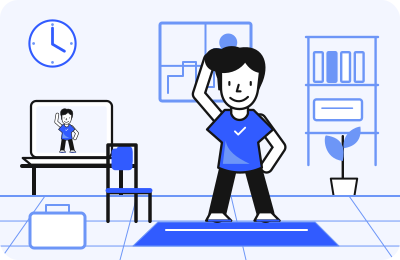
Most working professionals who stop training didn't lose interest. They lost the hour: thirty minutes each way to a gym, a trainer whose slot moved, a 7 PM call that ran to 8. A live online coach removes the logistics. The session is 45 minutes, it starts where you are, and it moves with 24 hours' notice when the week changes. What's left is the training, which is the part you wanted.
- No commute. A 45-minute session costs 45 minutes. Over three sessions a week that's three hours a week back, every week.
- Slots from 6 AM to 8 PM IST, every half hour. Before the stand-up, at lunch, or after the last call. See how a session works.
- Train where you already are. Your living room, your society gym, a hotel room on a work trip. Your coach plans around what's there.
- A coach who knows your calendar. Tell them you have quarter-end next week and the plan bends instead of breaking.
What sitting all day does, and what to train for
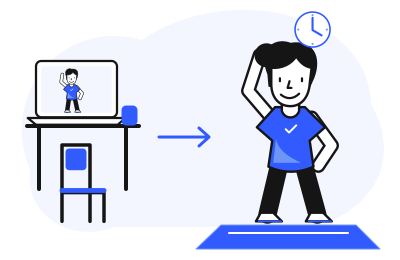
Long hours at a desk show up as a stiff back and hips, tight shoulders from the keyboard, and a slow, steady gain in weight from meals eaten at the screen. The World Health Organization's guidelines ask adults to limit sitting time and to do muscle-strengthening work on at least two days a week on top of 150 minutes of moderate activity. For a desk worker, strength work is the most efficient answer: it builds the muscle that protects your back, raises the energy you burn at rest, and takes 45 minutes.
| What you notice | What's usually going on | Where to start |
|---|---|---|
| Lower back and hip stiffness by evening | Hours of hip flexion, weak glutes and trunk | Mobility & flexibility, then strength |
| Rounded shoulders, neck tension | Keyboard posture, weak upper back | Rows and pulls in a strength plan |
| Weight creeping up a kilo a year | Low daily movement, meals at the desk | Fat loss coaching: strength plus a modest deficit |
| Tired at 4 PM, wired at 11 PM | No training, poor sleep rhythm | Morning sessions, two or three a week |
What a working week looks like with a coach
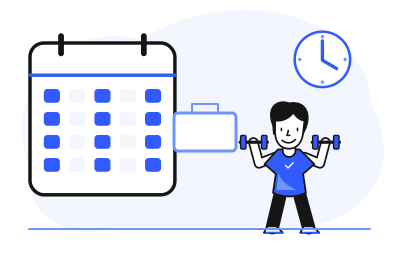
This is the shape most of our professional clients settle into. The times are theirs; yours will differ.
| Day | Slot (IST) | Session | Where |
|---|---|---|---|
| Monday | 7:00 AM | Full-body strength, 45 minutes | Living room, two dumbbells |
| Tuesday | Lunch | 20-minute walk, no coach | Around the block |
| Wednesday | 7:30 PM | Strength: hinge, push, pull | Society gym |
| Thursday | Rest | Nothing planned | |
| Friday | 6:30 AM | Conditioning and mobility | Living room, no equipment |
| Weekend | Your choice | A hike, a game, or nothing |
How the first month goes
- 1
Book a slot that survives your calendar
Pick the slot you'd actually keep, not the one you wish you'd keep. The team calls to confirm it and your coach.
- 2
Week one: learn four movements
A squat, a hinge, a push and a pull, coached on every rep. Sessions are gentle while your coach learns how you move.
- 3
Weeks two to four: build the habit
Loads go up a little each week. You'll notice stairs, sleep and the 4 PM slump before you notice the mirror.
- 4
Then: plan around the quarter
Travel weeks become home sessions. Crunch weeks drop to two sessions rather than zero. The plan is yours, so it flexes.
What it costs against the time it saves
A live one-to-one session is ₹899 at home or ₹799 at your own gym, and a 4-week plan of 12 brings that to about ₹673 or ₹589 a session, paid once with no subscription. Set that against three hours a week of commuting and the premium gym package you don't need to buy, and most professionals find the coach is the cheaper option. The full breakdown is in our cost-per-month guide.
Three questions professionals ask before booking
- "I travel for work." Sessions run anywhere with a camera and a connection. Hotel rooms are a common venue; your coach plans a no-equipment session.
- "My hours are unpredictable." Sessions move with 24 hours' notice at no charge, as the booking policy explains. Most clients book the week ahead on Sunday.
- "I haven't exercised in years." Then you're the person a live coach helps most. Our beginners' guide explains the first session minute by minute.
Sources
- WHO guidelines on physical activity and sedentary behaviour (2020), World Health Organization
- Physical activity guidelines for adults aged 19 to 64, NHS
Written by the MakeMyFitness team from the sources above. First published , last updated . Spotted something out of date? Tell us at hello@makemyfitness.com.