Most people who want to start going to the gym don't need more motivation. They need a plan small enough to follow on a tired Tuesday, and a few facts about what the first month actually feels like. This guide covers the practical side of starting: choosing a gym, what to bring, how Indian gyms work, how to handle nerves, and how to make the habit stick. For the exercises themselves, our gym workout plan for beginners gives you the eight machines and the sets and reps.
How to start going to the gym as a beginner: the five decisions that matter
Starting at the gym as a beginner comes down to five decisions you make before you lift anything. Get these right and the rest is repetition.
- 1
Choose the gym you'll actually reach
Distance beats equipment. A gym on your route to work or a short walk from home is one you'll still visit in the monsoon. Fancy machines across town are not.
- 2
Fix your days and times
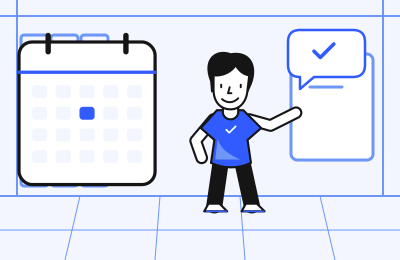
Three non-consecutive days, at the same time each day: for example Monday, Wednesday and Friday at 7 AM. Put them in your calendar like meetings.
- 3
Decide what you'll do before you arrive
Walk in with a written plan of five to eight exercises. Wandering between machines is where nerves and wasted time come from.
- 4
Start lighter than your ego wants
The first two weeks are for learning movements and letting your body get used to training. Soreness that stops you coming back is the real risk, not lifting too little.
- 5
Write everything down
Exercise, weight, sets and reps, every session. Your phone's notes app is enough. Next session's target is then always obvious.
Why three days? The World Health Organization recommends muscle-strengthening activities for all major muscle groups on 2 or more days a week for adults, plus at least 150 minutes of moderate activity. The American College of Sports Medicine's position stand on resistance training suggests 2 to 3 days a week for novices. Three full-body sessions meet both with room to spare. Our guide on how many days a week you should work out explains the reasoning in detail.
How to start going to the gym for the first time: a first-week checklist
Your first week at the gym is about learning the place, not getting fit. Use this checklist, and treat every item you tick as a win.
| Day | What to do | Why |
|---|---|---|
| Before joining | Take a trial or day pass at the time you plan to train | You see how crowded it is at your hour, not at 2 PM on a sales visit |
| Session 1 | Ask for the induction; learn where mats, dumbbells and benches are; do 2 light sets of 5 machines | Knowing the layout removes most first-day nerves |
| Rest day | Walk 20 to 30 minutes | Light movement eases soreness and counts towards your weekly minutes |
| Session 2 | Same 5 machines, note the seat settings and weights | Repeating the same routine is how it starts to feel familiar |
| Rest day | Walk, stretch, or rest | Recovery is when your body adapts |
| Session 3 | Add 1 or 2 exercises; a 5-minute warm-up on the treadmill or cycle | You finish week 1 with a routine you can repeat |
What to wear and bring to the gym
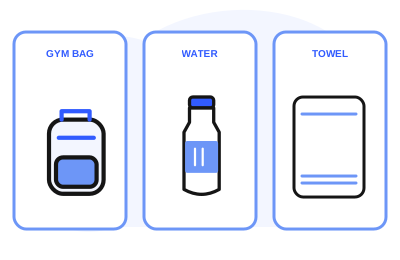
You don't need special gym clothes to start. You need clothes you can squat and stretch in, and a few small things that make Indian gyms easier.
| Item | What works | Tip |
|---|---|---|
| Shoes | Clean sports shoes with a flat, firm sole | Many gyms ask you to change into clean shoes at the door, so carry them in a bag in the monsoon |
| Clothes | T-shirt or top and track pants, shorts or leggings that let you squat | Cotton is fine; avoid anything loose enough to catch on a machine |
| Towel | A small hand towel | Most gyms expect you to wipe benches and seats after use |
| Water | A refillable bottle | Water coolers are common; queues at them are too |
| Lock | A small padlock | Not every gym provides locks for lockers |
| Phone and earphones | Your plan, your log and a playlist | Keep calls short and off speaker on the gym floor |
How to choose a gym in India before you pay
Choosing a gym in India is mostly about location, crowding and contract terms. Prices range from neighbourhood gyms to premium clubs, and our guide to gym membership fees in India compares what each type costs. Before you pay, check these:
- Visit at your training hour. Many gyms are busiest before and after office hours. If you can only go at 7 PM, see what 7 PM looks like.
- Count the basics, not the machines. A beginner needs a few benches, a dumbbell rack, a leg press, a cable or pulldown station and floor space. Rows of identical treadmills don't help much.
- Ask about the trial, freeze and refund terms in writing. A long plan is only cheaper if you use it. Ask whether you can pause it for travel or illness.
- Check what the floor trainer does. Some gyms include a free induction and basic help; personal training is usually extra. Our comparison of a personal trainer versus a gym membership explains the difference.
- Look at cleanliness and ventilation. Wiped equipment, working fans or AC, clean washrooms and drinking water tell you how the gym is run.
- Women-only hours or areas: some gyms offer them. If that matters to you, ask directly rather than assume.
Gym etiquette in Indian gyms: the unwritten rules
Gym etiquette in Indian gyms is simple once someone spells it out. Regulars notice manners far more than the weight you lift.
- Change your shoes at the entrance if the gym asks. Outdoor shoes bring dust and mud onto the floor and mats.
- Wipe what you sweat on and put dumbbells and plates back where they came from. Unracking someone else's 20 kg plates is the most common complaint in any gym.
- Ask "how many sets left?" before using a machine someone is near. It's normal to share a machine and take turns between sets.
- Don't sit on a machine while scrolling at busy hours. Rest standing nearby, or let someone work in.
- Keep calls and music off speaker. Earphones only.
- Give people space in front of the mirror and the dumbbell rack. Lift a step back from the rack so others can reach it.
- Ask the floor trainer for help with setting up a machine. That's part of their job, and nobody thinks less of a beginner for asking.
- Unsolicited advice is common. Thank people, and stick to your plan if it's working.
Gym anxiety: how to feel less nervous about starting
Gym anxiety, the feeling that everyone is watching and you'll look foolish, is very common among beginners and it usually fades with repetition. You can't think it away, but you can shrink the things that feed it.
- Go at a quiet hour for the first two weeks. Late morning and mid-afternoon are often calmer. Ask the front desk which hours are emptiest.
- Carry a written plan. Knowing your next exercise removes the moment of standing around wondering what to do.
- Start in one corner. Machines and a mat in one area of the gym, rather than crossing the whole floor.
- Rehearse at home. Practise the goblet squat and hip hinge with a water bottle in your living room so the movement isn't new on the day.
- Bring a friend, or a coach on your phone. Company makes the first sessions feel less exposed.
- Remember what regulars are doing. They are counting their own reps and checking their own form. A beginner learning a machine is the most ordinary sight in any gym.
How to start going to the gym as a woman
Starting at the gym as a woman follows the same plan as anyone else: three full-body sessions, machines first, weights that challenge you by the last two reps. Strength training is for everyone, and the WHO's 2-days-a-week recommendation applies to women and men alike. A few practical points help:
- Choose your hour deliberately. Visit at the time you'd train and see who's there and how the staff behave. If you'd prefer women-only hours or a separate area, ask whether the gym offers them.
- Don't stay on the cardio machines by default. Leg presses, rows, presses and squats build strength that helps everyday life. Lifting at a beginner's level won't make you bulky; building large muscles takes years of deliberate training and eating for it.
- Wear what you're comfortable in. Leggings or track pants and a T-shirt are as normal in Indian gyms as any gym wear.
- Trust your instincts about people. If someone's attention makes you uncomfortable, tell the staff. A good gym deals with it.
Our guides on online personal training for women and strength training for women over 40 go into more detail on goals and programming.
How to start going to the gym in the morning
Going to the gym in the morning works well for many people because nothing else has claimed the time yet. The difficulty is the alarm, not the workout. Make the morning gym start easy:
- Move bedtime, not just the alarm. Getting up an hour earlier only works if you sleep an hour earlier.
- Pack the night before: shoes, towel, water bottle, lock, and your plan for the session.
- Eat something small if you need it: a banana or a few dates 20 to 30 minutes before, or nothing if you feel fine training on an empty stomach.
- Warm up longer. Five to ten minutes of easy cardio and a few light sets before your first exercise.
- Keep it to three mornings to start. Every-day morning plans tend to collapse in week two.
Is morning the best time? Research suggests the time of day matters much less than doing it consistently. Our guide to the best time to work out covers the evidence, including heat and winter air quality in Indian cities.
Your first four weeks at the gym, week by week
The first four weeks at the gym should feel almost too easy. You are building the habit and learning movements; strength follows. This outline pairs with the exercises in our beginner gym workout plan.
| Week | Sessions | What to do | What success looks like |
|---|---|---|---|
| 1 | 3 | 5 machines, 2 light sets each, learn every seat setting | You turned up three times |
| 2 | 3 | 6 to 8 exercises, 2 sets of 10 to 12, same weights as week 1 | Movements feel smoother; less soreness |
| 3 | 3 | 3 sets; add the smallest weight step where the top of the range felt easy | Your log shows the first increases |
| 4 | 3, plus walking on 2 other days | Keep adding small amounts; try a free-weight move like the goblet squat | Going feels routine rather than a decision |
On adding weight, the American College of Sports Medicine's resistance-training position stand recommends novices use loads they can lift for 8 to 12 reps, and increase the load by 2 to 10% once they can do one or two reps more than their target with good form. In practice that's usually the smallest step on the machine. If your goal is losing fat, the calorie deficit calculator and our fat loss page cover the food side; for muscle, see the protein intake calculator and our muscle building page.
How to start going to the gym consistently: what habit research says
Going to the gym consistently is the part most beginners struggle with, and the research on habits explains why the first two months are the hardest.
In a study by Phillippa Lally and colleagues at University College London, published in the European Journal of Social Psychology, 96 volunteers chose a daily eating, drinking or activity behaviour to do in the same context and rated how automatic it felt each day for 12 weeks. According to the British Psychological Society's summary, it took 66 days on average to reach peak automaticity, with individual times ranging from 18 days to a predicted 254 days. A single missed day had little effect on the process, but many missed repetitions added up. The popular "21 days" figure isn't supported by this data, as UCL's own researchers have pointed out.
Gym-specific research points the same way. A 2015 study by Navin Kaushal and Ryan Rhodes in the Journal of Behavioral Medicine followed 111 new gym members for 12 weeks and found that exercising at least four times a week for six weeks was the minimum needed to establish an exercise habit in that group. Consistency was the strongest predictor of habit forming, followed by keeping the routine simple, the environment, and enjoying the sessions.
Making a specific plan also helps. In a 2002 trial by Sarah Milne, Sheina Orbell and Paschal Sheeran with 248 participants, adding an "implementation intention" (writing down exactly when and where you will exercise) to a motivational message had what the authors called a dramatic effect on later exercise, while the motivational message alone did not significantly change behaviour.
- 1
Same time, same place
Habits attach to cues. "Monday, Wednesday, Friday at 7 AM, straight from home" works better than "three times a week".
- 2
Write the plan as a sentence
"After I drop the kids at school, I'll drive to the gym." A where-and-when plan beats a vague intention.
- 3
Keep sessions simple
The same handful of exercises for the first month. Novelty can come later; repetition builds the habit.
- 4
Don't break the chain twice
Missing one session barely matters. Missing two in a row is how a routine quietly stops, so make the next one non-negotiable.
- 5
Make it pleasant
A playlist you like, a gym you don't dread, weights that leave you feeling capable. Enjoyment predicted habit strength in the gym study.
How to start going to the gym again after a break
Starting the gym again after weeks or months away is easier than starting from scratch, because the movements come back quickly. The mistake is returning to your old weights on day one. Use the first two weeks as a re-entry:
- Go back to two or three sessions a week, even if you used to train five days.
- Start well below your old weights, somewhere that feels clearly easy, and build up over two to four weeks.
- Rebuild the cue first. Pick a fixed time again; most breaks start when the old time slot was lost to work, travel or a new routine.
- If you stopped because of pain or injury, get it assessed before loading it again. Our Rehab & Recovery program is exercise coaching after a doctor or physio has cleared you; it isn't treatment.
When a coach helps you start at the gym
A coach helps most in the first months, when technique and habit are both fragile. A 2022 systematic review and meta-analysis by James Fisher and colleagues in the International Journal of Strength and Conditioning, covering 12 studies, found that supervised resistance training produced somewhat greater strength gains than unsupervised training, with little difference for body composition. Supervision also gives you something the research can't measure easily: someone expecting you at a fixed time.
Personal Gym Training puts a certified coach on a live video call while you train at your own gym: your coach plans the session, watches every set and adjusts weights on the spot. One 45-minute session costs ₹799, and a 4-week plan of 12 sessions is ₹7,070 (about ₹589 a session). If you'd rather start at home before you join a gym, Personal Home Training works the same way in your living room. Full prices are on our pricing page, and you can try a single first session without committing to a plan.
Sources
- How to form a habit (on Lally et al., How are habits formed: Modelling habit formation in the real world, European Journal of Social Psychology, 2010), British Psychological Society Research Digest
- Busting the 21 days habit formation myth (2012), UCL Health Behaviour Research Centre, Health Chatter blog
- Exercise habit formation in new gym members: a longitudinal study (2015), Kaushal N, Rhodes RE, Journal of Behavioral Medicine, via Springer Medicine
- Combining motivational and volitional interventions to promote exercise participation: protection motivation theory and implementation intentions (2002), Milne S, Orbell S, Sheeran P, British Journal of Health Psychology, via PubMed
- Physical activity (Be He@lthy, Be Mobile), World Health Organization
- Progression models in resistance training for healthy adults (position stand, 2009), American College of Sports Medicine, Medicine & Science in Sports & Exercise, via PubMed
- The role of supervision in resistance training: an exploratory systematic review and meta-analysis (2022), Fisher J, Steele J, Wolf M, et al., International Journal of Strength and Conditioning
Written by the MakeMyFitness team from the sources above. First published , last updated . Spotted something out of date? Tell us at hello@makemyfitness.com.