High BP and low BP are not the same training problem
A single list saying no weights, no HIIT and no lying workouts is too broad for blood pressure. High blood pressure, low readings without symptoms, postural dizziness and fainting during exercise are different situations. Start with your diagnosis, recent readings, symptoms and any instructions from the clinician who manages your care. A trainer should not infer the cause from how you look during a session.
This guide is for adults seeking general exercise precautions, not for diagnosing blood pressure or changing treatment. Pregnancy, recent heart problems and prescribed cardiac rehabilitation need their own clinical guidance. If you have been given a specific exercise limit, use that limit rather than treating the thresholds or examples in this article as permission to train.
When to stop and seek medical help
These actions follow the American Heart Association's severe blood-pressure guidance. They are not a universal exercise-clearance threshold: a lower reading can still require postponing a session under your own care plan. Do not take extra medicine or try to lower a reading with exercise unless your clinician has specifically instructed you how to manage it.
NHS fainting guidance treats fainting during exercise or while lying down as a reason for emergency help. Do not dismiss it as ordinary low BP or restart the session because the person wakes up. Chest symptoms, incomplete recovery or difficulty speaking or moving also require emergency action. A coach cannot safely diagnose the cause of a blackout.
What to review for high versus low blood pressure
| Activity | With high blood pressure | With low BP or postural symptoms |
|---|---|---|
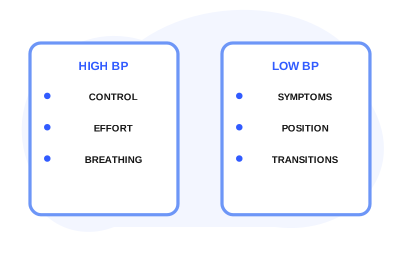
| Heavy weight training | Review straining, breath-holding, maximal efforts and whether BP is controlled | Do not lift while dizzy or faint; get symptoms assessed before loading |
| HIIT | Not a default starting point when control or exercise suitability is uncertain | Unexplained dizziness or fainting needs assessment before hard intervals |
| Lying exercises | Position alone does not determine suitability; load, breathing and other conditions matter | Lying is not automatically prohibited; getting up quickly may provoke symptoms |
| Fast floor-to-standing circuits | Review the intensity and recovery demands | Repeated rapid transitions may be unsuitable when standing causes dizziness |
| Moderate aerobic activity | Often part of an agreed activity plan when appropriate | Choose the position, pace and supervision with guidance if symptomatic |
High BP: activity can help, but control and effort matter
The American Heart Association encourages regular activity as part of managing high blood pressure. It includes resistance exercise among options and recommends gradual increases. This is different from saying that every person with high BP can start heavy lifting or vigorous intervals immediately. Discuss suitable effort and any monitoring needs with your clinician, particularly if control is uncertain or other conditions are present.
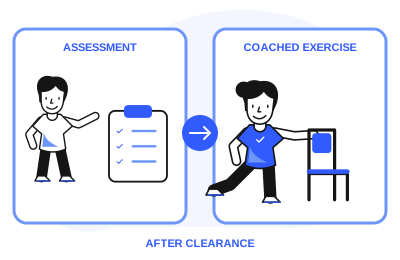
For a cleared session, choose an activity you can pace and stop safely. Begin gradually and leave time to ease down afterwards. Do not turn a planned moderate walk into a sprint because a fitness tracker asks for a higher score. A workout's label does not tell you whether the actual effort, rest periods and movement demands are appropriate for your circumstances.
Heavy weights and breath-holding need separate attention
A heavy weight is relative to the person lifting it. The important coaching observations include straining, losing control and holding the breath to finish. AHA guidance notes that breath-holding can raise blood pressure. Use a resistance and pace that allow regular breathing within the exercise plan you have been given. Do not add maximal-effort tests or forced repetitions as an informal check of readiness.
Avoid replacing heavy lifting with long, exhausting holds on the assumption that all static exercises are safer. Isometric exercise has specific uses, but a prescribed protocol is different from holding a plank or wall sit until you cannot continue. Ask whether it belongs in your plan and how it should be dosed. The same principle applies to a light weight lifted for a very long, straining set.
Explain to the coach what your clinician has said about intensity and breathing. Ask for time to rest and a way to stop each exercise safely. Do not let a group timer decide when you must resume. If the available weight options or class pace make it difficult to stay within your plan, choose another setup rather than trying to force the session to fit.
Low BP: symptoms and changes of position matter
The NHS describes low blood pressure as a reading below 90/60 mmHg, while noting that it does not always cause symptoms. Recurrent dizziness, blurred vision, weakness or fainting needs assessment. Symptoms when standing or changing position may involve postural hypotension, but a trainer should not make that diagnosis from a single episode.
If you feel faint during a session, stop and get into a safe position rather than trying to walk it off under a weight. NHS advice for feeling about to faint includes lying down with the legs raised when feasible. This shows why a blanket rule against lying down for low BP is misleading. However, managing an episode is different from choosing an exercise program, and recurrent symptoms still need medical review.
For someone with an assessed postural problem, organise the session so transitions are deliberate. Move from lying to sitting and then standing gradually, as advised by the NHS. Keep support available and avoid holding weights while first testing whether you feel steady. You may need a different exercise position or closer supervision, but that should be chosen for your condition rather than assumed from the words low BP.
Lying workouts and HIIT: replace blanket rules with a plan
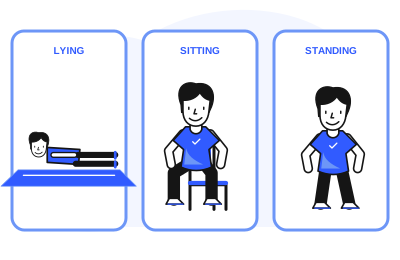
A lying exercise still has several demands: getting to the floor, positioning equipment, breathing during the movement and returning to standing. Review the whole sequence. A floor press may be unsuitable because you cannot safely handle the weights, while a different supported activity may be manageable. Neither decision follows from lying down alone. Other conditions can also affect whether a position is appropriate.
HIIT adds vigorous efforts and repeated recovery periods. It is not required for general fitness and should not be used to test unexplained symptoms. If your clinician later considers vigorous exercise appropriate, ask how to introduce it and whether supervision or monitoring is needed. The general fat burn training guide describes workout formats, but its example intervals are not a prescription for a blood-pressure condition.
Measure and record blood pressure as instructed
The AHA home-monitoring guidance recommends a validated upper-arm monitor with a suitable cuff. For routine resting measurements, avoid exercise, caffeine and smoking in the preceding 30 minutes, rest quietly for at least five minutes and support the arm at heart level. Take two readings one minute apart and record them, unless your clinician has given a different schedule.
Do not compare an immediate post-workout reading with a routine rested reading as though they were measured under the same conditions. Ask when you should measure around exercise and what action to take for the results. A fitness watch's heart-rate display is not a substitute for measuring blood pressure. Keep the monitor and technique consistent so the record is useful to the person managing your care.
Questions to settle before the next session
- Is my blood pressure sufficiently controlled for the activity I want to do, and do my symptoms need further assessment?
- Which intensity, resistance exercises and positions are appropriate, and are there specific restrictions?
- Should I measure around exercise, and what readings or symptoms mean I should postpone training or seek help?
- Do medicines, fluid restrictions or other conditions affect the session plan?
- Should I begin with supervised clinical exercise or cardiac rehabilitation instead of ordinary fitness coaching?
Do not change medication timing, increase salt or use a stimulant supplement to get through a workout based on general advice. Hydration and dietary instructions can differ when other conditions or restrictions are present. Tell your clinician about recurring symptoms and your usual exercise schedule so recommendations can fit both. Your coach can follow that guidance, but should not prescribe treatment adjustments.
Make a cleared session predictable
- 1
Check in before moving
Report symptoms and any new clinical advice. Follow your agreed monitoring plan. A concerning reading or symptom is a reason to postpone, not a reason to begin with a harder warm-up.
- 2
Allow a gradual start and finish
Leave time for the warm-up and cool-down rather than spending the full booking on demanding work. Ask the coach to keep transitions unhurried, particularly when changing between the floor, a chair and standing.
- 3
Keep the effort within the agreed range
Use the activity, resistance and rest periods selected for you. Breathe regularly and stop for symptoms. Do not chase another participant's pace or continue because only a few repetitions remain.
- 4
Review without changing treatment yourself
Record the session, any symptoms and measurements taken under the agreed conditions. Share a concerning pattern with your clinician. Adjusting the medical plan belongs with the healthcare team, not the fitness session.
Sources
- Getting Active to Control High Blood Pressure, American Heart Association
- When To Call 911 About High Blood Pressure, American Heart Association
- Home Blood Pressure Monitoring, American Heart Association
- Low blood pressure (hypotension), NHS
- Fainting, NHS
Written by the MakeMyFitness team from the sources above. First published , last updated . This is general fitness information, not medical advice: see the medical disclaimer.